


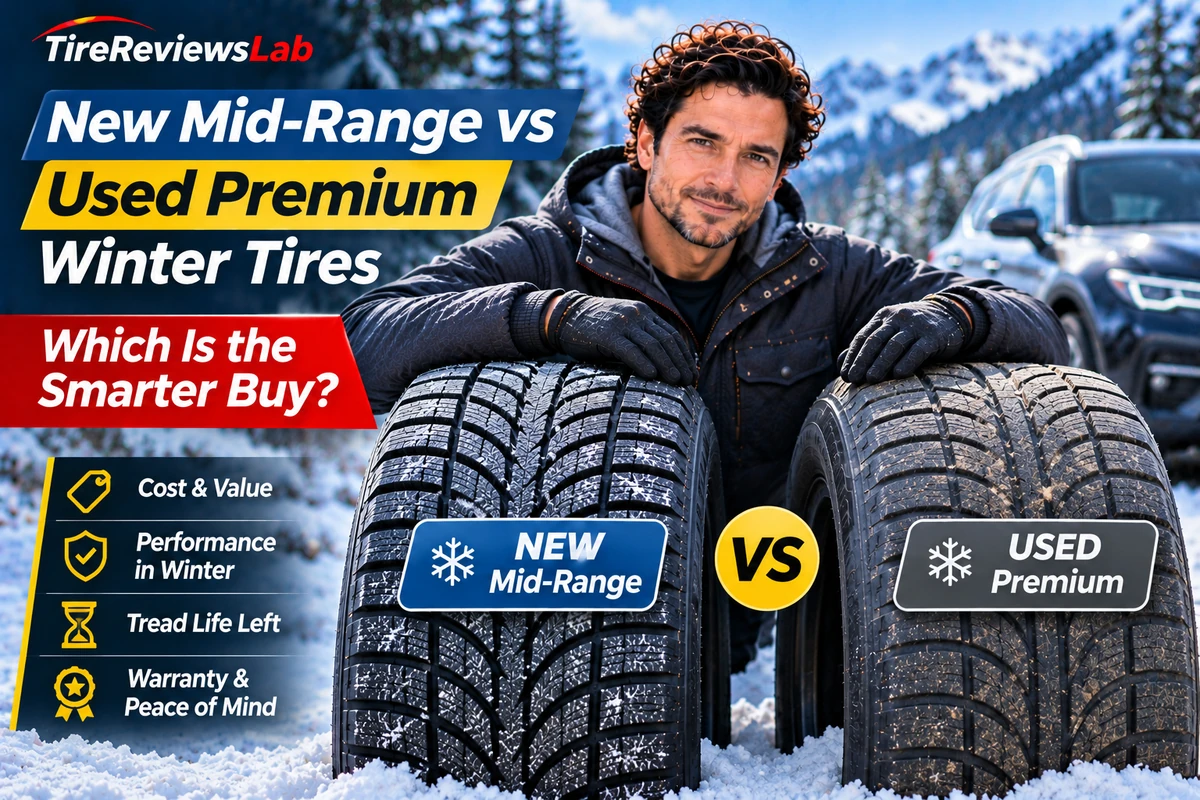
You have a winter tire budget, and two listings are pulling you in opposite directions. One is a fresh set of mid-range winter tires from a brand you know by name only. The other is a used set of top-tier winter tires that cost twice as much new, offered at a price close to the mid-range set. The premium badge is tempting, and the seller swears they have plenty of tread left.
The right answer depends less on the brand on the sidewall than on two numbers most buyers never check: how much tread is really left and how old the rubber is. A worn or aging premium winter tire can grip worse than a new mid-range one, while a lightly used, recent premium set can be the best deal of the season. This guide walks through the performance gap between tiers, what wear and age do to a winter tire, how the money really works out and how to inspect a used set before you hand over cash.
How this guide was put together: This guide is general information based on manufacturer guidance, federal rules and industry practice, with sources listed at the end. Prices are typical ranges, not quotes, and policies change; checked on October 23, 2026.
Table of Contents
Why the Used Premium Winter Tires Decision Matters
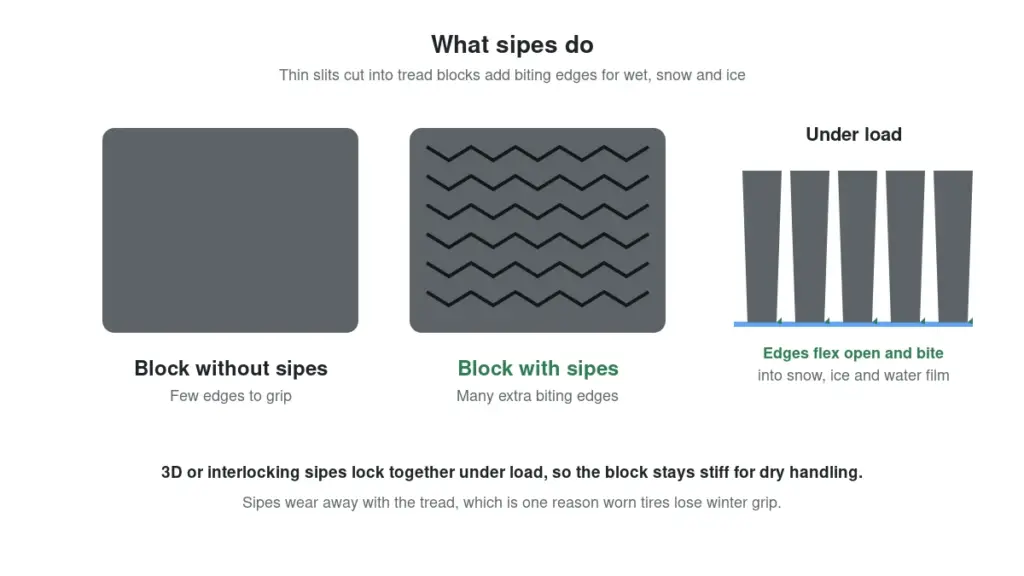
Winter tires earn their keep in two ways. Their tread compound stays pliable in the cold, and their tread pattern is packed with deep grooves and thousands of small slits called sipes that bite into snow and ice. All-season tires stiffen as the temperature falls, and below roughly 45°F (7°C) they lose grip on cold pavement even before snow arrives. That is the temperature range where winter tires start to pull ahead in braking, cornering and acceleration.
Some places treat winter tires as a legal requirement rather than a preference. Quebec, for example, requires winter tires on vehicles registered in the province from December 1 to March 15. Most US states do not mandate them, but drivers in snow country quickly learn that a good set shortens stopping distances in exactly the conditions where crashes happen. If you are still deciding whether you need dedicated winter tires at all, our comparison of winter tires vs all-season tires covers that question in depth.
How Mid-Range and Premium Winter Tires Differ
Both tiers deliver a real step up over all-season tires in snow and cold. The differences show up in the margins, and the margins matter most on ice.
Rubber Compound
Premium winter tires tend to use more sophisticated compounds that stay flexible at lower temperatures, often with high silica content and other additives that improve grip on ice. Mid-range compounds still remain soft in the cold, but they may stiffen sooner when temperatures plunge well below freezing.
Tread Design and Siping
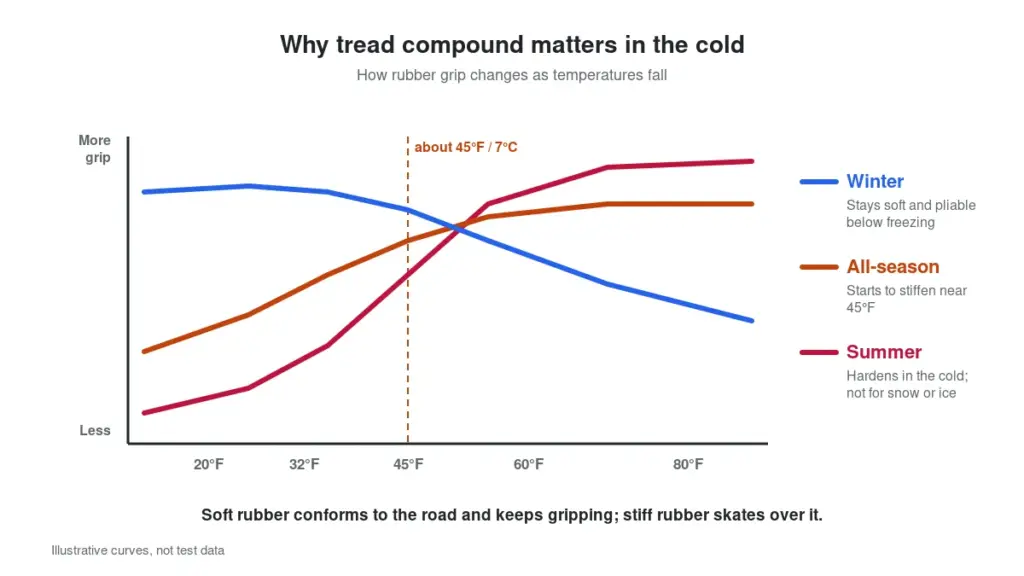
Premium models usually have denser, more intricate siping, including three-dimensional sipes that interlock under load so the tread blocks bite without squirming. Mid-range tires use sipes and biting edges too, typically in simpler patterns.
Construction and Consistency
Top-tier manufacturers invest heavily in casing design and manufacturing precision. The payoff is sharper handling, better stability at highway speeds and more consistent performance from tire to tire. Mid-range casings are built to a price, and steering feel is often softer.
Where Each Tier Shines
| Condition | New Mid-Range Winter Tire | Premium Winter Tire (Good Condition) |
|---|---|---|
| Fresh and packed snow | Strong, thanks to full-depth tread | Strong, if tread depth is healthy |
| Ice | Good, a clear step over all-seasons | Usually the best available, especially in deep cold |
| Slush | Very good with deep, open grooves | Very good, often with a slight edge |
| Cold dry pavement | Adequate, with softer steering response | Typically more precise and stable |
| Braking and handling | Solid in most winter driving | Generally the benchmark |
The table holds only while the premium tire is in good condition. Wear and age erode those advantages faster than many buyers expect.
Tread Depth: The Variable That Changes Everything
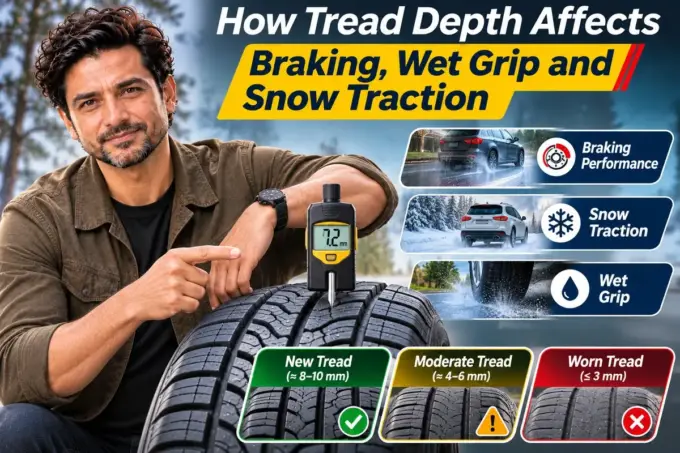
A winter tire’s snow traction depends heavily on tread depth. Deep grooves pack with snow, and snow grips snow better than rubber does. As the tread wears, the grooves get shallower, the sipes get shorter and the tire loses the very features that made it a winter tire.
New winter tires are molded with deeper tread than typical all-season tires, often 10/32 inch or more. Tire Rack’s guidance is that snow traction starts to fade around 6/32 inch and is noticeably reduced at about 5/32 inch, which is where it recommends replacing tires used on snow-covered roads. Many winter tires have built-in winter wear indicators that sit at roughly that depth. Legal minimum tread in most states is 2/32 inch, but that figure has nothing to do with winter performance.
That gives you a practical way to judge a used set:
- 8/32 inch or more: A meaningful amount of usable winter tread left. This is the range where a used premium set can make sense.
- 6/32 to 7/32 inch: Usable, but already losing some snow and slush bite. Expect a short remaining service life.
- 5/32 inch or less: At or near the end of its useful winter life. No discount makes this a bargain.
A used premium winter tire at 6/32 inch is already past its best snow performance. Compare it against a new mid-range tire with full-depth tread, not against the premium tire it was when new.
How long a tire lasts beyond that depends on climate, mileage and vehicle weight, so treat any seasons-remaining estimate as rough. Our guide to how long winter tires last breaks down the variables in more detail.
Tire Age: The Hidden Risk in Used Premium Winter Tires
Rubber ages whether or not it is driven on. Over time the compound hardens, and a hardened winter tire loses the cold-weather flexibility that made it worth buying. A five-year-old set with deep tread can look perfect and still grip poorly on ice.
Every tire sold in the US carries a DOT code on the sidewall. The last four digits give the week and year of manufacture, so 3221 means the 32nd week of 2021. Check it on all four tires before you agree on a price. Many automakers recommend replacing tires at six years regardless of tread, and annual inspection by a professional is a sensible practice once a tire passes five years.
For a used winter set, the age math is harsh. A tire built four years ago and offered with good tread may only have a couple of seasons before age becomes a concern, even if the tread holds out. A new mid-range tire starts its clock at zero.
Inspecting Used Premium Winter Tires Before You Buy
A used tire’s history is mostly unknown, so the inspection has to do the work. Bring a tread depth gauge and go through the set methodically.
- Read the DOT date code on every tire and confirm all four are reasonably recent and close in age.
- Measure tread depth at the inner edge, center and outer edge of each tire, and at several points around the circumference.
- Look for uneven wear such as cupping, feathering or one worn shoulder, which can signal past alignment or suspension problems and noisy, irregular wear ahead.
- Inspect the sidewalls and tread grooves for cracking, bulges, cuts and plugs or patches. Run a hand around the inside of the sidewall too.
- Check for signs of poor storage, such as fine weather cracking, chalky discoloration or a hard feel to the rubber.
- Confirm the size, load index and speed rating match your vehicle’s placard on the driver’s door jamb.
Buy a matched set of four with similar tread depth whenever possible. Mixing brands, models or wear levels on a winter car upsets the balance of grip front to rear, which is exactly what you do not want on ice. A tire shop that sells used take-offs and stands behind the inspection is usually a safer bet than a private seller, so ask any shop how it inspects and date-checks its used inventory.
The Real Cost: Price Per Season, Not Price Per Tire
The upfront difference is obvious. A used premium set often sells for a large discount off its new price, sometimes half or less, while a new mid-range set costs more than the used listing. Our breakdown of how much winter tires cost gives current price ranges by size and category.
The more useful number is what you pay for each season of good winter traction. Here is a simple way to compare.
| Factor | New Mid-Range Set | Used Premium Set |
|---|---|---|
| Starting tread | Full depth, often 10/32 inch or more | Whatever is left, often 6/32 to 8/32 inch |
| Remaining usable winter tread | All of it until about 5/32 inch | Only the depth above about 5/32 inch |
| Age clock | Starts at zero | Already running |
| Warranty | Manufacturer limited warranty applies | Usually none |
| Mounting and balancing | Paid once per set | Paid once per set, more often if replaced sooner |
| Known history | Yes | Rarely |
Run the numbers on your specific listings. Divide the price of each set by the number of seasons you realistically expect from it, and include mounting and balancing in both. A used premium set at 9/32 inch and two years old can win easily. The same set at 6/32 inch and five years old will likely cost more per season than a new mid-range set, because you will be buying again much sooner.
Mounting costs also tilt the math. If you do not have spare wheels, every set change means a fresh mount and balance. Putting the winter tires on their own set of wheels avoids that cost each season and reduces wear on the tire beads.
Safety and Liability
Winter tires exist for the worst conditions you will drive in, so safety should outrank the badge. A premium tire in good shape is the strongest choice on ice. A premium tire with marginal tread or hardened rubber is not, and it can fall below a new mid-range tire on snow.
There is also a practical liability angle. After a winter crash, worn or unsuitable tires can become part of the conversation with an insurer or in a legal claim. What matters there is the condition of the tire, not the brand. A new mid-range winter tire with full tread is easier to defend than a premium set worn near its limit.
The Environmental Angle
Reusing a tire that already exists avoids the raw materials and energy that go into building a new one, which gives used tires a real environmental advantage. That benefit only holds if the tire is safe and gets meaningful use before disposal. When either set reaches the end of its life, return it to a retailer or recycler. Scrap tires are commonly processed into rubberized surfaces, construction materials and fuel for industrial uses such as cement kilns.
Which Option Fits Your Situation
Choose new mid-range winter tires if:
- You drive many winter miles and want the full tread depth from day one.
- You cannot verify a used set’s age, history or storage.
- You want a manufacturer warranty and a known starting point.
- Your winters bring lots of deep snow, where fresh tread depth matters most.
Choose used premium winter tires if:
- The set has 8/32 inch or more of even tread on all four tires.
- The DOT codes show the tires are recent, ideally within about three years.
- You face frequent ice or deep cold, where premium compounds pay off most.
- You can buy from a seller who lets you inspect and measure the tires first.
Related guides: Breaking In New Tires, Winter Driving Guide and Used Tire Cost
Frequently Asked Questions
Only when they are recent and have plenty of tread. A premium tire with 8/32 inch or more and a recent DOT date can outperform a new mid-range tire, especially on ice. Once tread falls toward 6/32 inch or the rubber ages and hardens, a new mid-range tire with full tread is often the safer choice.
Aim for at least 8/32 inch if you want more than a short service life. Snow traction begins to fade around 6/32 inch and drops noticeably at about 5/32 inch, which is a common replacement point for winter use.
Check the DOT code before anything else. Many automakers recommend replacing tires at six years regardless of tread, and tires past five years should be inspected annually. For a used winter set, anything more than a few years old leaves little time before age becomes a concern.
It is best avoided. Uneven tread depth or different models front to rear change how the car brakes and corners on slippery roads. Buy a matched set of four with similar tread depth.
Usually not. Manufacturer limited warranties generally cover the original purchaser, and private sellers rarely offer any protection. Some shops that sell used tires provide a short guarantee of their own, so ask before buying.
They are a substantial improvement over all-season tires and handle most winter driving well. Premium winter tires typically grip better on ice, especially in very cold temperatures, so drivers who face glare ice often may find the premium tier worth seeking out.
The Bottom Line on Winter Tire Value
New mid-range winter tires are the safer default for most drivers. They arrive with full tread, a fresh age clock and a warranty, and they deliver the large jump in cold-weather grip that makes winter tires worth having in the first place.
Used premium winter tires are a smart buy only under the right conditions: four matching tires, 8/32 inch or more of even tread, a recent DOT date and a seller who lets you inspect them. Hit all of those and you get top-tier ice grip for mid-range money. Miss any of them and the bargain disappears, because a tired premium tire is still a tired tire.
Sources
Specs, warranty terms and prices were checked on October 23, 2026. Prices change often.
- NHTSA: Tires (tire safety, pressure, tread and DOT codes)
- USTMA: Tire care (industry tire care and maintenance guidance)
 Summarize this article with:









Leave a comment