


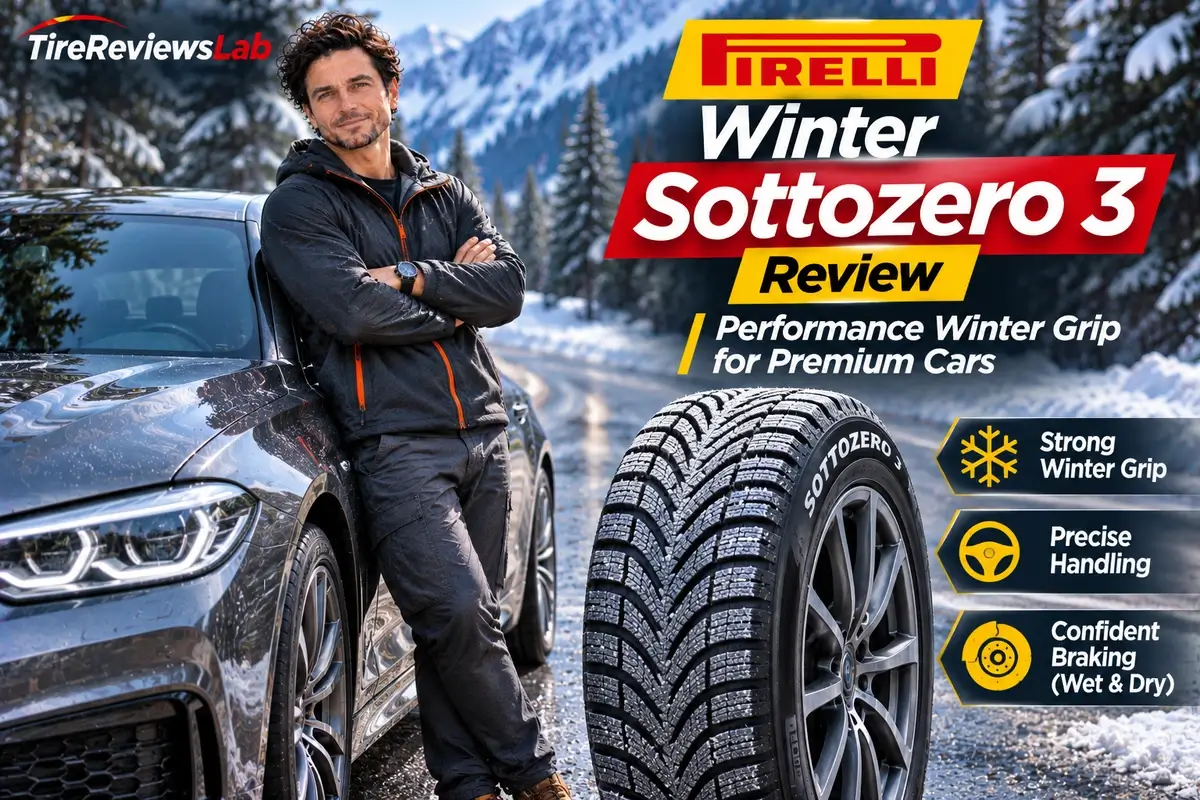
The Pirelli Winter Sottozero 3 is a performance winter tire for sports sedans, coupes and premium cars. It is designed for drivers who face cold, wet and snowy roads but still want sharp handling and strong braking on cleared pavement. It is fitted as original equipment on many premium cars, and it has been one of the most widely tested performance winter tires in Europe.
This review covers how the Winter Sottozero 3 performs, what its test record shows, how it compares with the older Sottozero Serie II and which drivers it suits best.
How this review was put together: We have not road-tested the Pirelli Winter Sottozero 3. This review draws on the manufacturer’s published information and retailer listings, with sources listed at the end. Warranty terms and prices change, so confirm them for your size before you buy.
Table of Contents
Where the Winter Sottozero 3 Fits
Pirelli‘s car winter lineup includes the Winter Sottozero range and the P Zero Winter 2. The Winter Sottozero 3 is a performance winter tire for premium cars, while the P Zero Winter 2 targets high-performance and sports cars with larger wheels.
The Winter Sottozero 3 followed the Sottozero Serie II, and above all it improved snow traction.
Pirelli Winter Sottozero 3 at a Glance
| Spec | Details |
|---|---|
| Category | Performance winter tire |
| Test record | About 30 independent tests and 3 test wins reported |
| Strongest area | Dry braking |
| Weakest area | Snow braking |
| Typical rim sizes | About 16 to 20 inches |
| Versions | Standard, run-flat and OE-marked sizes |
Even so, check that the size you are buying carries the snowflake symbol for severe snow. Performance winter tires are designed for winter use, but confirm the marking on your exact size.
Tread Design and Technology
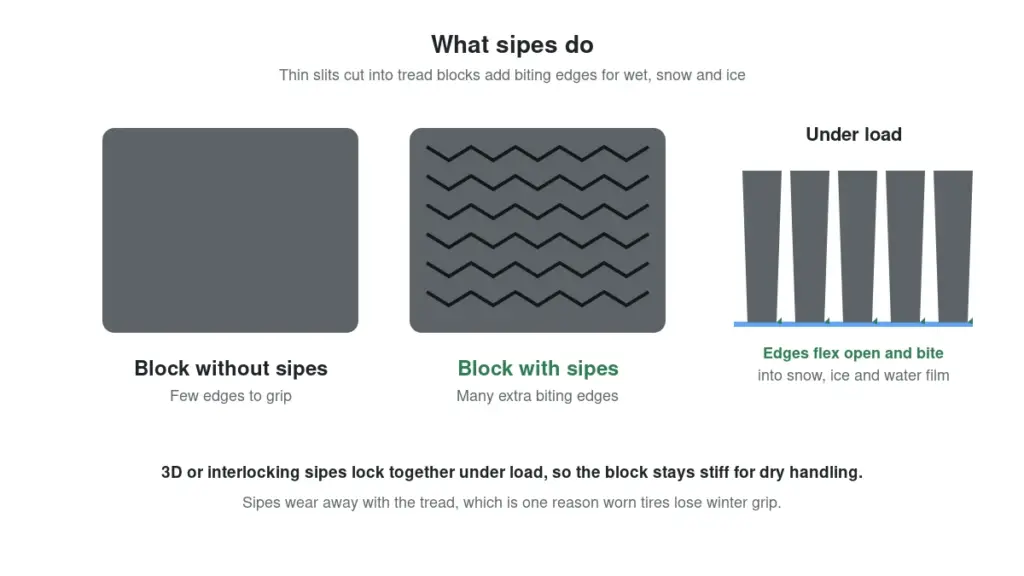
The Winter Sottozero 3 uses a directional tread with V-shaped grooves to channel water and slush away from the contact patch. Sipes provide biting edges for snow, while the shoulder blocks are designed to stay stable for cornering. The compound is formulated to stay flexible in cold temperatures while maintaining enough stiffness for high-speed stability.
Snow and Ice Performance
In snow, the Winter Sottozero 3 provides good traction for a performance winter tire. Independent test data suggests its snow braking is weaker than its other abilities, beating only a minority of rivals in some tests. On ice, however, it is capable but not as strong as a softer studless winter tire.
Wet and Dry Performance
The Winter Sottozero 3 shines on cold, wet and dry pavement. In particular, its strongest area in tests is dry braking, where it has beaten most of the field. Also, steering is precise, which suits premium cars that spend most of the winter on cleared roads.
Independent Test Results
The Winter Sottozero 3 has been tested about 30 times by independent European testers, with three test wins and an average finish around 7th. That record shows a tire with strong dry and wet abilities that is often outpaced by newer designs in snow.
Ride Comfort and Noise
The ride is comfortable for a performance winter tire, and road noise is moderate. However, run-flat versions ride a little firmer.
Tread Life and Warranty
Winter tires usually carry little or no mileage warranty. For that reason, remove the tires in spring to avoid fast wear in warm weather.
Sizes and Fitment
The Winter Sottozero 3 is available in sizes from about 16 to 20 inches, including run-flat and OE-marked versions such as the BMW star and MO for Mercedes-Benz. In addition, fit winter tires in sets of four for balanced handling.
Winter Sottozero 3 vs Rivals
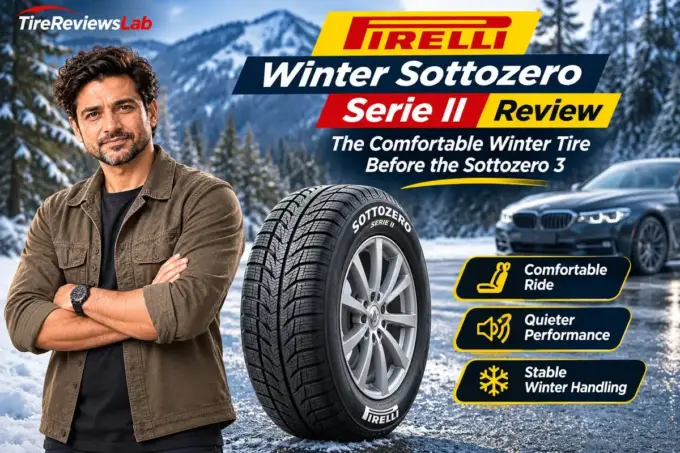
Pirelli Winter Sottozero 3 vs Pirelli Winter Sottozero Serie II
Comparison data gives the Sottozero 3 an edge overall and in snow, while the Serie II scores slightly better on comfort, noise and tread life. For most drivers, the Sottozero 3 is the better choice.
Pirelli Winter Sottozero 3 vs Michelin Pilot Alpin 5
The Pilot Alpin 5 is a newer performance winter tire with strong test results in snow and wet. It is often a step ahead of the Sottozero 3 in recent tests.
Pirelli Winter Sottozero 3 vs Continental WinterContact TS 860 S
The TS 860 S is a strong performance winter tire with good snow and wet grip. It is a strong alternative.
Performance winter tires suit cars that see mostly cleared roads in winter. If you face deep snow or frequent ice, a softer studless winter tire may grip better.
Who Should Buy the Winter Sottozero 3
- Owners of premium cars that came with it
- Drivers who face cold, wet winters on mostly cleared roads
- Drivers who want precise handling in winter
Who Should Skip It
- Drivers who face deep snow or frequent ice
- Drivers who want the strongest snow braking
- Drivers in mild climates who can use all-season tires
Pros
- Strong dry and wet braking
- Precise handling for a winter tire
- Run-flat and OE-marked versions
- Proven test record
Cons
- Snow braking weaker than newer rivals
- Ice grip not class-leading
- Typically no mileage warranty
More Pirelli reviews: Pirelli Scorpion Winter 2, Pirelli Winter Sottozero Serie II and Pirelli P Zero Winter
FAQ
It provides good snow traction for a performance winter tire, but tests show its snow braking is weaker than some newer rivals.
The Sottozero 3 is newer and better in snow, while the Serie II scores slightly better on comfort and tread life.
Yes. Run-flat versions of the Winter Sottozero 3 are available in select sizes, mainly for cars that come with run-flat tires from the factory.
It has about 30 tests and 3 wins, with an average finish around 7th.
The Bottom Line on the Pirelli Winter Sottozero 3
The Pirelli Winter Sottozero 3 is a capable performance winter tire with strong dry and wet braking and precise handling. It suits premium cars that spend most of the winter on cleared roads. Drivers who face deep snow or frequent ice should look at newer rivals or softer studless winter tires.
Sources
Specs, warranty terms and prices were checked on October 23, 2026. Prices change often.
- Pirelli Winter Sottozero 3 on the manufacturer’s site (official product page: specs, sizes and warranty terms; accessed October 29, 2026)
 Summarize this article with:










Leave a comment