


Every input you give a car, from a gentle lane change to a panic stop, ends up as force passing through four patches of rubber, each roughly the size of your hand. How much force those patches can handle before they slide is tire traction, and it changes dramatically with the surface underneath. The same tire that feels glued to the road on a dry August afternoon can skate across a frozen intersection in January.
Most drivers notice traction only when it runs out. This guide works through each surface in turn, explains why grip rises and falls, and shows which parts of it you control through tire choice, maintenance and technique.
How this guide was put together: This guide is general information based on manufacturer guidance, federal rules and industry practice, with sources listed at the end. Prices are typical ranges, not quotes, and policies change; checked on October 23, 2026.
Table of Contents
What Tire Traction Actually Is
Traction is the friction between the tire and the surface, and it does every job at once: it accelerates the car, stops it and turns it. A tire has a finite budget of grip at any moment. Spend most of it braking and less remains for steering, which is why a car that is braking hard in a corner is far more likely to slide than one doing either task alone.
Five things set the size of that budget:
- The surface: dry asphalt, wet concrete, packed snow, glare ice and loose gravel all offer very different friction.
- Rubber compound: softer, stickier compounds grip better but usually wear faster, and every compound has a temperature range where it works best.
- Tread design: grooves, sipes and block shapes determine how well a tire clears water, bites into snow or digs into dirt.
- Inflation and tread depth: both change the shape and behavior of the contact patch.
- Load and weight transfer: how much weight each tire carries, and how that shifts as you brake, accelerate and turn.
Dry Pavement: Where Grip Is Highest
Clean, dry pavement gives tires the most traction they will ever have. With nothing between the rubber and the road, the compound can key into the surface texture and generate maximum friction.
The tires that make the most of it are summer and high-performance tires. They use softer, stickier compounds and tread patterns with large, stiff outer shoulder blocks for cornering stability, often with a solid or continuous center rib that sharpens straight-line response. Many use asymmetric or directional patterns. All-season tires give up some of that ultimate dry grip in exchange for wet, light-snow and year-round versatility, but they remain perfectly capable on dry roads for everyday driving.
One counterintuitive point: tread depth matters far less on dry pavement than anywhere else. A worn tire puts more rubber in contact with the road and its shorter tread blocks squirm less, so it can brake about as well as a new tire in the dry. That is exactly why worn tires feel fine until the first rain.
Temperature matters too. Summer compounds need warmth, and near freezing they lose much of their grip and can even crack, so dry winter roads are not summer-tire weather.
Wet Roads: Where Tread Earns Its Keep
Water is a lubricant. Even a thin film reduces the friction between rubber and pavement, and the effect is worst in the first minutes of rain, when oil and grime lift off the road surface.
The bigger danger is hydroplaning. When the tread cannot move water out of the contact patch fast enough, a wedge of water builds in front of the tire and lifts it off the road. Steering and braking stop working until the tire reconnects. Speed, standing water depth, tread depth and inflation all affect when that happens.
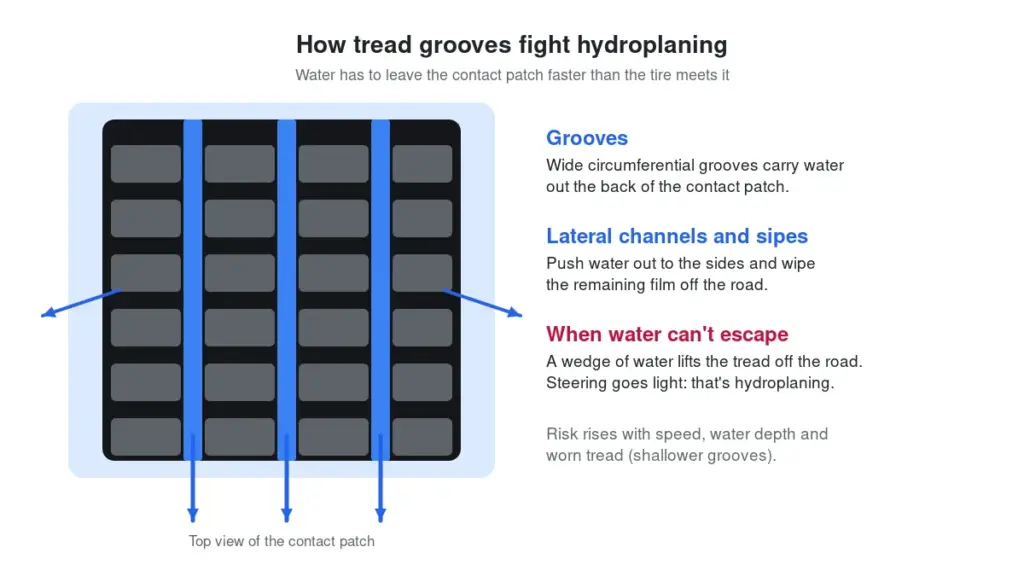
Tires built for wet traction attack the problem in several ways:
- Wide circumferential grooves act as channels that carry water out of the contact patch.
- Lateral grooves connect those channels to the shoulders so the water has somewhere to go.
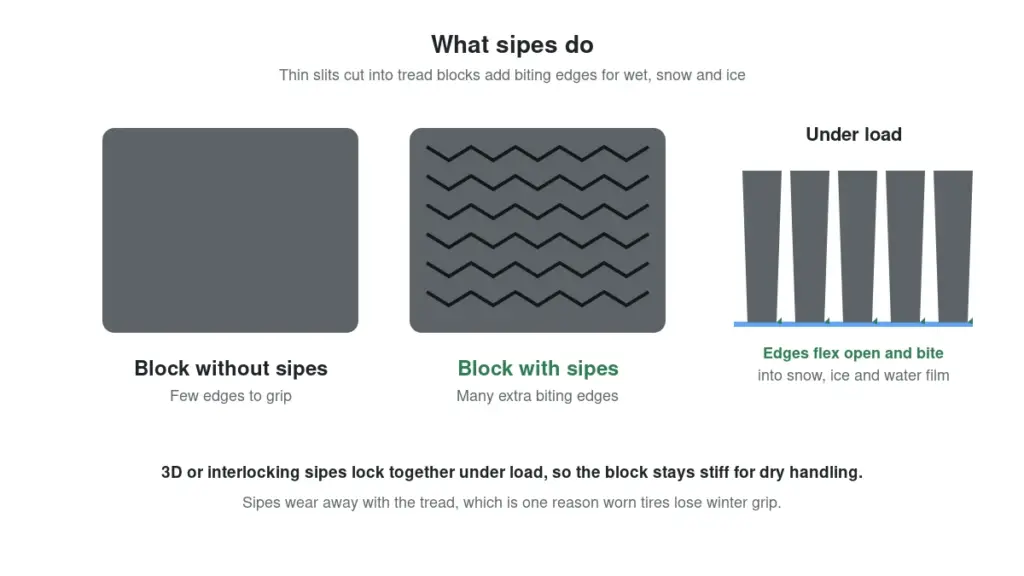
- Sipes, the thin slits cut into tread blocks, add biting edges that wipe the remaining film and grip the road.
- High-silica compounds stay flexible and grip better on wet and cool pavement than traditional carbon-black compounds.
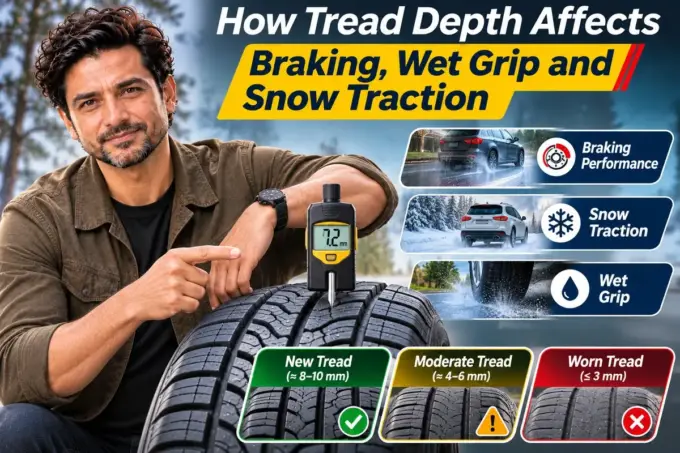
The decisive factor, though, is tread depth. A new passenger tire typically starts with 10/32 to 11/32 inch of tread. As it wears, the grooves get shallower, water evacuation slows and wet braking distances grow. The legal minimum in most US states is 2/32 inch, but many safety advocates and tire makers recommend replacing tires at 4/32 inch if you drive in rain regularly. Our guide on how to check tire tread depth shows how to measure yours with a gauge or the penny and quarter tests.
On dry roads, worn tires can feel almost as good as new ones. On wet roads, they are a different tire entirely. Replace by the rain, not by the sunshine.
Snow: Biting Edges and Packing Snow
Snow traction depends on two things a summer tire lacks: flexible rubber and lots of edges.
Below about 45°F, ordinary all-season and summer compounds start to stiffen, and rubber that cannot conform to the road surface cannot grip it. Winter tires use compounds that stay pliable in the cold. Their tread patterns combine deep grooves, high-angle blocks and dense siping, all of which bite into snow and give the tire many more edges to grip with.
Snow also grips snow. Winter tread captures snow in its grooves and uses that packed snow to generate traction against the snow on the road, while the open pattern still sheds slush so the tread does not fill up solid. Look for the three-peak mountain snowflake symbol on the sidewall, which indicates a tire met an industry snow traction performance standard. The plain M+S marking found on most all-season tires is a tread-geometry designation and does not certify real snow performance.
Winter tires should go on all four wheels. Mixing winter tires on one axle with all-seasons on the other creates a grip imbalance that can make the car spin under braking or in a turn. For a full breakdown of how the two categories compare across a season, see our article on winter tires vs all-season tires.
Ice: The Hardest Surface of All
Ice offers the least traction of any common road surface, and it is at its slipperiest near the freezing point, when a thin layer of meltwater forms on top. Black ice, a clear glaze that looks like wet pavement, catches drivers precisely because it gives no visual warning.
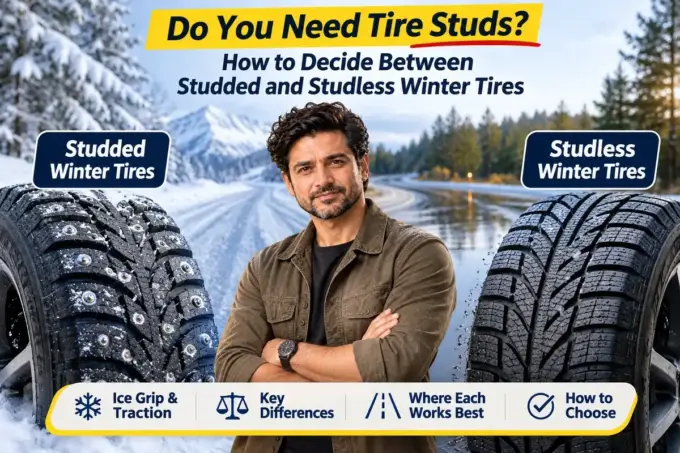
Dedicated winter tires do the best job here without studs. Their soft compounds stay grippy in deep cold, while dense micro-siping and porous or textured compounds in some designs break through and wick away the water film. Some winter tires accept metal studs, which dig into ice directly and offer the strongest ice grip available. Studs are noisy on bare pavement, can wear the road and are restricted or banned seasonally in many states, so check local rules before buying them.
No tire makes ice safe, only less dangerous.
Gravel, Dirt and Mud: Off-Road Traction
Loose surfaces flip the rules of pavement grip. On gravel, dirt or mud, the surface itself shifts under the tire, so traction comes less from rubber friction and more from tread that can dig in and push against the terrain.
Off-road tires use large, widely spaced lugs and a high void ratio, meaning a lot of open space between tread blocks. Those voids let the lugs bite into loose ground and allow the tread to clean itself as it rotates, flinging out mud and stones that would otherwise pack the grooves and turn the tire into a slick. Off-road compounds emphasize cut and chip resistance against sharp rocks, and many off-road and all-terrain tires use reinforced sidewalls and extra plies to resist punctures and impact damage.
The cost shows up on pavement as more noise, a firmer ride, vaguer handling and often faster wear. That is why many truck and SUV owners choose all-terrain tires, which balance loose-surface traction with acceptable road manners, and leave mud-terrains to drivers who spend real time off pavement.
Comparing Traction by Surface
| Surface | Relative Grip | What Helps Most | Main Risk |
|---|---|---|---|
| Dry pavement | Highest | Sticky compound, stiff shoulder blocks, correct pressure | Exceeding the grip limit in corners or cold-weather use of summer tires |
| Wet pavement | Reduced | Deep grooves, siping, silica compounds, adequate tread depth | Hydroplaning and longer stopping distances |
| Snow | Low | Winter compound, deep tread, dense siping, three-peak snowflake rating | Snow-packed tread and sliding under braking or turning |
| Ice | Lowest | Winter compound, micro-siping, studs where legal | Black ice and stopping distances many times longer than dry |
| Gravel, dirt, mud | Variable | Open tread, high void ratio, self-cleaning lugs, tough sidewalls | Packed tread, punctures and loose-surface slides |
Tire Pressure and the Contact Patch
The pressure in your tires determines the shape of the contact patch, and both extremes cost you grip.
An underinflated tire flexes too much. Its sidewalls bulge, its center lifts away from the road and its shoulders carry too much of the load. Steering response turns vague, heat builds up and water evacuation suffers, so hydroplaning arrives at lower speeds. It also wears out the shoulders early. Letting air out does not create usable traction on pavement, a myth we unpack in our article on whether underinflated tires give better traction. (Off-road drivers deliberately air down on sand or rocks, but that is a specialized technique using equipment and pressures meant for that purpose, and the tires must be reinflated before returning to pavement.)
An overinflated tire does the opposite. It bulges in the center, shrinks the contact patch, rides harshly and can skip over bumps, losing contact with the road at the moment you need grip.
The right number is on the placard on the driver’s door jamb, not the maximum molded on the sidewall. Check pressure monthly with the tires cold, because pressure drops as temperatures fall and tires slowly lose air over time.
Weight Transfer and Load
Every time you brake, weight shifts forward onto the front tires. Accelerate and it moves rearward. Turn and it moves to the outside tires. The tires carrying more weight gain grip, while the lightly loaded tires lose it, which is why a car can feel unsettled when you lift off the throttle mid-corner or brake hard while turning.
Heavy cargo or a trailer shifts that balance further. Stay within rated load limits, spread cargo evenly and use the loaded pressure figure if the placard lists one. Healthy shocks and struts keep weight transfer controlled so the tires stay planted.
Traction Control, ABS and Stability Control
Modern cars layer electronic aids on top of tire grip, and it helps to know what each one does.
- Traction control watches wheel speed sensors and steps in when a driven wheel spins faster than the others, cutting engine power or braking the spinning wheel so the tire can regain grip during acceleration.
- Anti-lock brakes (ABS) prevent the wheels from locking during hard braking, so you keep the ability to steer while stopping.
- Electronic stability control (ESC) brakes individual wheels to keep the car pointed where you are steering when it starts to skid or slide.
These systems manage the grip that exists but cannot create more of it. Worn or wrong-season tires leave them less to work with. In deep snow or mud, where some wheelspin helps keep the car moving, many vehicles let you reduce traction control for that reason.
Maintenance That Protects Traction
- Rotate regularly, every 5,000 to 8,000 miles or on your owner’s manual schedule, so all four tires wear and grip evenly.
- Keep the alignment right, and have it checked after a hard pothole or curb strike, since misalignment wears tread unevenly.
- Check pressure monthly. It is the cheapest traction upgrade there is.
- Watch the wear bars. Tread wear indicators are small raised bars in the grooves. When the tread is flush with them, the tire is at 2/32 inch and due for replacement.
- Match tires to the season. Summer tires in summer, winter tires in winter, and all-seasons only where winters are mild.
Driving Techniques for Each Surface
Dry roads: Accelerate and brake smoothly, set your speed before a corner rather than in it, and avoid abrupt steering that loads a tire suddenly.
Wet roads: Slow down, especially through standing water, and widen your following distance. Avoid cruise control in heavy rain. If the car hydroplanes, ease off the accelerator, keep the steering straight and avoid braking hard until the tires reconnect with the road.
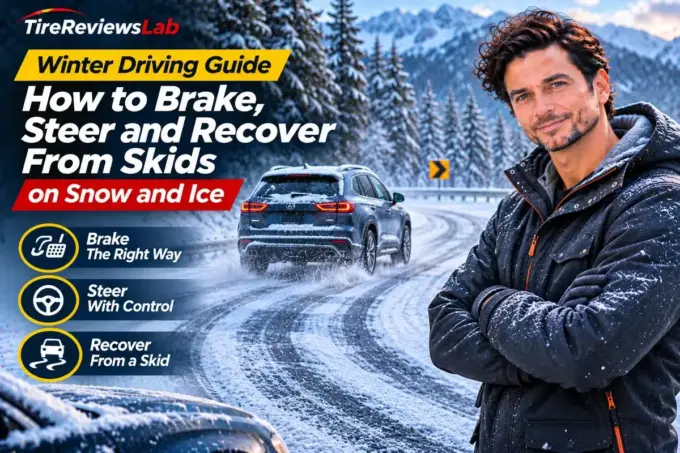
Snow and ice: Drive slowly, accelerate gently to avoid wheelspin, and begin braking much earlier than usual. With ABS, apply firm, steady pressure and let the system work. Downshifting or using a lower gear can help control speed on descents. Allow several times the normal following distance.
Gravel, dirt and mud: Engage four-wheel drive or the vehicle’s off-road mode if equipped, keep a steady pace, steer gently and use momentum on soft ground, since stopping in mud is often where vehicles get stuck.
Where Traction Technology Is Heading
Tire makers keep refining compounds that grip across wider temperature ranges and treads that hold their wet performance as they wear, while in-tire sensors and airless designs are under development. None of that changes the fundamentals: the right tire for the conditions, at the right pressure with enough tread.
Related guides: Where Are Continental Tires Made? and Why Are Tires Black?
Frequently Asked Questions
Clean, dry pavement offers the most. Wet roads reduce grip, snow reduces it further, and ice offers the least, especially near freezing when a film of water sits on top.
Much less than on wet roads. A worn tire can stop about as well as a new one on dry pavement because more rubber touches the road. The problem appears in rain, where shallow grooves cannot clear water and stopping distances and hydroplaning risk increase.
In regions with occasional light snow, many all-season tires cope reasonably well, particularly models carrying the three-peak mountain snowflake symbol. In places with regular snow, ice and sustained cold, dedicated winter tires deliver far more grip because their compounds stay flexible below freezing.
Not on pavement. Underinflation distorts the contact patch, makes steering vague, increases heat and raises hydroplaning risk. Off-road drivers air down for sand or rocks, but only for that terrain and with a plan to reinflate before driving on the road again.
The legal minimum in most states is 2/32 inch, which is where the wear bars sit. If you drive in rain or snow, replacing tires around 4/32 inch preserves much more wet and snow traction.
No. Traction control, ABS and stability control manage the grip your tires have but cannot add grip. With worn or wrong-season tires, they have less to work with and reach their limits sooner.
Final Word on Traction
Tire traction is not a fixed property of a tire. It is a moving balance between rubber, tread, pressure, load and the surface underneath. Dry pavement forgives a lot, which is why tire problems often stay hidden until the weather turns. Water exposes worn tread, cold exposes the wrong compound, and ice and loose surfaces punish any input that asks for more grip than exists.
The practical answer is simple to state and easy to neglect: choose tires that match where and when you drive, keep them inflated to the placard pressure, replace them before the tread runs out and drive to the conditions. Do that, and the electronic aids in your car will rarely need to step in.
Sources
Specs, warranty terms and prices were checked on October 23, 2026. Prices change often.
- NHTSA: Tires (tire safety, pressure, tread and DOT codes)
 Summarize this article with:









Leave a comment