


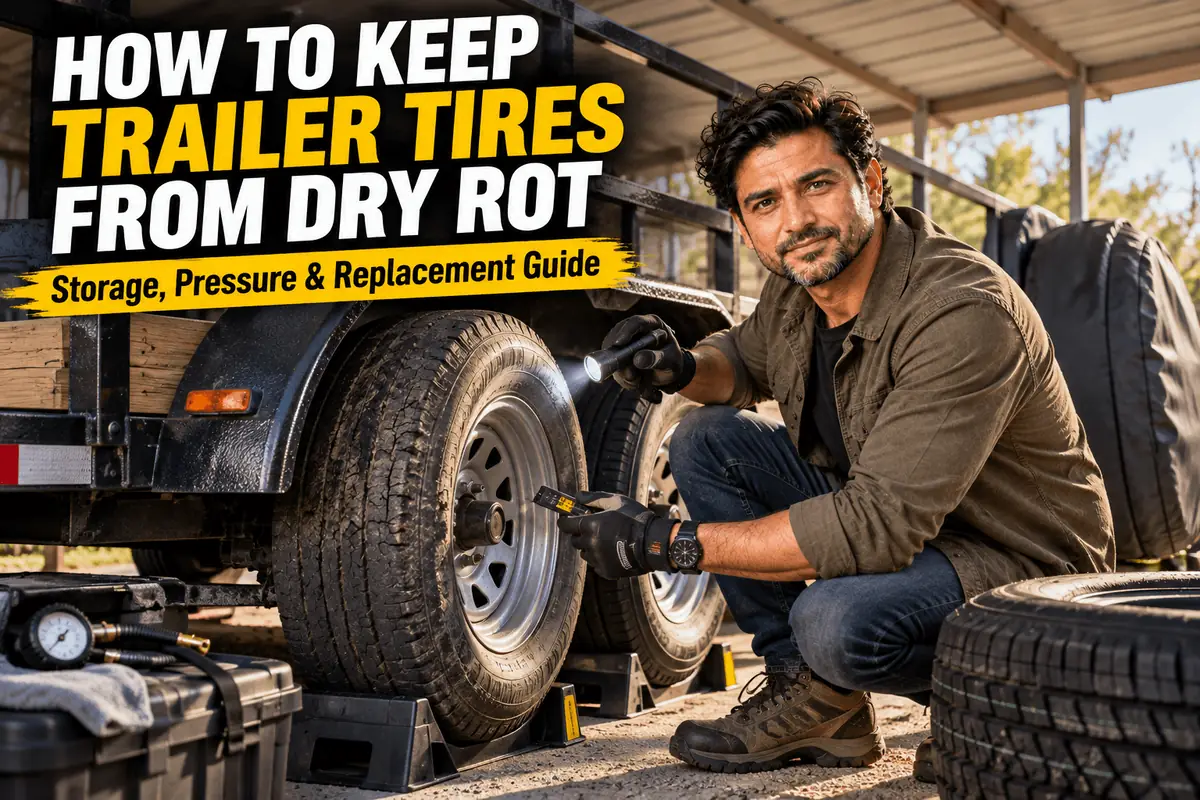
A boat trailer, camper or utility trailer can spend eleven months of the year parked in a side yard and still have tires with nearly full tread. That is exactly the trap. The tread looks new, so the tires seem fine, but the rubber has been baking in the sun, breathing ozone and sitting under load the whole time. Then a sidewall full of fine cracks gives out at 60 mph on the way to the lake, and the blowout takes a fender, a wheel well or the cargo with it.
Dry rot is the main reason trailer tires fail long before they wear out, and most of it is preventable. Keeping it at bay comes down to a handful of habits: blocking sunlight and ozone, running the right pressure, getting weight off the tires in storage, choosing products that do not attack the rubber, and knowing how old your tires really are. Here is how each one works and why it matters.
Table of Contents
Why Trailer Tires Are Different
Most trailers ride on ST tires, short for Special Trailer. They are not interchangeable with the P-metric passenger tires on a car or the LT tires on a pickup. ST tires use stiffer sidewalls and construction built for the job a trailer tire actually does: carrying heavy vertical loads, resisting sway and tolerating the scrubbing that happens when tandem axles turn tightly. A passenger tire is tuned for steering response, comfort and traction under acceleration and braking, none of which a trailer tire needs to deliver.
ST tires also carry their own load and speed conventions. Their load ratings are based on a lower speed than passenger tires, and many ST tires have traditionally been limited to 65 mph unless the sidewall shows a higher speed rating. Running an ST tire faster than it is rated, or underinflating it, builds heat, and heat is one of the forces that accelerates the breakdown of rubber.
The bigger difference is how trailers are used. A daily-driven car flexes its tires constantly, which keeps the protective waxes and antiozonant chemicals in the rubber working their way to the surface. A trailer tire sits still for weeks or months at a time. It ages on the calendar, not the odometer.
What Dry Rot Actually Is
Despite the name, dry rot has nothing to do with fungus or decay. It is chemical aging. Tire rubber contains oils, waxes and antioxidants that keep it supple. Over time, ultraviolet light, ozone, oxygen and heat break those compounds down and stiffen the rubber until it starts to crack.
The early signs are easy to miss:
- Fine cracks on the sidewall, often in a spiderweb or checkered pattern
- Cracks at the base of the tread grooves or where the sidewall meets the tread
- Rubber that has faded from deep black to dull gray or brown
- A sidewall that feels hard and stiff rather than slightly pliable
- Cracking around the valve stem
As the damage progresses, cracks widen and deepen, chunks of rubber can break away, and the tire can eventually fail under load without much warning.
The Main Causes
| Cause | How It Damages Rubber | Best Defense |
|---|---|---|
| UV light | Breaks chemical bonds in the rubber surface | Tire covers, shade, indoor storage |
| Ozone | Attacks rubber at the molecular level, especially under stretch | Covers, distance from electric motors |
| Heat and temperature swings | Speeds chemical aging and stresses the rubber | Shade, correct pressure, legal speeds |
| Sitting under load | Keeps the same section stressed for months | Jack stands or blocks, periodic movement |
| Petroleum chemicals | Draws protective oils out of the rubber | Water-based products, clean parking surfaces |
Cover the Tires and Block the Sun
Sunlight is the single biggest threat to a parked trailer’s tires, and the cheapest fix is a set of tire covers. Opaque, UV-resistant covers block the rays that break down the rubber surface and also cut down on ozone contact. Light-colored or reflective covers keep the tires cooler on hot days, which slows chemical aging further.
Look for covers made for outdoor use that fit snugly so wind cannot whip them off. Breathable fabric is a plus, because it lets moisture escape instead of trapping it against the rubber. Covers go on whenever the trailer sits for more than a few days, not just over the winter.
If you can store the trailer indoors, do it. A garage, barn or storage building blocks UV entirely and keeps temperatures steadier. A carport is the next best option. When the trailer has to live outside with no roof, covers and smart positioning do most of the work.
Run the Right Pressure
Underinflation is hard on any tire, but it is especially damaging to trailer tires. A soft tire flexes more and runs hotter under load, and that heat speeds up the chemical breakdown that leads to cracking and failure.
For ST tires, the common guidance from tire makers is to inflate to the maximum cold pressure molded on the sidewall. That is the pressure at which the tire can carry its full rated load, and trailers often run close to that load. If your trailer has a placard or the trailer manufacturer specifies a pressure, follow that recommendation. Either way, never exceed the maximum pressure shown on the tire.
A few habits make the number stick:
- Check pressure with a quality gauge when the tires are cold, before towing.
- Check before every trip and at least monthly, including while the trailer is in storage.
- Expect pressure to drop in cold weather, roughly 1 psi for every 10°F decrease.
- Never let air out of hot tires to bring the reading down; the pressure will fall too low once they cool.
- Keep valve caps on to block dirt and moisture.
Trailer tires lose air while they sit, just like any other tire. A trailer that has been parked for a few months almost always needs air before it moves.
Take the Weight Off in Storage
A tire carrying a loaded trailer in the same spot for months has one section under constant stress. That flattened area can develop a flat spot and tends to age faster than the rest of the tire. For long-term storage, the best move is to get the weight off the tires entirely.
- Park on a level, firm surface and chock the wheels.
- Lift the trailer and set it on jack stands rated for its weight, positioned at the frame points the trailer maker recommends.
- Lower the trailer onto the stands so the tires sit just off the ground or carry very little load.
- Leave the tires inflated, and cover them.
If you cannot lift the trailer, parking the tires on wood blocks or plastic tire pads is still better than leaving them on the ground. Whatever goes under the tire should be wider and longer than the tire’s footprint so no part of the tread hangs over an edge.
Choose the Parking Surface Carefully
Bare dirt and grass hold moisture against the tire, and soil can contain chemicals that attack rubber. Concrete or a clean, dry gravel pad is a better choice, and blocks or stands under the tires help on any surface. Avoid parking in puddles of oil or fuel, which draw protective compounds out of the rubber. Very hot asphalt in direct summer sun can also add heat from below.
Keep Tires Away From Electric Motors
Electric motors generate ozone, and ozone is one of the main drivers of rubber cracking. If the trailer is stored in a garage or shop, keep the tires away from furnaces, air compressors, freezers, generators, welders and other motor-driven equipment. This same rule applies to spare tires and seasonal sets stored on shelves.
Use the Right Cleaners and Dressings
Clean tires age better, and cleaning gives you a chance to spot early cracks. A bucket of water with a little mild soap and a soft brush handles almost everything. Rinse thoroughly and let the tires dry before covering them. After towing on salted winter roads or through salt water at a boat ramp, wash the tires promptly.
Tire dressings are where many owners do harm without realizing it. Products based on petroleum distillates or harsh solvents can pull the protective oils out of the rubber over time and speed up cracking, even when they leave a glossy finish at first. If you want a dressing, choose a water-based protectant that lists UV protection, and skip anything sold mainly for a “wet look” shine.
Never sand or scrape a tire surface to remove faded rubber. That strips away the protective layer and exposes fresh rubber to the same damage.
Move the Trailer and Inspect It
A trailer that sits unused all season benefits from being moved now and then. Rolling it a few feet so each tire turns and flexes shifts the load to a different part of the tread and helps the protective chemicals in the rubber do their job. If the trailer is on the ground rather than on stands, moving it roughly once a month is a reasonable habit. Use those moments to check pressure.
Before every trip, walk around the trailer and look at each tire, including the inner sidewalls, which are easy to skip. A flashlight helps. Look for:
- Cracks deep enough to see into, or cracks that show cords or fabric
- Bulges, blisters or bubbles on the sidewall or tread
- Chunks of missing rubber
- Uneven or unusual wear
- Damage or cracking around the valve stem
Fine surface crazing on an otherwise healthy, young tire is common and worth watching. Deep cracks, any exposed cord, bulges or rubber that crumbles under a fingernail mean the tire should come off before the next tow. When you are unsure, have a tire shop inspect it. Before a long trip or after a long storage period, that inspection is cheap insurance.
While you are at it, check lug nut torque and the condition of the wheel bearings at the intervals your trailer maker recommends. Neither prevents dry rot, but both affect how safely the trailer runs on the road.
Know How Old Your Tires Are
Because trailer tires usually age out before they wear out, the date matters more than the tread. Many tire makers suggest replacing trailer tires about every three to five years, though the guidance varies by brand and use. Harsh sun, heat and long stretches of sitting can shorten a tire’s safe life, so check the recommendation from your tire manufacturer and treat it as a ceiling, not a target to push past.
How to Read a DOT Date Code
Every tire sold in the US carries a DOT code on the sidewall. On tires made since 2000, the last four digits give the manufacturing date: the first two are the week, the last two are the year. A code ending in 2419 means the tire was built in the 24th week of 2019.
The full code with the date sometimes appears on only one side of the tire, so check both sidewalls before deciding a tire has no date.
| DOT Code Ends In | Week Built | Year Built |
|---|---|---|
| 0823 | 8th week | 2023 |
| 2419 | 24th week | 2019 |
| 4521 | 45th week | 2021 |
Do Not Buy Old “New” Tires
A tire can sit in a warehouse for years before it is sold, and it ages the whole time. Before you buy or accept a set, read the date codes. A tire that is already several years old when it goes on the trailer has already burned through a large share of its useful life. Ask the retailer for recent production, and decline tires that are not.
Buy Quality Trailer Tires
Stick with ST tires from established manufacturers, and choose a load range that comfortably covers the trailer’s loaded weight rather than one that barely meets it. A tire working well within its capacity runs cooler, and cooler rubber ages more slowly. Our trailer tire reviews can help narrow down options for your setup.
Frequently Asked Questions
No product reverses dry rot. Cleaners and protectants can slow further aging on a tire with only light surface crazing, but once cracks are deep, widespread or show cords, the rubber has lost strength and the tire needs to be replaced. Prevention is the only real cure.
Very fine surface cracks on a young tire are often cosmetic, but they mean the tire is aging and deserves close attention. Cracks you can see into, cracking that covers large areas, bulges or any exposed cord are reasons to replace the tire before towing. If you cannot tell which you are looking at, have a tire professional inspect it.
Many tire makers suggest every three to five years for trailer tires, though recommendations differ between brands. Age matters more than tread depth for most trailers, so follow your tire manufacturer’s guidance and replace tires that reach that point even if the tread looks nearly new.
Usually, yes. For ST tires, inflating to the maximum cold pressure shown on the sidewall is the common recommendation, because that is the pressure needed to carry the tire’s full rated load. If the trailer placard or trailer manufacturer specifies a pressure, follow it, and never exceed the tire’s maximum.
Yes. Sunlight and ozone are two of the main causes of dry rot, and opaque, UV-resistant covers block much of both. Reflective covers also keep the tires cooler. They are one of the cheapest ways to extend the life of tires on a trailer that sits outside.
It is better not to. ST tires are built for the heavy vertical loads and sway forces trailers create, while passenger tires are built for the steering, braking and comfort demands of a car. Use the tire type and load range your trailer manufacturer specifies.
Tire covers and shade do the most, since sunlight is the biggest threat to parked tires. If you want a dressing, choose a water-based protectant with UV protection and skip petroleum-based products, which draw protective oils out of the rubber.
Look for a water-based protectant that lists UV protection, and skip anything sold mainly for a wet-look shine. Opaque, UV-resistant tire covers protect better than any spray.
No. Tire sealant is meant for small tread punctures and does nothing for rubber that is cracking from age; deep cracks mean the tire needs replacing.
The Final Word on Trailer Tire Dry Rot
Dry rot is a slow process, which is good news, because slow problems are easy to get ahead of. Cover the tires, keep them inflated to the right pressure, get the weight off them during long storage, park on a clean, dry surface away from electric motors, and skip petroleum-based dressings. Those few habits cost little and add real years to a set of trailer tires.
None of them stops the calendar, though. Read the date codes when you buy, refuse tires that are already old, inspect before every trip, and replace on age even when the tread still looks good. A trailer tire that fails on the highway puts far more at risk than the price of a new set.
 Summarize this article with:














Leave a comment