


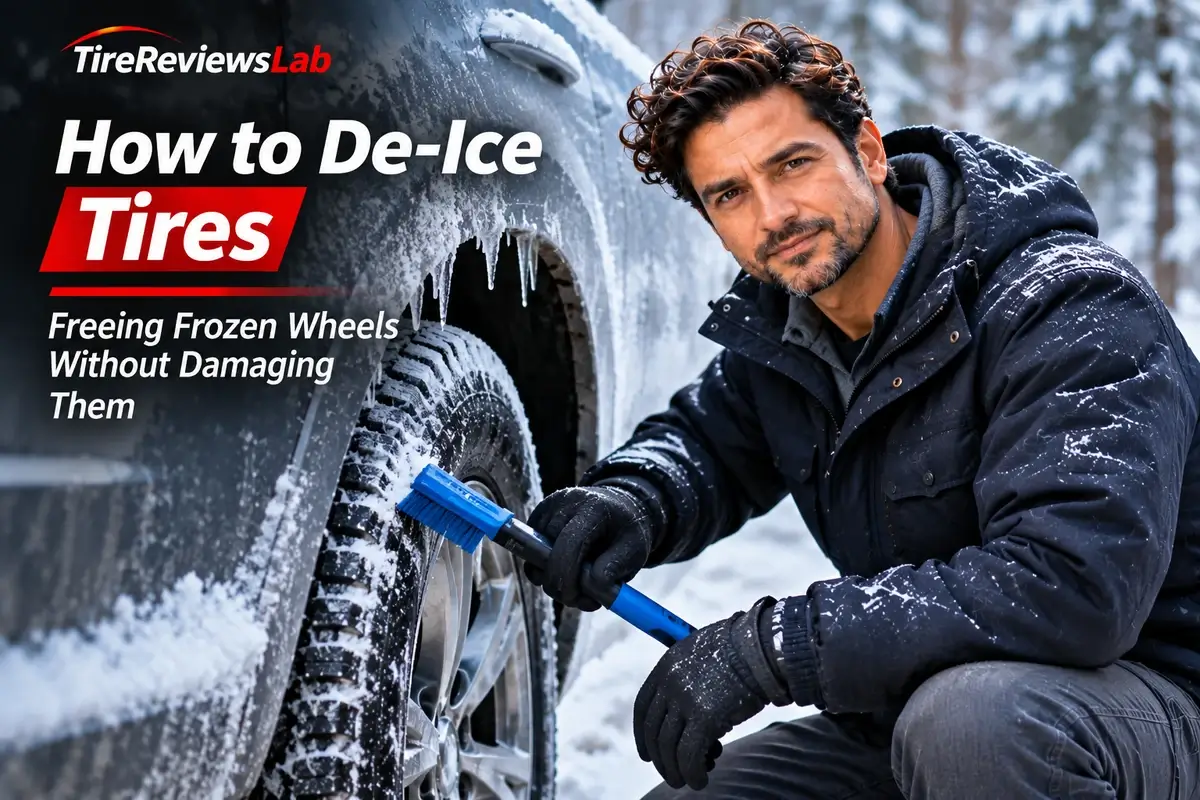
You walk out on a January morning, start the car, shift into drive and nothing happens. The engine revs, the car shudders and stays put, because the slush you parked in last night has turned into a block of ice welded to the bottom of your tires. Or the car moves, but a scraping, thumping sound from the wheel wells tells you a slab of frozen road spray is grinding against the rubber every time you turn the wheel. Here is how to de-ice tires safely without damaging the rubber, wheels or brakes.
Both problems are common, both are fixable in a few minutes and both tempt drivers into shortcuts that make things worse. Flooring the throttle, pouring a kettle of boiling water on the wheels or reaching for a heat gun can cost you a tire, a windshield or a trip to the body shop. This guide covers how ice builds up on tires and in wheel wells, the safe ways to break a frozen tire loose, the methods to avoid and the habits that keep it from happening in the first place.
How this guide was put together: This guide is general information based on manufacturer guidance, federal rules and industry practice, with sources listed at the end. Prices are typical ranges, not quotes, and policies change; checked on October 23, 2026.
Table of Contents
Why You Should De-Ice Tires Promptly
A tire works by putting rubber and tread in direct contact with the road. When ice packs into the grooves and sipes, that tread pattern stops doing its job. The grooves can no longer channel slush and water away from the contact patch, and the biting edges that grip snow are filled in. Even a good winter tire behaves more like a hockey puck when its tread is caked with ice.
Packed ice in the wheel wells causes a different set of problems. Snow and slush thrown up by the tires freezes inside the fender liners, layer by layer, until there is very little clearance left. That buildup can rub against the tire when you turn or hit a bump, which wears the sidewall and shoulder, makes steering feel heavy or notchy and can produce a vibration that feels like a balance problem. Large chunks can also break loose at speed and become hazards for the drivers behind you.
Then there is the classic frozen-to-the-ground scenario. Park on wet slush or in a puddle, let the temperature drop below freezing overnight, and the bottom of each tire can bond to the surface. Trying to drive off with brute force spins the tires, polishes the ice under them and can damage the tread or drivetrain.
When to Check and De-Ice Tires
Ice forms on and around tires whenever moisture meets temperatures below freezing. The most likely times to find it:
- After driving through slush, then parking outside overnight in falling temperatures
- After freezing rain or a wet snowfall followed by a hard freeze
- After parking in a puddle or on a slushy shoulder
- After long highway drives on wet, sub-freezing roads, when spray accumulates in the wheel wells
A quick walkaround before you drive is the simplest habit. Look at the base of each tire where it meets the ground, check the tread for packed ice and glance up into each wheel well. If you see a thick crust of ice hanging down toward the tire, clear it before you go.
Tools to De-Ice Tires
You do not need specialized equipment to de-ice tires, but a few items make the job faster and safer. Most of them belong in a winter emergency kit anyway.
| Item | What It Does | Notes |
|---|---|---|
| Plastic ice scraper | Chips packed ice from tread and wheel wells | Avoid metal scrapers and ice picks near tires |
| Stiff-bristle brush | Sweeps loosened ice and slush from grooves | A snow brush or a stiff broom works |
| Automotive deicer spray | Softens ice so it breaks free with less force | Follow label directions and dwell times |
| Sand or non-clumping kitty litter | Adds grit under the tires for traction | Cheap, light and easy to store in the trunk |
| Rock salt or ice melt | Lowers the freezing point of water around the tires | Rinse wheels and brakes afterward to limit corrosion |
| Small folding shovel | Clears snow and slush from around the tires | Essential if the car is also buried |
| Insulated, waterproof gloves | Protect hands from cold and chemicals | Wet hands lose heat fast |
| Headlamp or flashlight | Lets you see into dark wheel wells | Winter mornings are often dark |
If you are caught without supplies, household items can substitute. Table salt works like rock salt on a small scale, and a car’s floor mat, flipped rubber-side down and wedged in front of a drive wheel, can give a stuck tire something to grab.
How to De-Ice Tires Step by Step
Step 1: Make the Area Safe
Work in a spot away from traffic, with enough light to see what you are doing. If the car is in a driveway, a headlamp or work light makes a big difference on a dark morning. Set the parking brake only if it is not frozen itself, and make sure the car is in park or in gear with the engine off while you work around the wheels.
Shovel away loose snow from around each tire so you can see the ice and reach the tread. On a frozen-to-the-ground car, clear a path in front of and behind the drive wheels, since you will need room to move.
Step 2: Soften Stubborn Ice
For thick, hard ice in the tread or the wheel wells, an automotive deicer spray speeds things up. Apply an even coat to the icy areas and give it the dwell time the label specifies before you start scraping. Choose a product made for vehicles, since some household ice melts are harsh on paint, plastic trim and skin. Wear gloves and eye protection when spraying, and keep children and pets away from treated areas.
Rock salt or a salt-and-water mix also works but leaves a corrosive residue on wheels, lug nuts and brake parts. If you use it, rinse the wheels and wheel wells once temperatures allow.
Step 3: Scrape the Tread and Wheel Wells
Once the ice softens, chip it away with a plastic scraper. Work along the direction of the tread grooves rather than prying sideways into them, and keep the edge of the tool away from the sidewall. Metal tools, screwdrivers and ice picks can gouge or cut the rubber, and a sidewall cut is not repairable.
In the wheel wells, knock the ice loose from the fender liner and let it fall clear of the tire. A long-handled brush helps you reach without crawling under the car. Take care around brake lines, sensor wires and the suspension. If a brake caliper or drum appears frozen, do not hammer on it. Apply deicer and give it time to work, repeating if necessary.
Step 4: Brush Away the Remainder
Finish with a stiff brush to clear chips and slush out of the grooves and sipes. If the car can be rolled a few feet safely, move it to reach the part of the tread that was sitting on the ground and brush that section too. The goal is a tread pattern you can see clearly, with open grooves.
How to Free Tires Frozen to the Ground
When the tires themselves are stuck to the pavement, the goal is to break the bond gently rather than tear the car free.
- Clear around the tires. Shovel snow and chip any ice ridge away from the front and back of each drive wheel so the tire has a clear path.
- Add grit. Pour sand, non-clumping kitty litter or salt around the base of the drive wheels. Grit gives the tires something to bite on, and salt starts working on the bond.
- Try gentle throttle. Straighten the front wheels, leave traction control on and ease onto the accelerator. In vehicles that allow it, starting in a higher gear such as second reduces wheel spin.
- Rock the car. If it does not move, shift gently between drive and reverse, applying light throttle each way to build a little momentum. Wait for the car to settle before each shift, and be patient. Slamming between gears can damage the transmission.
- Use lukewarm water as a last step. Pour lukewarm water, never boiling, at the base of the stuck tire to loosen the bond, then move the car right away before the water refreezes into a fresh, slicker layer of ice.
Never spin a stuck tire at high speed. It polishes the ice into a slicker surface, overheats the rubber and can damage the tread, the tire or the drivetrain.
Water deserves a word of caution. Lukewarm water melts the contact point between tire and ice, but it also leaves the area wetter. In temperatures well below freezing, that water can turn into new ice in minutes. Use only as much as you need and follow it immediately with sand or litter. Never pour hot water on glass, either, since the sudden temperature change can crack a windshield or window.
Ways Not to De-Ice Tires
Some de-icing ideas circulate every winter that can damage your car or put you at risk.
- No open flames or heat guns on rubber. A torch, propane burner or heat gun can scorch, soften or blister the tire’s rubber in seconds and can weaken the sidewall. It also puts a flame near fuel lines, plastic fender liners and brake components.
- No boiling water. Water straight off the stove can crack glass, refreezes into a slick layer and offers no real advantage over lukewarm water.
- No metal pry bars against the tire. Prying ice from the tread with a crowbar or screwdriver risks cutting the rubber.
- No high-rev wheel spin. Flooring the throttle on a stuck car rarely frees it and can overheat tires, clutches and transmissions.
- No forcing frozen brakes. Hammering a frozen caliper or drum can damage brake parts. Deicer and patience are safer.
Preventing Ice Buildup on Tires
The easiest ice to remove is the ice that never formed. A few habits cut down on how often you deal with frozen tires.
Park Smart
Whenever possible, park in a garage or carport. Outdoors, choose a dry spot over a puddle or a pile of slush. If you know a hard freeze is coming, moving the car a few feet onto clear pavement can save you a frustrating morning. Insulated tire covers are another option for cars that sit outside for long periods.
Clear the Wheel Wells Before Parking
After a slushy drive, take a minute to kick or knock loose the slush packed into the wheel wells while it is still soft. It falls away easily when it is wet and becomes a solid block once it freezes overnight.
Keep Tires in Good Shape
Tread depth matters more in winter than any other season, because deep grooves and plenty of sipes are what clear slush and grip snow. Worn tires pack with ice more readily and lose traction sooner. Pressure matters too. Air pressure drops as temperatures fall, so check your tires more often in winter and inflate them to the figure on the driver’s door placard. Our winter tire pressure guide explains how much pressure changes with temperature and how to keep up with it.
Consider Winter Tires
If you live where snow and ice are routine, dedicated winter tires are the single biggest upgrade for cold-weather driving. Their softer compounds stay flexible in the cold, and their deep tread and dense siping are built to bite into snow and ice and evacuate slush. They will not stop ice from forming in a wheel well, but they give you far more grip when you need to break a car loose or stop on a frozen road.
Know When Chains Make Sense
In severe conditions, tire chains or cables add traction that even winter tires cannot match on packed ice. Rules for using them vary by state and by road, so read our guide to whether tire chains are legal before you buy a set.
When to Get Help to De-Ice Tires
Most frozen tires and wheel wells can be handled in a driveway. Call for help if ice buildup is severe on several wheels, if you lack the tools or a safe place to work, or if something feels wrong once the car is moving, such as a persistent vibration, a pull to one side or a grinding sound from the brakes. A shop with a heated bay can thaw the car completely and inspect the tires, wheels and brakes for damage, and roadside assistance can help if the car is stuck somewhere unsafe.
Related guides: How to Drive on Black Ice
Frequently Asked Questions
Lukewarm water can help break a tire free from the ground, but avoid boiling water. It refreezes quickly into a slick layer and can crack glass if it splashes on windows. Use a small amount, add sand or kitty litter, then move the car right away.
Light buildup is common, but thick ice that reaches the tire can rub the sidewall, limit steering and cause vibration. Large chunks can also fall off on the highway. Knock it loose before driving whenever you can.
Yes. Non-clumping kitty litter and sand give the tires grit to grip on ice. Spread it in front of and behind the drive wheels and ease onto the throttle.
It can. Concentrated heat can scorch or soften the rubber and weaken the sidewall, and open flames near a car add a fire risk. Use deicer spray, a plastic scraper and patience instead.
Salt melts ice effectively but leaves a corrosive residue on wheels, lug nuts and brake components. Rinse it off once temperatures allow, and favor automotive deicer near the brakes.
Park in a garage or on a dry surface rather than in slush or puddles, and clear packed slush from the tires and wheel wells before the overnight freeze. Good tread and proper pressure also help the tires shed slush while you drive.
Our Bottom Line on How to De-Ice Tires
De-icing tires is a job for patience rather than force. Soften stubborn ice with deicer, chip it away with a plastic scraper, brush the grooves clean and keep metal tools, open flames and boiling water well away from the rubber. When a car is frozen to the ground, clear around the tires, add grit, rock it gently and use lukewarm water only as a final step followed by immediate movement.
The longer-term fix is prevention. Park on dry ground, clear slush from the wheel wells before it freezes, keep pressure and tread depth in check and consider winter tires if ice is a regular part of your commute. Those habits mean fewer mornings spent on your knees beside a frozen wheel and more confidence once you are on the road.
Sources
Specs, warranty terms and prices were checked on October 23, 2026. Prices change often.
- NHTSA: Tires (tire safety, pressure, tread and DOT codes)
- USTMA: Tire care (industry tire care and maintenance guidance)
 Summarize this article with:














Leave a comment