


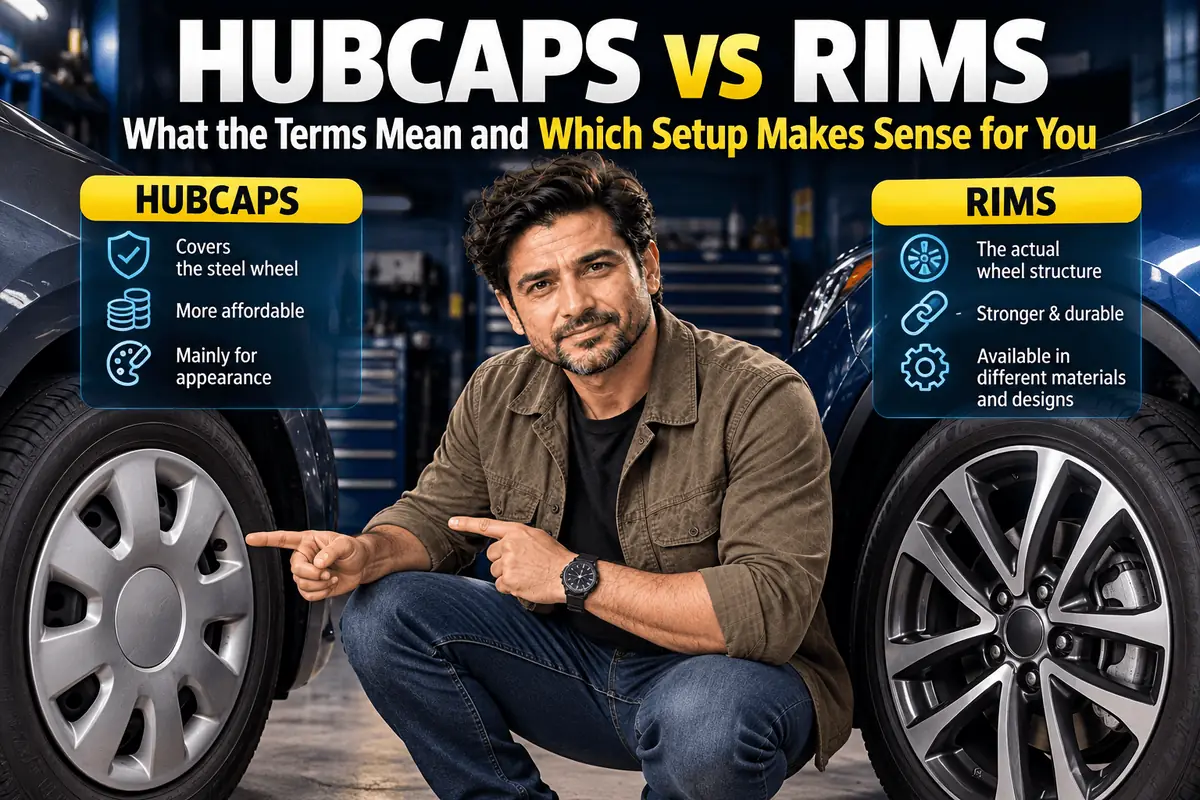
A car shopper compares two trims of the same sedan. One has plain-looking wheels with plastic covers, the other has shiny alloys, and the salesperson calls the difference “hubcaps versus rims.” It sounds like a choice between two parts that do the same job. In reality it is a choice between two different kinds of wheel, and one of them happens to wear a decorative cover.
Sorting out the vocabulary is the first step, because hubcaps and rims are not alternatives in the way the phrase suggests. Every car has wheels. Some wheels need a cover to look finished, and others are designed to be seen. This guide explains the terms, compares steel wheels with covers against alloy wheels, outlines what each costs and helps you decide which suits your driving and budget.
How this guide was put together: Prices here are typical ranges for common vehicles, not quotes; they vary by vehicle and seller. Checked on October 22, 2026.
Table of Contents
The Terms, Defined
Tire shops, parts stores and drivers use these words loosely, which is where most of the confusion starts.
Wheel. The complete metal assembly that bolts to the car’s hub and holds the tire. It includes the center section with the lug holes, the spokes or face and the outer barrel.
Rim. Strictly, the outer edge of the wheel, the part where the tire’s beads seat. In everyday speech, “rims” usually means the whole wheel, especially an alloy or aftermarket one. When someone says “new rims,” they almost always mean new wheels.
Hubcap. Originally a small cap that covered the end of the axle hub and the lug nuts at the center of the wheel. Today the word is commonly used for any wheel cover.
Wheel cover. A full-face cover, usually plastic, that snaps over the entire outer face of a steel wheel. Most modern “hubcaps” are technically wheel covers. They are often styled to look like alloy wheels.
Center cap. A small cap that fits into the center bore of a wheel, usually an alloy, to hide the hub and often carry the automaker’s logo. It covers only the middle, leaving the spokes and lug area visible on many designs.
| Term | What It Covers | Where You Usually Find It |
|---|---|---|
| Wheel | The whole metal assembly that holds the tire | Every vehicle |
| Rim | Technically the outer lip; casually, the whole wheel | Common slang for alloy and aftermarket wheels |
| Hubcap | Originally the hub center; now often any cover | Older cars, everyday speech |
| Wheel cover | The full outer face of a steel wheel | Base trims, fleet and budget vehicles |
| Center cap | Only the center bore and hub | Most alloy wheels |
So the real comparison behind “hubcaps vs rims” is this: a steel wheel dressed with a wheel cover, or an alloy wheel that needs no cover.
Steel Wheels With Covers
Steel wheels are stamped and welded from sheet steel. They are simple, inexpensive to make and very tough. Their weakness is appearance: a bare steel wheel looks utilitarian, with exposed welds and lug nuts. That is why automakers often fit a full wheel cover on base trims, giving the car a finished look at low cost.
Strengths
- Low replacement cost. A steel wheel costs considerably less to replace than a comparable alloy.
- Toughness. Steel tends to bend rather than crack on a hard impact, and a bent steel wheel can sometimes be straightened.
- Cheap cosmetic fixes. A scuffed or broken wheel cover is a small expense to replace, and you can change the look of the car by swapping covers.
- Winter friendly. Steel wheels hold up well to salt, slush and potholes, which is why many drivers use them for a dedicated set of winter tires.
Weaknesses
- Weight. Steel wheels are heavier than comparable alloys. More unsprung weight can dull handling and ride response slightly and does nothing for efficiency.
- Covers can come off. Snap-on wheel covers rely on a retaining ring or clips. A hard pothole, a curb strike or a worn retaining ring can pop one off, which is why lost covers are a common sight along highways.
- Limited style. Even good covers look like covers up close, and they can rattle, crack or discolor with age.
- Fewer size options. Steel wheels are mostly offered in modest diameters, so drivers wanting larger wheels usually end up with alloys.
- Corrosion. Steel can rust once the paint or coating is chipped, though a cover hides much of that.
Alloy Wheels
Alloy wheels are usually made from aluminum alloy, cast or forged into shape. They are now standard on most mid-level and upper trims, and they rarely need anything more than a center cap.
Strengths
- Lower weight. A typical alloy wheel weighs less than a comparable steel wheel. Less unsprung weight helps the suspension keep the tire in contact with the road, which can sharpen steering response and ride quality.
- Heat dissipation. Aluminum sheds heat well, and open spoke designs let more air reach the brakes.
- Design freedom. Alloys come in a huge range of designs, finishes and diameters, so they are the default for anyone personalizing a car.
- No covers to lose. The wheel itself is the finished surface.
Weaknesses
- Higher cost. Alloys cost more to buy and to replace, and OEM alloys for newer vehicles can be expensive.
- Damage behavior. A severe impact can crack an alloy wheel instead of bending it. Some damage can be repaired by a wheel specialist, but a cracked wheel often needs replacing.
- Curb rash. Visible faces and finishes scuff easily against curbs, and refinishing costs money.
- Larger is not always better. Big-diameter alloys usually mean lower-profile tires, which can make the ride firmer, raise tire costs and leave the wheel more exposed to pothole damage.
For a closer look at how the two materials differ in strength, weight and long-term ownership, see our steel vs alloy wheels comparison.
What Each Option Costs
Prices vary with vehicle, size, brand and where you buy, so use these as broad estimates.
| Item | Typical Price Range |
|---|---|
| Universal aftermarket wheel covers | Roughly $45 to $100 for a set of four |
| Vehicle-specific replica wheel cover | Around $35 to $45 each |
| Genuine OEM wheel cover | Often $70 to $90 each, more for luxury brands |
| OEM center cap | From around $13 each |
| Steel wheel | Roughly $50 to $200 each |
| Alloy wheel | Roughly $100 to $500 each, and much more for premium or large sizes |
The gap is clearest when something gets damaged. Losing a wheel cover on a steel wheel is a nuisance that costs tens of dollars. Cracking an alloy wheel can cost hundreds. Switching from steel wheels to alloys also adds mounting and balancing to the bill, and you may need different lug nuts and a TPMS sensor transfer. For a fuller breakdown of wheel pricing by size and type, our guide to rim prices covers the numbers in more detail.
Installing and Caring for Each
Wheel Covers
Fitting a wheel cover is a simple job. Make sure you have the right diameter for the wheel, line up the notch for the valve stem, then press the cover on evenly around its edge until the retaining ring snaps into place. Some covers fasten with lug-nut-mounted clips or bolts, which hold more securely. A cover that sits loose or feels flimsy is likely to come off on the first rough road, so check that the retaining ring is in good shape.
Clean covers with mild soap and water. Harsh chemicals can dull or crack plastic, and many covers turn brittle over the years, especially in cold climates.
Alloy Wheels
Changing wheels means removing tires from the old wheels, mounting them on the new ones and balancing the assemblies. That is a tire shop job. The shop should also torque the lug nuts to the vehicle’s specification, since uneven clamping can cause problems, and move or replace the TPMS sensors. If the new wheels change diameter, width or offset, confirm fitment first so the tires clear the suspension and bodywork.
To keep alloys looking good, wash them regularly with a cleaner that is safe for the wheel’s finish to stop brake dust from etching the surface. Dry them with a soft cloth. Minor curb rash can sometimes be touched up, while deeper damage is a job for a wheel repair shop. Keeping tires at the correct pressure helps protect the wheel from pothole impacts.
Which Setup Is Right for You?
Choose Steel Wheels With Covers If
- Your main priority is low running cost.
- You drive on rough, pothole-ridden or salted roads and want a wheel that is cheap to replace.
- You want a separate set of wheels for winter tires.
- Appearance matters less to you than durability and price.
Choose Alloy Wheels If
- You want a cleaner, more upscale look without covers.
- You value sharper steering response and lower unsprung weight.
- You want a larger diameter or a specific design and finish.
- You are comfortable paying more to buy and repair the wheels.
Many drivers end up with both: alloys for most of the year and an inexpensive set of steel wheels carrying winter tires.
Frequently Asked Questions
No. A rim, in everyday use, means the wheel itself, the metal part that holds the tire and bolts to the car. A hubcap or wheel cover is a decorative piece that fits over a wheel, usually a steel one, to improve its appearance.
A traditional hubcap covered only the center of the wheel. A wheel cover covers the entire face of a steel wheel. Most of what people call hubcaps today are actually full wheel covers.
Not much. They hide the steel wheel and lug nuts from view and keep some dirt off the face, but they offer little real protection against curb strikes or potholes. Their main job is cosmetic.
Generally no. Wheel covers are made to snap onto steel wheels, and alloy wheels are styled to be seen. Alloys use center caps instead, which cover only the middle of the wheel.
Most snap-on wheel covers rely on a metal retaining ring or plastic clips. A hard pothole, a curb hit, an incorrectly sized cover or a worn retaining ring can let a cover work loose. Covers that bolt on under the lug nuts stay put more reliably.
For many drivers, yes, especially if appearance and handling matter. They weigh less and look better, but they cost more to buy and repair. If you mainly want low running costs or a winter wheel, steel wheels with covers are hard to beat.
Choosing Between Covers and Alloys
“Hubcaps vs rims” really asks whether you want a steel wheel with a cosmetic cover or an alloy wheel that stands on its own. Steel wheels with covers win on cost and toughness, and they make an ideal base for a winter tire set. Alloys win on weight, appearance and design choice, at a higher price to buy and to fix.
If your roads are rough and your budget is tight, steel with good covers is a sensible, unglamorous choice. If you want a better look and slightly sharper responses, and you are prepared to pay for them, alloys are the way to go. Either way, match the wheel size to your vehicle’s specifications and your tire budget before you buy.
Sources
Specs, warranty terms and prices were checked on October 22, 2026. Prices change often.
- NHTSA: Tires (wheel and tire safety information)
 Summarize this article with:
















Leave a comment