


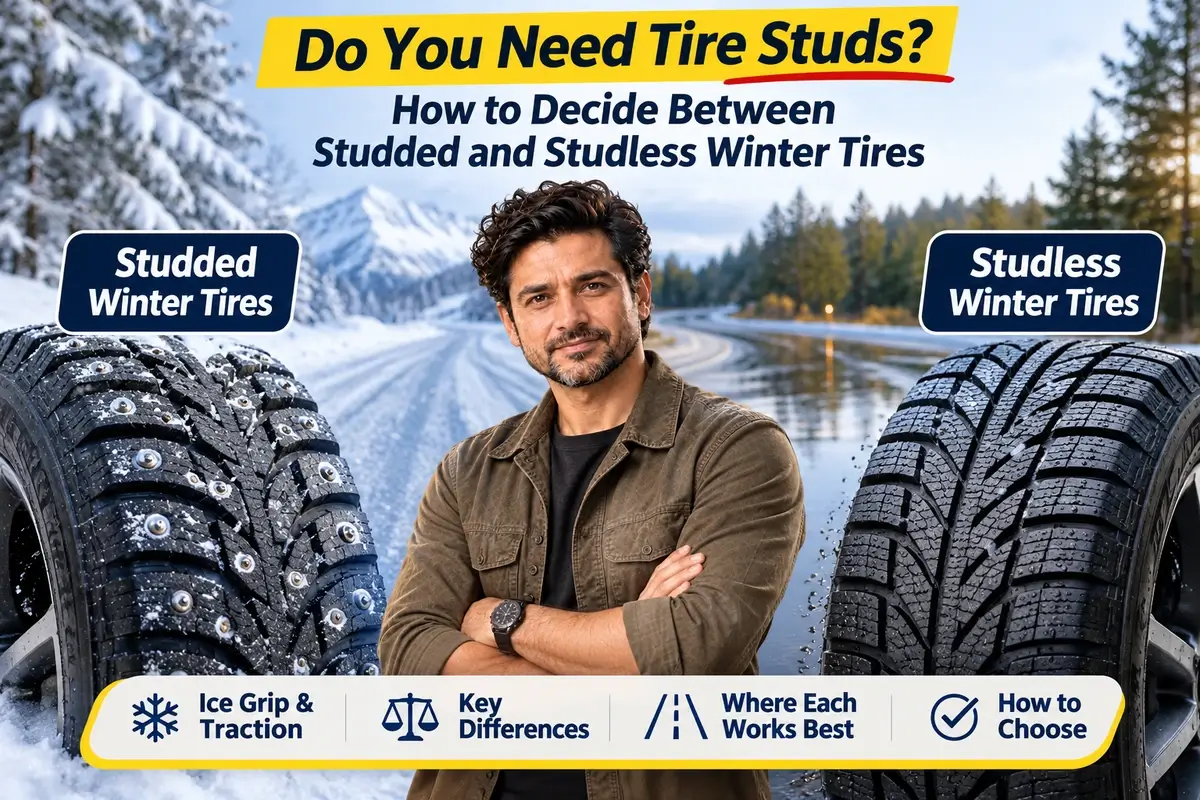
Every fall, drivers in cold states face the same question at the tire counter: pay for studs, or trust a studless winter tire? The answer is not about how much snow you get. It comes down to how much glare ice you drive on, what kind of roads you use, and whether your state lets you run studs at all. Here is how to decide whether you need tire studs.
Studs are a specialized tool. On hard ice they deliver grip nothing else matches, but on clear pavement they are noisy, wear the road, and can actually reduce traction. This guide explains how studs work, how they compare with modern studless winter tires, where they are legal, and how to tell which camp you belong in.
How this guide was put together: This guide is general information based on manufacturer guidance, federal rules and industry practice, with sources listed at the end. Prices are typical ranges, not quotes, and policies change; checked on October 23, 2026.
Table of Contents
How Tire Studs Work
A tire stud is a small metal insert pressed into a hole molded into the tread of a studdable winter tire. Each one has a hard tungsten carbide pin set inside a cylindrical metal housing that looks a bit like a short, stubby nail. A typical studded tire carries roughly 80 to 100 of them.
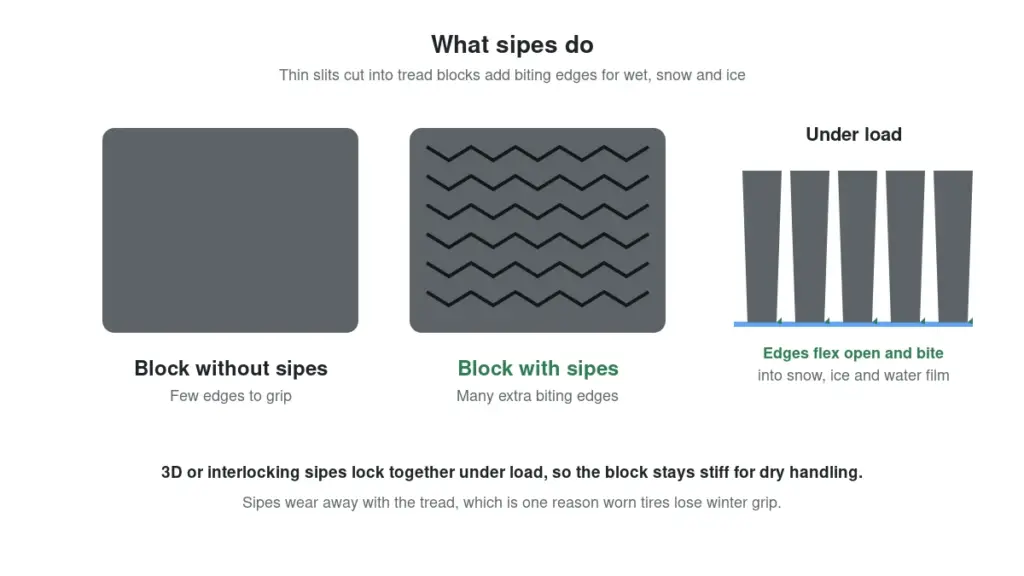
The carbide tip protrudes slightly from the tread surface. On ice, those tips dig in like tiny ice picks, giving the tire mechanical bite where rubber alone would slide. That is the key distinction: a studless winter tire grips ice through soft rubber, sipes and biting edges, while a studded tire adds a hard point that physically penetrates the surface.
Studs are not the same thing as winter tires. They go into a winter tire, and only into one built to accept them. Studdable tires have stud holes molded in at the factory, and they can be run with or without studs. Pushing studs into a tire that was never built for them is a bad idea.
Studded vs Studless Winter Tires
Modern studless winter tires have closed much of the gap that once made studs the only serious choice for northern drivers. Their soft, cold-flexible compounds and dense siping handle snow, slush and most icy conditions very well. Studs still hold an edge in one specific situation: hard, polished ice, especially on hills, curves and stop signs where cars have buffed the surface smooth.
The trade-offs show up the rest of the time. When the road is dry or simply wet, studs reduce the rubber contact with the pavement, so braking and cornering grip can suffer compared with a studless tire. They also add a constant metallic hum.
| Factor | Studded Winter Tires | Studless Winter Tires |
|---|---|---|
| Glare and polished ice | Best available grip | Good, but not equal to studs |
| Packed snow | Excellent | Excellent |
| Deep snow and slush | Comparable, since the tread does the work | Comparable |
| Dry and wet pavement | Reduced grip, more noise | Better grip, quieter |
| Road wear | Significant | Minimal |
| Legal use | Restricted by season or banned in some states | Legal everywhere year-round |
| Speed and break-in | Needs a careful break-in, not ideal for sustained high speed | No special break-in |
Notice that studs do not make a tire better in deep snow. Snow traction comes from the tread pattern and compound, and both kinds of winter tire share those. If your winters are mostly snowfall followed by plowing, a quality studless tire covers you. Our comparison of winter tires vs all-season tires explains why any dedicated winter tire is a big step up from all-seasons in those conditions.
Who Actually Benefits From Studs
Studs earn their keep when ice is a regular part of the commute, not an occasional surprise. Drivers who tend to benefit most share some of these traits:
- Frequent glare ice. Freezing rain, refreezing meltwater and polished intersections are routine where you live.
- Rural or lightly maintained roads. Your routes are plowed late, rarely salted or not treated at all.
- Hills and grades. Your driveway, street or regular route climbs or descends, where losing grip carries real consequences.
- Long stretches of winter. Ice lingers for weeks or months rather than melting off in a day.
- Early morning or night driving. You are on the road when black ice is most likely and traffic has not yet roughened the surface.
Drivers on the other end of that list should usually skip studs. If you live in a city or suburb where roads are cleared and treated quickly, spend most winter miles on bare highway pavement, or see ice only a few days a year, studs give you noise and road wear in exchange for an advantage you will rarely use.
If your winter roads are usually bare and wet, a studless winter tire will stop and steer better than a studded one most of the time.
State Laws on Studded Tires
Before buying studs, check whether you can use them. Because studs grind pavement, states regulate them closely, and the rules vary widely. Some ban them for most passenger vehicles, many allow them only within a set winter window, and a few impose no dates at all.
| State | Rule for Passenger Vehicles |
|---|---|
| Minnesota | Generally prohibited, with narrow exceptions such as some out-of-state visitors |
| Wisconsin | Generally prohibited outside limited exceptions |
| Illinois | Generally prohibited on public roads |
| Florida | Metal studs prohibited |
| Washington | Allowed November 1 through March 31 |
| Oregon | Allowed November 1 through March 31 |
| California | Allowed November 1 through April 30 |
| New York | Allowed October 16 through April 1 |
| Pennsylvania | Allowed November 1 through April 15 |
| Alaska | Season depends on latitude, with a longer window north of 60 degrees |
| Wyoming | Allowed year-round |
| Colorado | Allowed, with no fixed calendar window |
These examples show how much the picture shifts across the border of a single state. Several other states, including Hawaii, Mississippi and Louisiana, prohibit metal studs for normal use or allow them only in emergencies, and Maryland limits them to vehicles registered in a handful of western counties. Some states also regulate stud protrusion and vehicle weight.
Enforcement is real. Washington, for example, fines drivers $137 for running studs after the March 31 deadline. Stud laws also change, and some states have debated tighter limits, so confirm the current rules with your state transportation department before you buy, and check the rules for any state you plan to drive through.
The Real Costs of Running Studs
Studs carry costs that go beyond the price of the tires.
Road Damage
Every stud chips at the pavement surface, carving ruts in the wheel paths over time. Those ruts collect water, which raises hydroplaning risk for everyone. The Washington State Department of Transportation estimates studded tires cause $20 million to $29 million in damage to state-owned roads each winter, before counting city and county streets. That burden is the main reason states restrict studs.
Noise and Comfort
Studs rattle and hum on bare pavement. On a long highway commute that sound becomes part of every winter drive.
Seasonal Changeovers
Because most states set legal seasons, studded tires usually live on a second set of wheels that you swap twice a year. Mounting them on dedicated wheels makes changeovers quicker and cheaper and spares your tire beads from repeated mounting. When spring arrives, stick to the deadline; our article on whether you can drive studded tires in the summer covers why running them into warm weather is a poor idea even where it is legal.
Wear and Upkeep
Studs wear as they hit pavement, and a stud that has worn flush with the tread no longer bites. Driving on dry roads accelerates that wear, which is another reason studs belong only on roads where ice is likely.
Choosing and Living With Studded Tires
If you decide studs make sense, a few habits help them work properly and last.
- Start with a studdable winter tire from a reputable maker, and have the studs installed by a shop with the right tooling. Studs belong in fresh tread.
- Break them in gently. Tire Rack’s guidance calls for keeping speed under about 31 mph for the first 62 miles and avoiding hard acceleration, braking and cornering, so the rubber can settle and lock each stud in place. Some manufacturers also recommend staying under roughly 62 mph for the next 248 miles.
- Avoid sustained high-speed driving. It wears studs faster and raises the chance of studs working loose and being thrown from the tread.
- Run studs on all four wheels. Studding only one axle creates a grip imbalance that can make the car spin or plow on ice.
- Inspect the tread each season for missing studs and for studs worn down flush.
- Remove them on time, and store them clean and out of the sun until next winter.
Alternatives to Studs
Studs are one of several ways to deal with winter roads.
- Studless winter tires are the best all-around choice for most snowbelt drivers, with strong snow and ice grip and none of the legal limits.
- Tire chains give maximum traction for short stints in deep snow or steep mountain passes, but they are slow to install and only suited to low speeds. Rules on when chains are required or allowed vary, and our guide on whether tire chains are legal covers the details.
- All-wheel drive helps you accelerate on slippery roads but does nothing for braking or cornering grip, so it is no substitute for winter tires.
- Traction and stability control reduce wheelspin and slides but can only work with the grip the tires provide.
Related guides: Winter Driving Guide
Frequently Asked Questions
On hard, polished ice, studs offer the most grip available. In snow and slush the two perform similarly, and on dry or wet pavement a studless winter tire usually brakes and corners better and runs quieter. Studs are the better tool only when glare ice is common on your routes.
No. Studs go only into studdable tires, which have stud holes molded into the tread at the factory. Forcing studs into a tire without those holes will not hold them securely and can damage the tread.
It depends on where you live. States such as Minnesota, Wisconsin and Illinois generally prohibit them for passenger cars, many states allow them only during a set winter window, and a few, such as Wyoming, permit them year-round. Check your state transportation department for current rules.
Not much. Deep snow traction comes from the tread pattern and rubber compound, which studded and studless winter tires share. Studs add their advantage on ice and hard-packed snow, not in powder or slush.
No. Mixing studded and unstudded tires across axles creates uneven grip that can cause the rear to slide or the front to push wide on ice. Run studded tires on all four wheels.
Studs wear grooves into pavement, and that damage costs states millions of dollars each year to repair. Ruts worn by studs also collect water, which can increase hydroplaning risk for all drivers.
Making the Stud Decision
Studs are worth it for a specific driver: someone who regularly faces glare ice on rural roads, hills or untreated routes, lives where they are legal, and is willing to accept noise, seasonal changeovers and a careful break-in. For that driver, the bite of carbide on ice is a meaningful safety margin.
For most everyone else in the snowbelt, a modern studless winter tire is the smarter buy. It handles snow and most ice impressively, grips better on the bare pavement that fills the majority of winter miles, and never runs afoul of a calendar deadline. Start with your roads and your state law, and the right choice usually becomes obvious.
Sources
Specs, warranty terms and prices were checked on October 23, 2026. Prices change often.
- WSDOT: Studded tire deadline (example state studded tire rules)
- NHTSA: Tires (tire safety, pressure, tread and DOT codes)
 Summarize this article with:














Leave a comment