


You have just picked out a new set of tires, the bill is already higher than you hoped, and the person behind the counter asks one more question: do you want them siped? It costs extra per tire, and the pitch sounds convincing. More grip on ice, shorter stops on snow, maybe even a tire that runs cooler. It is hard to say no to anything sold as a safety upgrade.
The catch is that most tires already leave the factory covered in sipes, and cutting more into the tread changes how the tire wears, handles and is warrantied. Whether aftermarket siping makes sense depends on the tire you are buying, the climate you drive in and the roads you use every day. Here is what siping does, where the evidence stands, and how to decide if it belongs on your next set.
Table of Contents
What a Sipe Is and Why Tires Have Them
A sipe is a thin slit cut or molded into a tread block. Unlike the wide grooves that channel water out from under the tire, sipes are hairline cuts that open slightly as the tread flexes through the contact patch and close again as it rolls away.
The name traces back to John Sipe, who worked on slippery slaughterhouse floors in the 1920s and found that slicing thin cuts into the rubber soles of his boots helped him keep his footing. The same idea moved to tires, and today nearly every passenger tire on sale carries some form of siping.
Sipes do two jobs:
- They add biting edges. Every slit creates two more edges that can grip the micro-texture of pavement, packed snow or ice. Siping does not add rubber to the contact patch. It adds edges, which matter most on slick, hard surfaces.
- They wipe away moisture. As a sipe opens and closes, it pulls in a thin film of water and pushes it aside, letting the rubber make better contact with the surface underneath. On ice, where a microscopic layer of water does most of the damage to traction, that squeegee action is valuable.
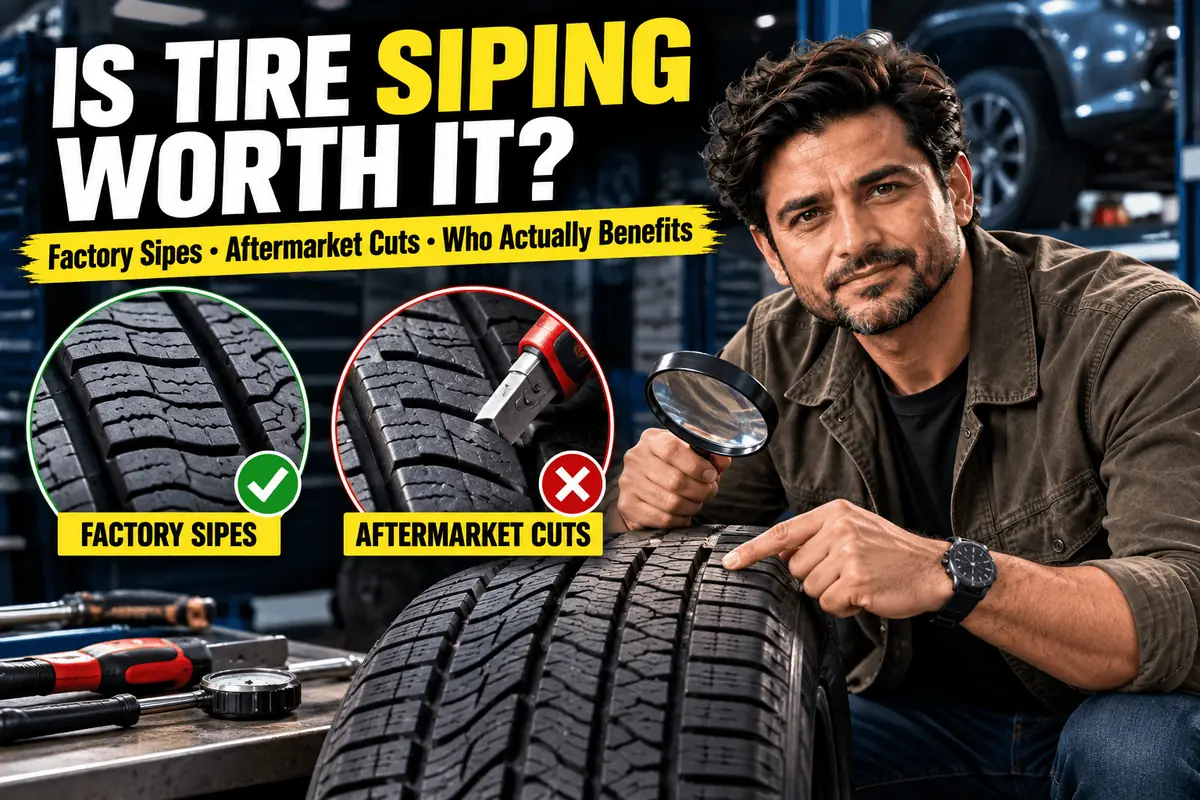
Factory Sipes vs Aftermarket Siping
The term “siping” covers two very different things, and the difference shapes everything that follows.
Factory Sipes
Factory sipes are molded into the tread when the tire is built. Tire engineers decide exactly where they go, how deep they run and what shape they take. Many modern designs use three-dimensional sipes that zigzag or interlock inside the tread block, so the block can flex for grip but lock up under cornering and braking loads to stay stable. That balance between traction, handling, noise and wear is a big part of what you pay for in a well-engineered tire, and on many tires the sipes run deep enough to keep working as the tread wears down.
Aftermarket Siping
Aftermarket siping is a service performed after the tire is made. The tire is mounted on a machine that spins it while rotating blades slice thin cuts across the tread, usually straight lines running roughly perpendicular to the direction of travel. The goal is to add more biting edges than the factory provided.
Those cuts are simple compared with engineered 3D sipes, and they may not reach the full depth of the tread. Once the tread wears below the depth of the cuts, the added edges disappear.
| Feature | Factory Sipes | Aftermarket Siping |
|---|---|---|
| How it is made | Molded in during manufacturing | Cut by rotating blades after manufacturing |
| Shape | Often 3D, wavy or interlocking | Usually simple straight cuts |
| Depth | Set by the tire engineer, often deep | Depends on the machine and shop, may be shallow |
| Cost | Included in the tire price | Extra charge per tire |
| Effect on warranty | No effect | May affect coverage, so ask first |
| Main focus | Balanced dry, wet and winter grip | More edges for ice and packed snow |
What Siping Claims to Do
Shops and siping equipment makers generally promote three benefits.
More Grip on Ice and Packed Snow
This is the core argument and the one with the most logic behind it. More edges and more squeegee action can help a tire grip on glare ice and hard-packed snow, the surfaces where an all-season tire with few sipes struggles most. Drivers who sipe chunky truck tires with large, solid tread blocks often report that the tires feel more secure on icy streets.
Better Wet-Road Contact
The same wiping action that helps on ice can help on wet pavement, at least on a tire with relatively few factory sipes. On a modern tire that already has wide grooves and plenty of sipes, any added benefit in the rain is likely small.
Cooler Running
Some siping advocates argue that the cuts let the tread release heat more easily. This claim is the hardest to pin down. Sliced tread blocks also flex more, and flexing rubber generates heat, so the net effect depends on the tire, the load and the driving.
Where the Evidence Stands
Evidence on aftermarket siping is mixed. Much of what supports it comes from siping equipment makers, shops that sell the service and owner anecdotes, while major tire manufacturers generally do not recommend modifying their tread. Controlled, independent comparisons of siped and unsiped versions of the same tire are scarce. The most defensible conclusion is that siping can add some ice and snow grip on tires that lack factory sipes, and that the benefit shrinks or vanishes on tires that are already heavily siped.
The Downsides to Weigh
Cutting into a finished tire has costs, and some of them last for the life of the tire.
Faster Tread Wear on Some Tires
Slicing a tread block into narrower ribbons of rubber makes it more flexible. Under acceleration, braking and cornering those ribbons squirm against the road, and on warm, dry pavement that movement can scrub away tread faster. How much faster varies with the tire and how it is driven, but a tire that wears out sooner costs you money no matter how little you paid for the siping.
Softer Handling Feel
Stable tread blocks give a tire its sense of precision. Once the blocks are cut, steering response can feel vaguer and the tire may feel less planted in quick lane changes or highway corners. On a touring tire that may barely register. On a performance tire, it undoes much of what you paid for.
Possible Warranty Problems
Siping is a modification to the tire, and manufacturer warranties typically exclude damage or wear caused by alterations. Whether siping affects your specific coverage depends on the brand and tire line. Ask the tire manufacturer before you agree to the service, not after a claim. If a shop offers its own warranty to cover siped tires, read exactly what it pays and for how long.
Other Drawbacks
- Limited availability. Fewer shops offer siping than in the past, so you may not find it nearby.
- Durability on rough surfaces. Thin slivers of rubber can tear on gravel or rocky roads, and stones can lodge in the cuts.
- Irregular wear and noise. Cut blocks can wear unevenly over time, and irregular wear tends to bring more road noise.
Before paying for siping, look closely at the tread. If the blocks are already covered in fine slits, you are adding cuts to a tire whose engineers already chose how much siping it needed.
Modern Tires Already Do Much of This
The case for aftermarket siping was stronger when many tires came with relatively few sipes. Today the tires built for slippery weather are heavily siped from the factory.
Dedicated winter tires combine dense siping with rubber compounds that stay pliable in freezing temperatures, along with tread patterns that pack and release snow. Siping an all-season tire adds edges, but it does not change the compound, so it cannot turn an all-season into a winter tire. Models such as the Bridgestone Blizzak and Nokian Hakkapeliitta show how far purpose-built winter engineering goes.
All-weather tires sit between all-seasons and winter tires. They carry the Three-Peak Mountain Snowflake symbol, meaning they meet a severe snow traction standard, yet they can be driven all year. Tires such as the Michelin CrossClimate2 and Bridgestone WeatherPeak are heavily siped from the factory, which is a big reason they handle snow better than typical all-seasons.
If you are shopping for new tires because winter traction worries you, putting the siping money toward a better tire usually delivers more benefit than cutting a cheaper one.
Who Might Benefit and Who Should Skip It
Drivers Who Might See a Benefit
- Owners of older all-season tires in icy climates. If your current tires have few sipes and you face regular ice and hard-packed snow, siping may add some grip, though replacing tires that are near the end of their life is the safer move.
- Truck owners with blocky tires. Mud-terrain and some aggressive all-terrain tires use large, solid lugs with little factory siping. Those tires can feel slippery on ice, and they are the classic candidate for aftermarket siping, provided you accept the possible wear and warranty trade-offs.
- Drivers in long, icy winters who cannot run a winter set. Siping is a compromise here, but for a driver who will not switch tires seasonally, it may help on the worst days.
Drivers Who Should Not Bother
- Performance and summer tire owners. These tires rely on stiff, stable tread blocks for steering precision. Cutting them works against that design, and summer tires are not meant for ice in any case.
- Drivers in warm climates. If snow and ice are rare, the main benefit never arrives, while extra tread flex on hot pavement can speed up wear. Factory sipes and grooves already handle rain.
- High-mileage highway drivers. Long stretches at highway speed reward stable tread and long tread life, not extra edges.
- Anyone with a heavily siped tire. Winter and all-weather tires already have the edges siping is supposed to add.
| Your Situation | Is Siping Worth Considering? | Why |
|---|---|---|
| Hot or dry climate | No | Little ice benefit, possible faster wear |
| Mostly highway driving | No | Stability and tread life matter more |
| Performance or summer tires | No | Cuts undermine handling precision |
| Gravel or rocky roads | No | Thin rubber slivers can tear |
| Icy winters, older lightly siped all-seasons | Maybe | Added edges can help on ice |
| Truck with blocky mud-terrain tires | Maybe | Solid lugs gain the most from extra edges |
Questions to Ask Before You Say Yes
- Does the tire already have dense factory siping?
- Has the tire manufacturer told you how siping affects the warranty?
- If coverage is affected, does the shop offer its own protection in writing?
- How deep will the cuts go compared with the tire’s tread depth?
- Would a winter or all-weather tire solve the problem better for similar money?
Frequently Asked Questions
It can. Siping alters the tread, and manufacturer warranties typically exclude problems caused by modifications. Policies vary by brand and tire line, so check with the tire manufacturer before having the work done, and get any shop-provided coverage in writing.
Used tires can be siped, and some drivers do it to add winter grip to an older set. It makes little sense on a tire that is close to the wear bars, since the added edges will not last long and the tire will need replacing soon anyway. Older rubber also hardens with age, which siping does not reverse.
Not usually at first. Over time, cut tread blocks can wear unevenly, and irregular wear patterns tend to increase road noise as the miles add up.
Only as long as the cuts remain. If the blade does not reach the full tread depth, the added sipes wear away once the tread drops below them, and the tire behaves like an unsiped tire from that point on.
No. Siping adds edges but leaves the rubber compound unchanged. Winter tires use compounds that stay soft in the cold along with dense factory siping and snow-focused tread patterns, so they outperform a siped all-season on snow and ice.
Generally not. Rain traction depends mainly on the tire’s grooves, compound and remaining tread depth, and modern tires already carry factory sipes. Replacing worn tires or choosing a tire with strong wet performance is a better use of the money.
It can make some tires wear faster on warm, dry pavement, soften steering response, and affect your warranty, since manufacturers typically exclude wear caused by alterations. It also costs extra per tire, and the added edges disappear once the tread wears below the cuts.
The Verdict on Tire Siping
For most drivers, aftermarket siping is an add-on worth declining. Modern all-season, all-weather and winter tires arrive with engineered sipes that balance grip, stability and wear, and cutting more into that tread trades tread life, handling precision and possibly warranty coverage for an ice benefit that is uncertain on a tire that is already well siped.
The exceptions are narrow but real. A truck on solid-lug mud-terrain tires, or an older, lightly siped all-season facing a long, icy winter, can gain some grip from added edges. If you fit one of those cases, confirm the warranty position with the manufacturer first. Everyone else will get more winter safety by putting that money toward a tire built for the conditions, and for help choosing one, our winter tire and all-weather tire guides are a good next stop.
 Summarize this article with:












Leave a comment