


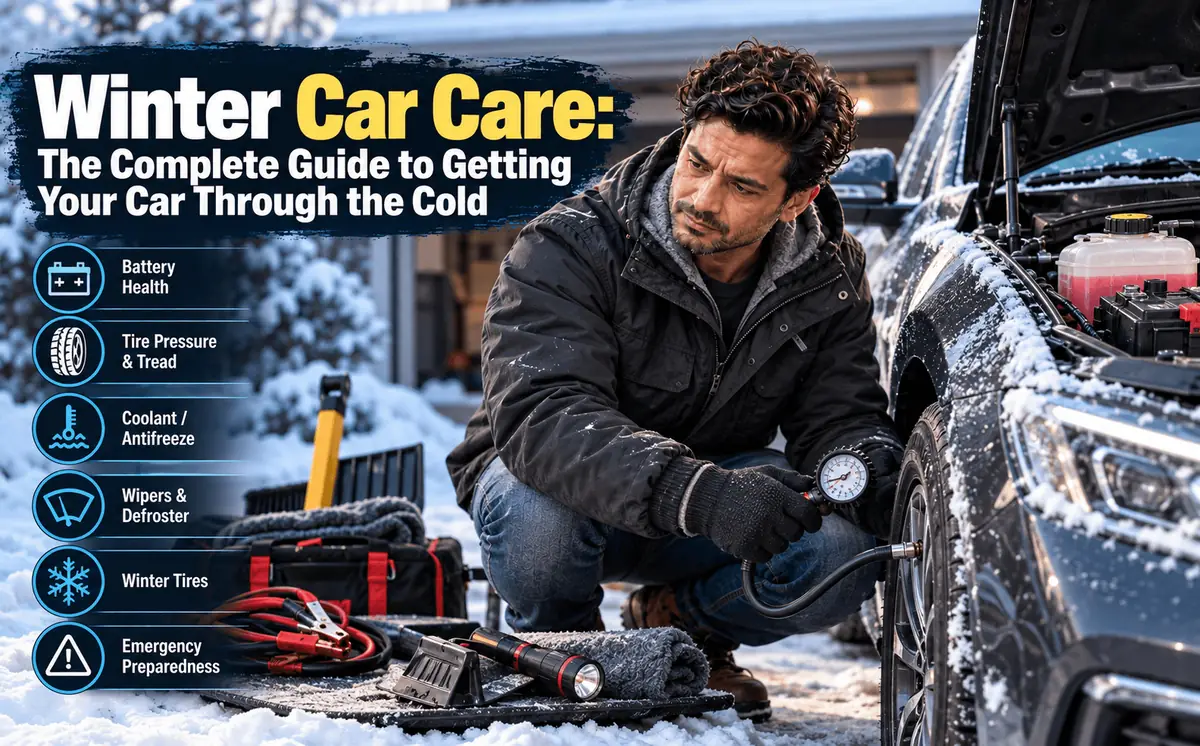
A car that ran flawlessly all summer can turn unreliable almost overnight once temperatures fall below freezing. The engine cranks slowly, then just clicks. The washer fluid will not spray. A tire that was fine yesterday is low this morning, and the door is frozen shut.
None of that is bad luck. Cold changes how almost every system in a car behaves. Battery chemistry slows down, cutting the power available to start the engine just when a cold engine needs more of it. Engine oil thickens. Tire pressure drops about 1 PSI for every 10°F decrease in temperature, reducing grip when roads are at their slipperiest. Road salt starts attacking metal from the moment the first storm is treated.
How this guide was put together: This guide is general information based on common manufacturer and industry guidance; your owner’s manual is the controlling source. Prices are typical ranges, not quotes. Checked on October 22, 2026.
The upside is that winter breakdowns are among the most preventable. This guide covers what to check before the first freeze, how to keep the car healthy through the season, and how to drive and prepare for the days when conditions turn dangerous. A printable checklist is near the end.
Table of Contents
Start With the Battery
The battery is the most common reason cars fail to start in winter, and it deserves to be first on your list. Cold slows the chemical reactions inside it, sharply reducing its output, and in freezing conditions a battery can lose a large share of its starting power. At the same time, demand rises: a cold engine with thick oil is harder to turn over, and you are running the heater, defroster, and heated seats.
Check Its Age
Most car batteries last about three to five years, and winter tends to finish off the ones near the end. Many batteries carry a date code on the top or side. A common format uses a letter for the month (A for January, B for February, and so on) and a number for the year, so “C3” would mean March 2023. Formats vary by manufacturer, so check the label carefully.
While you are looking, inspect for:
- White or bluish powdery corrosion on the terminals
- A swollen or bulging case
- Loose cable connections
- Low electrolyte, on batteries with removable caps
Get It Tested
A battery can look fine and still be on its last legs. Most auto parts stores will test it for free in a few minutes, checking voltage, cold cranking amps, reserve capacity, and internal resistance. If the results show a weak battery, or yours is approaching five years old, replace it before winter rather than after it strands you.
Other warning signs include an engine that cranks more slowly than usual on cold mornings, headlights that dim at idle, and power windows that move sluggishly.
Keep It Healthy Through Winter
- Clean the terminals with a wire brush and a baking soda and water solution.
- Make sure the cables are tight and free of corrosion.
- Limit very short trips. Short drives do not fully recharge the battery, so try to fit in a drive of 20 minutes or more each week.
- Consider a battery blanket if you live somewhere with extreme cold.
- Park in a garage when you can. Even an unheated one helps.
- Switch off accessories before starting. Turning off the headlights, radio, and climate control reduces the load at the moment the battery is working hardest.
Our DIY car maintenance guide explains how to clean battery terminals safely, step by step.
Tires: Pressure, Tread, and the Winter Tire Question
Cold Air Means Low Pressure
Tire pressure drops roughly 1 PSI for every 10°F decrease in temperature, so a sharp overnight cold snap can leave you noticeably underinflated by morning. Underinflated tires in winter mean:
- Less traction on snow and ice
- Longer stopping distances
- Higher fuel consumption
- Faster, uneven tread wear
- A greater risk of tire failure
Check your tire pressure at least weekly in winter, and more often during extreme cold snaps.
- Use your own gauge. A quality digital gauge in the glove box is more reliable than many gas station air pumps.
- Know the right number. Use the pressure on the sticker inside the driver’s door jamb or in the owner’s manual, not the maximum on the sidewall.
- Check cold, before driving or at least three hours after parking.
- Check all five, including the spare.
- Adjust and recheck. Add air as needed and confirm the reading afterward. To let out air, press the valve’s center pin briefly.
Your TPMS warning helps, but it typically alerts only when pressure is already significantly low, so manual checks still matter.
Tread Depth Matters More in Winter
Grip on snow and slush depends heavily on tread depth. The penny test is the bare minimum: insert a penny upside down into a groove, and if you can see all of Lincoln’s head, the tread is below 2/32 inch and the tire must be replaced.
For winter driving, at least 4/32 inch is the generally recommended minimum. A quarter checks that: insert it upside down, and if you can see the top of Washington’s head, it is time for new tires. Check several spots across each tire, since uneven wear can point to alignment problems that winter roads will only make worse. Our guide to checking tire tread depth explains each method in detail.
Winter Tires vs. All-Season Tires
Many drivers assume all-season tires are enough for winter. In mild climates they can be, but once temperatures stay consistently below about 45°F and snow and ice are regular, dedicated winter tires offer a substantial safety advantage.
| Feature | Winter Tires | All-Season Tires |
|---|---|---|
| Rubber compound | Stays flexible in cold temperatures | Stiffens as temperatures drop |
| Tread design | Deeper, more aggressive patterns for snow and slush | Balanced for year-round use |
| Biting edges | Many small slits called sipes for extra grip on snow and ice | Fewer sipes |
| Snow braking | Commonly cited as up to 30% shorter stopping distances on snow | Longer stopping distances on snow |
| Convenience and cost | Requires a seasonal changeover and a second set | One set year-round, generally cheaper |
| Best for | Regions with regular snow, ice, and cold | Regions with mild winters and little snow |
If you face real winters, think of winter tires as safety equipment, not an optional upgrade. Our tire reviews cover winter and all-weather options from the major brands.
Fluids That Need Winter Attention
Coolant (Antifreeze)
Coolant protects the engine from freezing as well as overheating. If it freezes, it can crack the engine block, one of the most expensive failures a car can suffer.
A 50/50 mix of antifreeze and water protects down to about -34°F (-37°C). In extremely cold regions, a 60/40 mix with more antifreeze provides protection to roughly -62°F, but never exceed your manufacturer’s recommendation, because too much antifreeze reduces cooling efficiency.
Check both the level and the concentration. An inexpensive antifreeze tester from an auto parts store, either a float-type hydrometer or a refractometer, shows the freeze protection level. Only open the cooling system when the engine is completely cold. Healthy coolant looks clear and brightly colored; if it is rusty or murky, or it has been more than about two years since it was changed, consider a flush before winter.
Engine Oil
Oil thickens in the cold, making the engine harder to turn over and putting more strain on the starter and battery. The first number in an oil rating such as 5W-30 describes cold-weather flow; a lower number flows better when cold, so 5W-30 flows more easily at startup than 10W-30. Many synthetic oils offer excellent cold-weather performance. Use the viscosity your owner’s manual specifies, including any cold-climate recommendations it lists.
Brake Fluid
Brake fluid absorbs moisture from the air over time. Water-contaminated fluid has a lower boiling point, which can lead to brake fade during hard stops, and moisture in the system encourages internal corrosion. Check the fluid’s condition with test strips or by color: it should be clear to amber, not dark brown. If it has been more than about two years since it was changed, schedule a flush before winter.
Transmission and Power Steering Fluid
Both thicken in cold weather, which can cause stiff shifting and heavy steering until the car warms up. Check their levels and look for discoloration or a burnt smell that suggests service is due. Some manufacturers specify particular fluids for extremely cold climates.
Windshield Washer Fluid
Standard washer fluid can freeze at 32°F (0°C), leaving you unable to clear salt spray from the windshield exactly when you need to. Switch to a winter-blend fluid, which is formulated to resist freezing to around -20°F or lower, depending on the product, and contains detergents that cut through road salt and grime.
Do not try to make your own by adding engine antifreeze to regular washer fluid. It does not work well and can damage the washer system. Winter-blend fluid typically costs only a dollar or two more per gallon.
Pre-Winter Fluid Checklist
- Coolant: level and freeze-protection concentration
- Engine oil: level, and confirm you are using the recommended viscosity
- Brake fluid: condition and date of last change
- Transmission fluid: level and condition
- Power steering fluid: level
- Washer fluid: switch to winter blend
Seeing and Being Seen
Wipers
Winter wears wiper blades out quickly. Keep them working with a few habits:
- Clean the blades regularly with a cloth dampened with washer fluid to remove salt and grime that cause streaking.
- Inspect for cracks and stiffness. Rubber hardens and deteriorates faster in the cold.
- Never use the wipers to clear ice. Scrape first; forcing wipers across ice can tear the blades and strain the wiper motor.
- Lift the wipers before a storm or hard freeze. Standing them upright keeps the blades from freezing to the glass and avoids motor strain when you start the car. Lower them gently before driving.
- Replace the blades about every six months, or sooner if they streak. Winter-specific blades with tougher rubber and covered frames resist ice buildup.
Lights
Shorter days and poor weather make your lights critical, both for seeing the road and for being seen. Walk around the car with the lights on and check:
- Low and high beams
- Fog lights, if equipped
- Taillights
- Brake lights, with a helper
- Front and rear turn signals
- Reverse lights
- License plate lights
Salt, grime, and slush can significantly dim headlights, so wipe them clean when you fuel up. Yellowed or foggy plastic lenses can be improved with a headlight restoration kit or professional restoration.
If you are considering brighter bulbs, use replacements that are approved for your vehicle’s headlight housings. Aim matters as much as brightness; poorly aimed headlights blind oncoming drivers and can actually reduce what you see. Many service centers can adjust headlight aim for a small fee.
Heater and Defroster
The heating system keeps you warm and, just as importantly, keeps the windshield clear. Hot coolant from the engine flows through the heater core, a small radiator behind the dash, and the blower motor pushes air across it into the cabin.
Run the heat on full before winter and watch for:
- Weak airflow: often a clogged cabin air filter or a failing blower motor
- Only cold air: possibly low coolant, a faulty thermostat, or a heater core problem
- Strange odors: a moldy cabin air filter, or a sweet smell that can indicate a heater core coolant leak
Replace the cabin air filter on schedule, commonly every 15,000 to 30,000 miles. Most heating problems are inexpensive when caught early.
Ignition and Fuel System
Cold starts demand more from the ignition system at exactly the moment the battery has less to give. Worn or poorly gapped spark plugs can leave you with an engine that cranks but will not start on a freezing morning. If your plugs are near their replacement interval, replace them before winter. On higher-mileage vehicles, have a mechanic check ignition coils and wires as part of a pre-winter inspection.
On the fuel side:
- Keep the tank at least half full. Less air space in the tank means less room for condensation, which can introduce moisture that freezes in fuel lines. A fuller tank is also insurance against being stuck in a long weather delay.
- Consider a fuel additive designed to prevent fuel-line freeze-up when temperatures stay below freezing, particularly for older vehicles and cars that sit unused for long periods.
- Diesel owners need extra care. Diesel fuel can gel in extreme cold. Use winter-blend diesel where available, or an anti-gel additive.
Protecting Paint and Undercarriage From Salt
Road salt is excellent at melting ice and equally good at accelerating rust. Dissolved salt creates a corrosive solution that attacks paint, wheel wells, exhaust components, brake lines, and especially the undercarriage, often out of sight until the damage is serious.
- Wax before the first snowfall. A good coat of wax adds a water-repelling barrier between your paint and winter’s grime. A ceramic coating lasts longer, at a higher cost.
- Keep washing all winter. During heavy salt periods, washing about every 10 days removes corrosive buildup. Choose days above freezing and a car wash with an undercarriage spray.
- Consider undercoating in severe-winter regions. An oil-based undercoating costs far less than replacing corroded brake lines or exhaust parts.
- Pay special attention to the wheel wells and rocker panels, which take the brunt of salty slush.
Salt damage is cumulative and often invisible until it is expensive. For more on protecting your finish year-round, see our guide to how the sun affects car paint.
Doors and Locks That Won’t Freeze Shut
Rubber door seals stiffen in the cold and can freeze to the body, tearing when the door is forced. Locks can trap moisture that freezes solid.
- Treat the door seals with a silicone-based rubber protectant before temperatures drop, and repeat monthly through winter.
- Lubricate lock cylinders with a graphite or silicone lock lubricant. Avoid water-based products.
- Keep lock de-icer with you, in a pocket or bag, not inside the car where you cannot reach it.
- If a door is frozen, press firmly against it to break the ice seal, then pull the handle. Never pour hot water on a frozen door or window; the sudden temperature change can crack glass.
Clearing Ice From the Windshield
Start the car and run the defroster to warm the glass from inside while you work. Use a proper ice scraper, not a credit card, and scrape in one direction. A de-icer spray helps loosen thick ice; spray it on and wait a minute before scraping. Never pour hot water on the windshield.
Clear every window, the mirrors, the lights, and the roof before driving. Driving with a peephole cleared in the windshield is dangerous and illegal in many places, and snow sliding off the roof can blind you or the driver behind you.
Warming Up the Engine
Modern fuel-injected engines do not need long idling to warm up. Extended idling wastes fuel, adds emissions, and can leave deposits from incomplete combustion. Start the car, let it idle for about 30 to 60 seconds so oil can circulate, then drive gently, without hard acceleration or high revs, for the first several minutes. Driving warms the engine, transmission, and other components faster than idling. The sensible exception is running the defroster while you clear snow and ice from the car.
Block Heaters
In places where temperatures regularly drop below about 0°F (-18°C), a block heater makes a real difference. It warms the engine coolant before you start, reducing engine wear on cold starts, easing the load on the battery and starter, and getting cabin heat flowing sooner. In severe cold, it can be the difference between starting and not starting.
Most block heaters only need to be plugged in for about two to four hours before you leave; running one all night mostly wastes electricity. An outdoor timer can switch it on automatically. Installation typically costs around $50 to $150, and some vehicles offer one from the factory.
Build a Winter Emergency Kit
Even a well-prepared car can get stuck. In winter, a delay that would be minor in summer can become dangerous, so keep these items in the car:
- Jumper cables or a portable jump starter. A jump starter lets you restart the car without needing another vehicle.
- A warm blanket. Wool retains heat even when damp.
- A flashlight with spare batteries. LED models offer the longest battery life.
- Non-perishable snacks, such as granola bars, nuts, and dried fruit.
- Bottled water in containers that can handle some expansion if it freezes.
- A first aid kit.
- An ice scraper and snow brush.
- A foldable shovel for digging out wheels.
- Traction aids such as sand, cat litter, or traction mats.
- A portable phone charger, fully charged.
Keep the kit organized in a collapsible crate or bag, and use space under the seats or around the spare tire if room is tight. Charge your phone before winter trips, keep a car charger in the vehicle, and if you are stranded in extreme cold, keep the phone in an inside pocket where your body heat slows battery drain.
Driving Safely on Snow and Ice
Slow Down and Leave Room
Posted speed limits assume good conditions. On snow or ice, slow down substantially, and remember that accelerating, braking, and turning all take longer. Increase your following distance from the usual three seconds to about eight to ten seconds.
Smooth Inputs
Accelerate gently, brake early and progressively, and avoid sudden steering. Abrupt inputs are what break the tires’ limited grip.
Braking With and Without ABS
- With ABS, which most modern cars have, press the brake firmly and hold it. The pedal will pulse and may make noise; that means the system is working. Do not pump the brakes.
- Without ABS, use threshold braking: press to just short of locking the wheels, ease off slightly if they lock, and repeat.
Recovering From a Skid
- Front-wheel skid (understeer), when the car keeps going straight even though you are turning: ease off the accelerator, unwind the steering slightly, and wait for the front tires to regain grip before steering again gently.
- Rear-wheel skid (oversteer), when the back end slides out: look and steer smoothly in the direction you want to go, avoid hard braking, and do not overcorrect.
Use Lower Gears on Descents
On downhill stretches, select a lower gear to help control your speed with less braking. Many automatics offer a low range or manual gear selection.
Sometimes the safest winter driving decision is not to drive. When conditions are truly dangerous, no appointment is worth the risk.
Plan Winter Trips Carefully
- Check the forecast and road conditions before you leave, and adjust your timing to avoid the worst weather.
- Tell someone your plans on longer trips, including your route and expected arrival time.
- Favor main roads and highways, which are usually plowed and treated first, even if the route is a little longer.
- Use navigation apps with weather and road-condition information to avoid trouble spots.
- Charge your devices before leaving.
- Build in extra time. Rushing on winter roads leads to risky driving.
What to Check After a Car Has Sat in the Cold
If the car has been parked for weeks in cold weather:
- Look under the hood for signs of animals nesting; rodents often shelter in warm engine bays.
- Check tire pressure, which can drop significantly during extended parking.
- Make sure the battery connections are clean and tight.
- Check fluid levels, particularly oil and coolant.
- On many cars, turning the key to the “on” position for a few seconds before starting lets the fuel pump prime the system.
- After starting, let the engine idle for about a minute and drive gently for the first few miles.
If it has been sitting for more than a month, consider having a mechanic look it over.
Cold-Weather Noises: What’s Normal and What Isn’t
- A brief belt squeal at startup is often normal, since cold rubber can slip for a moment. Persistent squealing points to worn or loose belts.
- Ticking or clicking at a cold start can be oil that has not fully circulated yet, another reason to idle briefly before driving.
- Groaning when turning the wheel can indicate low power steering fluid or a struggling pump.
- Clunking over bumps may signal worn suspension components, which can become more noticeable in the cold.
Any new, persistent, or worsening noise deserves a professional inspection. Our guide to what causes a car to vibrate while driving can also help if a noise comes with shaking.
When to See a Professional
Some winter problems should go straight to a mechanic:
- Brake trouble: grinding, a soft pedal, or longer stopping distances
- Heating failure: dangerous in freezing weather and sometimes a sign of cooling system problems
- Transmission service: often requires specialized equipment
- A check engine light: cold weather can make existing problems worse
A pre-winter inspection is worth scheduling if you are unsure where your car stands. A good one includes a cooling system pressure test and freeze-protection check, a brake inspection, a battery load test and charging system check, a heater performance check, a suspension and alignment inspection, and an exhaust system check. Exhaust leaks are especially dangerous in winter, when windows stay closed.
Look for ASE-certified technicians, read reviews, and choose a shop that provides a detailed inspection report. A single winter tow often costs $75 to $150, so a preventive inspection can easily pay for itself.
Winter Car Care Checklist
Before Every Drive
- Clear snow and ice from all windows, mirrors, lights, and the roof
- Confirm headlights and taillights are clear and working
- Glance at the tires to make sure none look low
- Listen for unusual noises at startup
- Idle for 30 to 60 seconds, then drive gently
- Test the brakes gently at low speed before entering traffic
Weekly
- Measure tire pressure with a gauge
- Inspect wiper blades
- Top off winter-blend washer fluid
- Check that all exterior lights work
- Check the engine oil level
- Make sure the emergency kit is complete
- Knock built-up snow and ice out of the wheel wells
Monthly
- Check tread depth on all tires
- Inspect battery terminals for corrosion
- Look over belts and hoses for cracks or wear
- Run the heater on full to check performance
- Check coolant level and freeze protection
- Lubricate door locks and treat door seals
- Wash the car thoroughly, including the undercarriage
- Check the brake fluid level
Maintenance Record
| Service | Date Completed | Next Due | Notes |
|---|---|---|---|
| Battery test | — | — | — |
| Oil change | — | — | — |
| Tire changeover or rotation | — | — | — |
| Brake inspection | — | — | — |
| Coolant check or flush | — | — | — |
| Cabin and engine air filters | — | — | — |
| Wiper blade replacement | — | — | — |
Frequently Asked Questions
At least once a week, with the tires cold. Pressure drops about 1 PSI for every 10°F decrease in temperature, so a cold night can leave tires underinflated by morning.
If temperatures where you live stay consistently below about 45°F and you regularly drive on snow or ice, winter tires offer a major safety advantage. In mild climates with occasional light snow, quality all-season tires may be enough.
No. Use a washer fluid made for winter. Homemade mixtures do not work reliably and can damage the washer system.
Check its age, since most last three to five years, and watch for slow cranking or dimming lights. The most reliable answer comes from a free load test at an auto parts store.
Only briefly. About 30 to 60 seconds is enough for oil to circulate. Then drive gently; the engine warms up faster while driving than while idling.
A 50/50 mix of antifreeze and water protects to about -34°F. In extremely cold regions, a slightly stronger mix may be appropriate, but never exceed your manufacturer’s recommendation. An inexpensive tester shows your current protection level.
In places where temperatures regularly drop below about 0°F, yes. It eases cold starts, reduces engine wear, and gets heat flowing sooner. In milder climates it is less important.
Treat the rubber door seals with a silicone protectant before and during winter, and lubricate the locks with a graphite or silicone lubricant. If a door does freeze, push firmly against it to break the seal rather than pouring hot water on it.
The Bottom Line
Winter is hard on cars, but it is predictable, and most cold-weather breakdowns trace back to a short list of causes: weak batteries, underinflated or worn tires, the wrong fluids, and poor visibility. An afternoon spent on the checks in this guide before the first freeze removes most of that risk.
From there, it is about consistency: weekly tire pressure checks, regular washes to fight salt, a stocked emergency kit, and a gentler driving style when roads turn slick. Do that, and your car will get you through the season reliably, and in better shape when spring arrives. When the weather warms up, our guide to preventing breakdowns in extreme summer heat covers the other end of the calendar.
Sources
Specs, warranty terms and prices were checked on October 22, 2026. Prices change often.
- NHTSA: Tires (tire safety, pressure and maintenance)
 Summarize this article with:













Leave a comment