


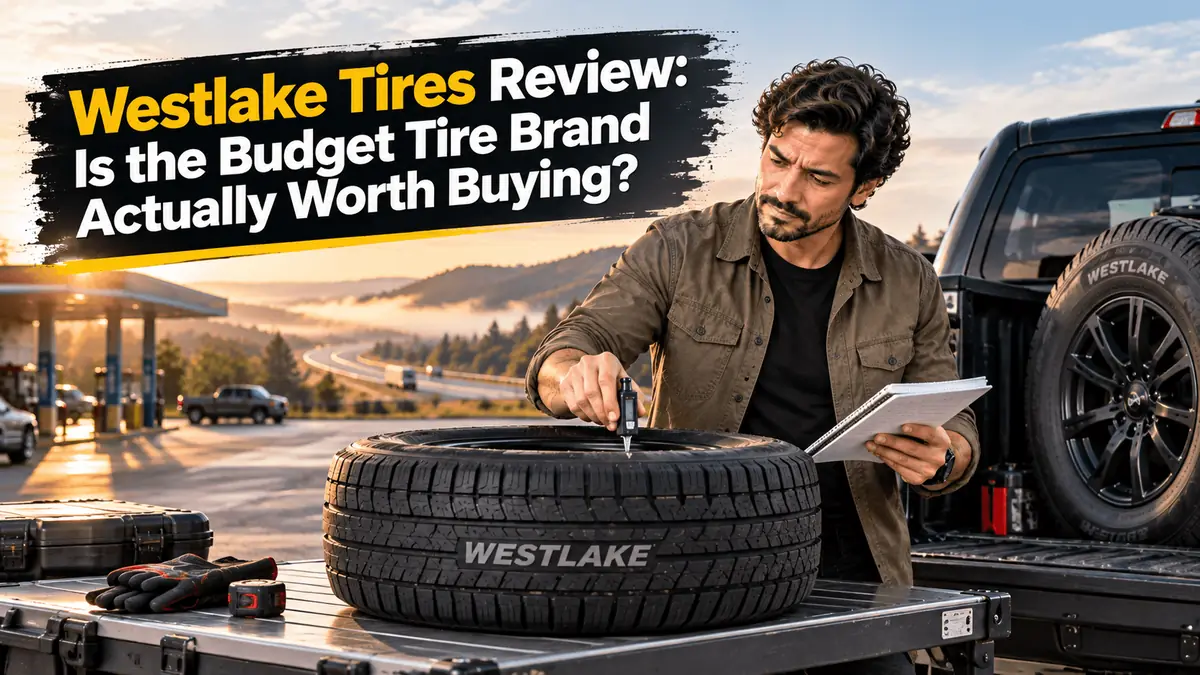
Westlake occupies a strange corner of the U.S. tire market. Most drivers have never heard the name mentioned in the same breath as Michelin, Goodyear, or Bridgestone, yet the brand keeps showing up as the tire people quietly switch to when a repair shop hands them a bill for a full set. That gap between brand recognition and actual adoption is exactly why this review exists: the real question isn’t whether Westlake is cheap, it’s whether that lower price comes with compromises a driver should know about before committing four tires’ worth of money and safety to it.
Westlake tires are built by Zhongce Rubber Company, one of China’s largest tire manufacturers, with additional production capacity in Thailand and Vietnam. The brand was established in 1988 and has spent the decades since expanding from a regional manufacturer into a global exporter with a full lineup covering passenger cars, light trucks, SUVs, trailers, and performance applications. None of that history erases the fact that Westlake still competes primarily on price — but it does explain how the company can offer four tires for what a premium brand charges for two, without simply cutting corners on rubber and calling it a day.
How this review was put together: We have not road-tested Westlake tires. This review is based on published warranty information and retailer listings, with sources listed at the end. An earlier version cited independent tests and warranties up to 60,000 miles that we could not verify; those have been corrected. Checked on October 22, 2026.
Table of Contents
Where Westlake Fits in the Tire Market
Westlake’s lineup breaks down into the same broad categories most shoppers already recognize, just priced well below the household names. Passenger car tires are tuned for sedans, coupes, and compact cars, prioritizing a smooth ride and reasonable fuel efficiency over outright grip. Light truck tires step up the load-carrying capacity and reinforcement for owners who haul or tow regularly, while the SUV lineup tries to blend that truck-tire toughness with the ride manners of a passenger tire. A smaller performance category rounds things out for drivers who want sharper handling without stepping up to a performance-brand price tag.
That breadth matters more than it might seem. A brand that only makes cheap all-season tires can get away with mediocre engineering in every category because there’s nothing to compare it against. Westlake instead has to make its passenger tires competitive against other passenger tires, its truck tires competitive against other truck tires, and so on — and largely does, which is the more interesting story than the price tag alone.
Value, in Westlake’s case, isn’t just “cheap.” Westlake positions itself as a brand that keeps pace with other budget-tier options on treadwear, handling, and ride comfort rather than simply undercutting them on price while falling behind on performance. That’s a meaningfully different proposition than the bargain-bin tires that show up at the bottom of every price comparison — Westlake is competing to be the best option in its price bracket, not just the cheapest one on the shelf.
Five Westlake Models Worth Knowing
Westlake’s catalog runs deep, but five models account for most of what shoppers actually cross-shop. Each one targets a distinct use case, and picking the wrong one is the easiest way to end up disappointed with a tire that was never built for your vehicle in the first place.
Westlake SU318 H/T — the SUV all-rounder
If you drive a crossover or midsize SUV and just want a tire that disappears into the background of daily life, the SU318 H/T is the model built for exactly that. It leans on circumferential grooves to move water out from under the tread, which keeps wet-road traction respectable without turning the tire into a noisy, aggressive-looking option. Ride comfort is the tire’s clearest strength — Westlake tuned this one for a quiet cabin and a settled ride rather than sharp handling, which lines up with how most SUV owners actually drive.
Best for: SUV and crossover owners who want dependable all-season traction and a quiet ride, not off-road capability or extreme-winter performance.
Westlake SA07 Sport — the enthusiast’s budget option
The SA07 Sport exists for a different driver entirely: someone with a sports car or sport sedan who wants tighter steering response and doesn’t want to pay performance-brand prices to get it. A silica-infused tread compound is doing the heavy lifting here, improving grip and steering feedback on both dry and wet pavement. That focus on responsiveness comes with the usual performance-tire trade-off — this isn’t a tire built for winter weather, and buyers who need cold-weather capability should look elsewhere in Westlake’s lineup or beyond it entirely.
Best for: drivers of performance-oriented vehicles who want sharper cornering and steering feel without paying premium-brand pricing.
Westlake RP18 — the everyday commuter tire
The RP18 is Westlake’s answer to the touring tires that dominate daily-driver recommendations from bigger brands. Wide circumferential grooves handle water evacuation, and the overall tuning favors comfort and quiet operation over outright grip — exactly what a commuter wants for a tire that will spend most of its life in stop-and-go traffic and highway commutes rather than canyon roads. It won’t out-corner a premium touring tire, but for the price, it covers the basics most drivers actually care about.
Best for: sedan and coupe owners who prioritize a comfortable, quiet ride for daily commuting over sporty handling.
Westlake CR960A — the sportier alternative
The CR960A shares the SA07’s silica-infused tread compound and its emphasis on precise cornering and steering response, giving budget-conscious drivers another route to sportier handling characteristics. Like its stablemate, it isn’t built with winter conditions in mind, so it makes the most sense for drivers in milder climates who are willing to trade some all-weather versatility for a livelier feel behind the wheel.
Best for: drivers who want Westlake’s sportier tread compound and don’t need cold-weather capability.
Westlake ST100 — the trailer specialist
The ST100 breaks from the rest of the lineup by targeting trailers rather than passenger vehicles. Durability and load-carrying capability take priority here, with a tread design built around stability under load rather than cornering agility. Owners who tow regularly tend to value this one specifically because it holds up to wear and tear better than many low-cost trailer tire alternatives — but it’s a poor fit for anything outside its intended use, including light off-road duty.
Best for: trailer owners who need a durable, stable tire for towing, not a multi-purpose tire for a daily-driven vehicle.
At a Glance
| Model | Best For | Main Strength | Main Limitation |
|---|---|---|---|
| SU318 H/T | SUVs and crossovers | Quiet, comfortable all-season ride | Not built for hard winter conditions |
| SA07 Sport | Sports cars, sporty sedans | Sharp steering response and grip | Weak cold-weather performance |
| RP18 | Daily-driven sedans and coupes | Comfort and value for commuting | Falls short of premium touring tires |
| CR960A | Drivers who want sportier grip on a budget | Silica compound aids dry/wet grip | Not intended for winter driving |
| ST100 | Trailers and towing setups | Durable, stable under load | Not designed for other vehicle types |
How These Tires Actually Drive
Dry-road performance is where Westlake tends to earn the most goodwill. Tread patterns and rubber compounds across the lineup deliver confident, responsive handling that doesn’t feel like a compromise compared to pricier alternatives — cornering stability in particular holds up well for the price point. For wet roads, siping and grooves are designed to channel water away from the contact patch; we have not found independent wet-grip test data for current Westlake models.
Braking performance follows the same pattern. Specialized tread compounds and optimized contact patches translate into respectable braking distances, and reinforced sidewalls add a margin of structural confidence against blowouts and impact damage from potholes or curbs — a meaningful consideration for drivers who put a lot of miles on rough city streets.
Noise and ride comfort are the one area where Westlake’s story gets more complicated, and it’s worth being upfront about that rather than glossing over it. The touring-oriented RP18 and SU318 are tuned specifically to keep cabin noise down and soak up road imperfections, and they deliver on that. The more aggressive tread designs on performance-oriented models trade some of that quiet for grip, generating more road noise at highway speeds — a fair trade for a driver chasing handling, but a real downside for anyone expecting the same hush as the touring lineup. Vehicle type and suspension setup also shape how noise and comfort actually feel in practice, so results vary somewhat from one car to the next.
Treadwear, Durability, and What the Warranty Covers
Treadwear is arguably Westlake’s strongest selling point relative to its price bracket. SimpleTire lists a 45,000-mile tread life warranty on the RP18 (October 2026), and distributor Tireco announced a warranty of up to 40,000 miles on core Westlake patterns in 2019, so check the current figure for your model. Reinforced sidewalls and more robust belt packages support that longevity by helping the tires resist damage from road hazards rather than just resisting normal wear.
We have not found reliable owner mileage data; real-world tread life depends heavily on driving style, alignment, and maintenance habits.
On the warranty side, Westlake’s standard limited warranty covers workmanship and material defects for the usable tread life of the tire, and a prorated treadwear warranty kicks in for drivers who want some financial protection if a tire wears out faster than expected. Customer support is available through phone, email, and online chat, though the support infrastructure isn’t as extensive as what a driver would get from a decades-established premium brand with a larger dealer network.
Westlake vs. the Big Brands
The honest comparison against Michelin, Goodyear, and Bridgestone isn’t close on brand reputation, and it isn’t meant to be — Westlake was never built to out-market those companies. Where the comparison gets more interesting is performance per dollar. Westlake’s tires are manufactured with modern production techniques and materials, but we have not found independent test data showing how close their traction, handling, and braking come to established brands.
The gap widens at the extremes: hard winter driving, high-speed performance driving, and long-term ownership beyond the warranty period are the situations where premium tires tend to pull ahead, thanks to more advanced compounds and tighter manufacturing tolerances. For a driver whose year consists mostly of commuting, errands, and the occasional road trip, that gap may never actually show up in daily use — which is precisely the audience Westlake is built for.
Who Should Buy Westlake Tires
Daily commuters and city drivers are the clearest fit. Westlake’s touring-oriented models — the RP18 and SU318 in particular — deliver the comfort, tread life, and everyday traction that commuting actually demands, without the premium price tag attached to comparable tires from bigger brands.
Highway-heavy drivers and road-trippers get a similar case: a quiet, stable ride and solid tread life make Westlake’s touring tires a reasonable choice for anyone racking up long-distance miles on a budget.
Light truck and SUV owners who need reliable traction, durability, and load capacity without the cost of a premium truck tire line have a legitimate option in Westlake’s SUV and light-truck lineup — provided they’re not planning serious off-road use.
Trailer owners and anyone towing regularly should look specifically at the ST100 rather than trying to stretch a passenger tire into that role.
Budget-conscious drivers in general — the buyer who wants a safe, dependable set of tires without stretching the household budget to do it — are Westlake’s core audience, and the brand delivers competently for that use case.
Drivers who should look elsewhere include anyone facing severe winter conditions regularly, track-day or canyon-carving enthusiasts who need the outer limits of grip, and anyone planning to keep a vehicle long enough that tire longevity beyond 60,000 miles becomes the deciding factor — premium options tend to hold their edge longer in that scenario.
Pros and Cons
Pros
- Significantly lower cost than premium tire brands without an equivalent drop in everyday performance
- Treadwear warranties around 40,000 to 45,000 miles on core models
- Low prices, with RP18 sizes listed from about $53 to $87 (SimpleTire, October 2026)
- Broad lineup covering passenger, SUV, light truck, performance, and trailer applications
- Reinforced construction that holds up reasonably well to everyday road hazards
Cons
- Road noise and ride comfort vary noticeably between the touring lineup and the more aggressive performance models
- Not a strong choice for severe winter conditions across most of the lineup
- Customer support and dealer network are less extensive than major, decades-established brands
- Falls short of top-tier tires in outright grip and refinement for high-performance driving
Final Verdict
Westlake has carved out a real niche rather than just a cheap one. The brand’s strongest case is built on treadwear, durability, and wet-weather traction that hold up well against the price — areas where a lot of budget tires quietly cut corners. For a driver who commutes, runs errands, and takes the occasional highway trip, a well-chosen Westlake model is a genuinely reasonable way to keep four fresh tires under a car without overspending.
Where Westlake comes up short is at the margins: serious winter driving, high-performance handling, and the kind of long-haul refinement that premium brands build their reputations on. Drivers chasing those specific needs are better served looking toward established premium options, even at a higher cost.
For everyone else — the budget-conscious majority of drivers who just need a tire that’s safe, comfortable, and long-lasting — Westlake earns its spot on the shopping list. The key to a good outcome is matching the specific model to the specific vehicle and driving style rather than assuming any one Westlake tire fits every use case, since the lineup spans genuinely different priorities from one model to the next.
Related Reading
Frequently Asked Questions
Westlake tires are manufactured by Zhongce Rubber Company, one of China’s largest tire manufacturers, with production also based in Thailand and Vietnam.
For everyday driving in typical conditions, Westlake tires perform competently and offer strong value for the price. They aren’t positioned as high-performance or top-tier tires, so whether they’re “good” depends largely on what a driver needs — a commuter will likely be satisfied, while a driver chasing maximum performance or extreme winter capability probably won’t be.
Treadwear warranties range from 40,000 to 60,000 miles depending on the model, and real-world mileage before replacement typically falls between 30,000 and 50,000 miles, depending on driving habits, alignment, and maintenance.
Yes, for everyday driving. Westlake designs its tires for stable braking and cornering in dry and wet conditions, using reinforced sidewalls and tread designs built to resist hydroplaning. They aren’t marketed as extreme-winter or high-performance safety tires, so drivers in those situations should weigh that limitation carefully.
Westlake tires are made in China, where parent company Zhongce Rubber Company is based and oversees production, with additional manufacturing capacity in Thailand and Vietnam.
It depends on the vehicle and how it’s driven: the SU318 H/T suits SUVs and crossovers, the RP18 fits daily-driven sedans and coupes, the SA07 Sport and CR960A suit drivers who want sportier handling, and the ST100 is built specifically for trailers rather than passenger vehicles.
Westlake doesn’t match the brand reputation or extreme-condition performance of Michelin or Goodyear, but we have not found independent test data showing how its everyday traction and handling compare.
Yes. Westlake is a budget brand built by Zhongce Rubber, one of China’s largest tire makers, and aimed at drivers who want safe, dependable tires at a low price. It aims to keep pace with other budget brands on treadwear, handling and comfort rather than match Michelin or Goodyear.
Sources
Specs, warranty terms and prices were checked on October 22, 2026. Prices change often.
- SimpleTire: Westlake RP18 (45,000-mile warranty, prices ($53–$87), ratings)
- Modern Tire Dealer: Westlake mileage warranty (2019) (Tireco up to 40,000-mile warranty on core patterns)
 Summarize this article with:












Leave a comment