


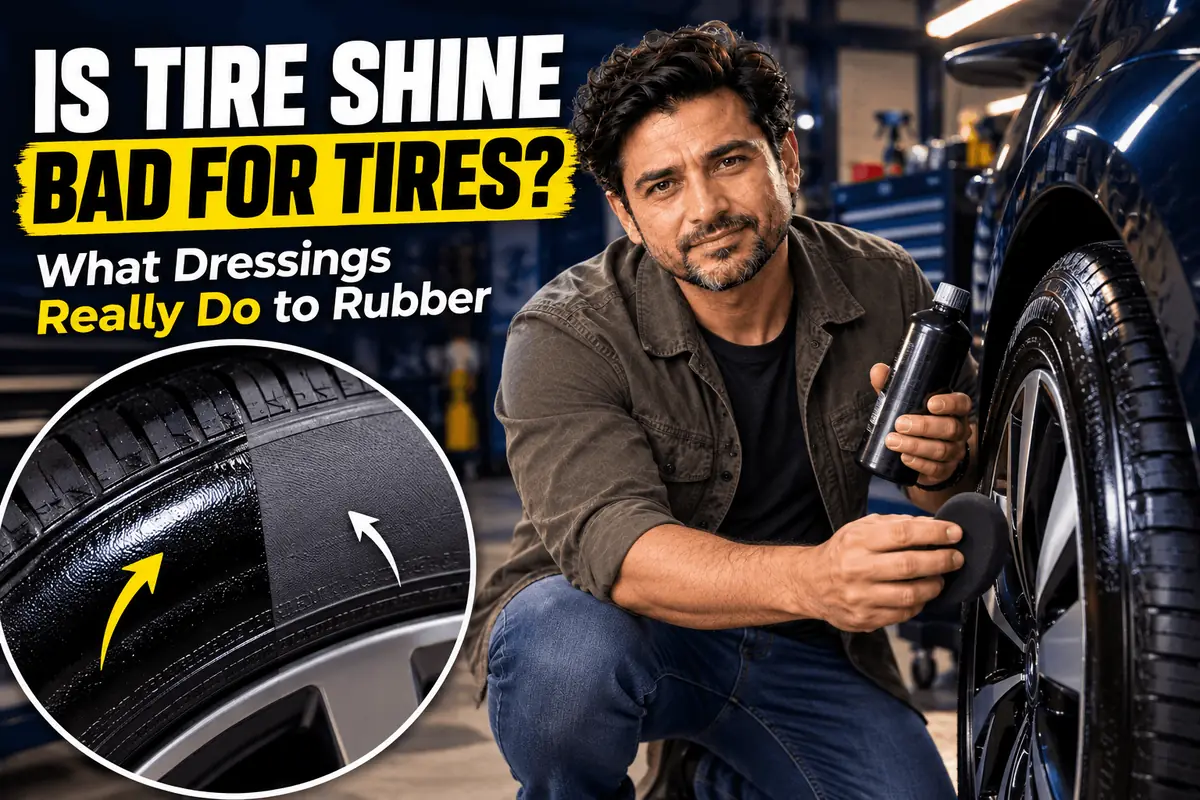
A freshly washed car with dull gray tires looks unfinished, and a coat of tire shine fixes that in minutes. Then the doubts set in. Someone at the car wash says dressings dry out rubber, a forum post blames them for sidewall cracks, and the tire shop shrugs when you ask. You want the deep black look without paying for it with tires that crack or turn brown early.
The short answer is that tire shine is a cosmetic product, and most of the risk depends on what is in the bottle and where it ends up. A thin coat of a quality water-based dressing on a clean sidewall is unlikely to do measurable harm. Heavy, solvent-heavy products used constantly, or any dressing that gets onto the tread, are where the real concerns lie. This guide sorts out the proven risks from the plausible ones and the myths, and explains how to apply dressing so it looks good without compromising safety.
Table of Contents
What Tire Shine Is and What It Is Not
Tire shine, also sold as tire dressing or tire gel, is a coating applied to the sidewall to darken it and add gloss. Formulas vary widely, but most combine some of the following:
- Silicone oils or emulsions that provide the gloss and repel water
- Carriers, either water or a solvent such as petroleum distillates, that spread the product and then evaporate
- Polymers that help the product cling to the rubber
- Dyes, UV inhibitors and fragrance in some products
What tire shine is not is a maintenance product. It does not repair the tire, restore lost flexibility or extend tread life. At best, it improves appearance and may add a little surface protection. Judging any dressing by that standard keeps expectations realistic.
Why Tires Turn Brown in the First Place
Much of the tire shine debate is really a debate about browning, so it helps to understand what browning is.
Tire rubber contains antiozonants and protective waxes, chemicals added to shield the rubber from ozone, which attacks rubber and causes cracking. These protectants are built to migrate slowly to the surface of the tire over its life, where they form a protective film. When they reach the surface and react with ozone and air, they oxidize and turn brown. Tire people call this “blooming.”
In other words, a brownish sidewall is often a sign that the tire’s built-in protection is working, not a sign of damage. It is a cosmetic issue. Tire shine darkens it, and a gentle cleaning removes some of it, but the browning will keep returning because the tire keeps producing those protectants.
The Claims Against Tire Shine, Examined
Claim: Tire Shine Dries Out and Cracks Rubber
This is the most common worry and the hardest to settle. There is little published independent research measuring how dressings affect tire life, so much of what circulates is opinion. The concern is not baseless, though. Petroleum distillates and some other solvents can affect rubber, and detailers and tire technicians widely recommend water-based products over solvent-based ones for that reason. There is also a plausible argument that harsh solvents and aggressive cleaners can strip away the protective waxes that migrate to the surface, leaving the rubber more exposed to ozone.
Tire makers have been cautious. Bridgestone has told customers that it does not recommend tire dressings of any brand because it cannot confirm their long-term effect on the rubber compound, and that some products may degrade rubber over time. That is a statement of uncertainty, not proof of damage, but it is a good reason not to treat any dressing as a protectant.
What is clear is that sidewall cracking has other well-established causes: age, sun and ozone exposure, long periods of sitting and chronic underinflation. If a tire is cracking, those are more likely culprits than a dressing used now and then.
Claim: Tire Shine Causes Browning
Probably not in most cases. Browning comes from the tire’s own antiozonants blooming to the surface. Some detailers believe certain dressings and harsh cleaners can make the problem worse by disturbing the protective layer, which then re-blooms. Evidence for that is anecdotal. What does reliably make tires look brown again is dirt and dressing residue building up, which is why cleaning before applying matters.
Claim: Tire Shine Makes Tires Slippery
This one is true in a specific way. Dressing on the sidewall has no effect on grip, because the sidewall does not touch the road in normal driving. Dressing on the tread is another matter. Silicone is slick, and a coat of it on the contact patch can reduce traction until it wears off, especially on wet pavement, during the first few stops and turns after application. For motorcycles, where the tire’s shoulder carries the bike through every corner, any dressing on the tread is a serious hazard.
Keep tire shine on the sidewall only. Dressing on the tread is the one risk everyone agrees on, and it matters most on motorcycles.
Claim: Tire Shine Protects Against UV Damage
Some products contain UV inhibitors, and many are marketed as protectants. How much they extend tire life is unproven. A dressing may help the surface look better for longer, but it does not replace the protection compounded into the rubber itself, and it will not save a tire that is aging out.
Water-Based vs. Solvent-Based Tire Shine
The biggest choice you make is the type of carrier, and it affects finish, durability and how gentle the product is likely to be on rubber.
| Feature | Water-Based Dressing | Solvent-Based or Heavy Silicone Dressing |
|---|---|---|
| Typical finish | Satin to moderate gloss, adjustable with layers | High-gloss, wet look |
| Durability | Shorter; washes off sooner | Longer; resists rain and washing |
| Sling risk | Lower when applied thinly | Higher, especially with heavy coats |
| Effect on rubber | Generally regarded as the gentler choice | Petroleum solvents are the main source of concern about drying and cracking |
| Residue and dirt pickup | Dries to the touch, attracts less dust | Can stay oily and collect dust and brake dust |
| Environmental impact | Lower solvent content | More volatile solvents in many formulas |
Gels and aerosols are delivery formats rather than separate chemistries. A gel can be water-based or solvent-based, so read the label. Aerosols make overspray onto wheels, brake parts and paint more likely, so spraying onto an applicator rather than directly onto the tire is the cleaner approach.
If you want the wet look, a water-based product applied in two thin coats usually gets you close. If you want a factory-fresh satin finish, a water-based dressing applied once and wiped down is the safest and least messy option.
How to Apply Tire Shine Safely
Good technique solves most of the problems people blame on the product.
- Clean the tire thoroughly. Use a dedicated tire cleaner or a diluted all-purpose cleaner and a stiff brush. Scrub until the foam stops turning brown. Dressing over dirt and old residue looks blotchy and turns brown faster.
- Rinse and let the tire dry. Water-based dressings bond poorly to a wet surface, and water can dilute the product.
- Put the product on an applicator, not the tire. A foam pad or dedicated tire applicator gives you control and keeps product off the wheel and brakes.
- Apply a thin, even coat to the sidewall only. Work around the tire and stay off the tread and the tread shoulder. If you want more gloss, wait a few minutes and add a second thin coat rather than one heavy one.
- Wipe off the excess. A quick pass with a microfiber towel reduces sling and helps the dressing dry evenly.
- Let it dry before driving. Many products need roughly 30 minutes to an hour, depending on the formula and the weather. Follow the label.
- Check the tread. If any dressing got onto the tread, wipe it off with a cleaner before driving.
Avoid overdoing it. Piling on product every few days leads to buildup that traps dirt and slings onto the paint. Reapply when the tires start looking dull again, which for most drivers is somewhere between every wash and every few weeks.
When to Skip Tire Shine
- Motorcycle tires. Many riders avoid dressings entirely because the slightest contamination on the tread can cost grip in a corner.
- Track days and performance driving. Tires are worked to their edges, and there is no benefit to anything slick near the contact patch.
- Tires that are cracking or old. Dressing can hide weathering cracks without fixing them. Have aged or cracked tires inspected instead of covering them up.
- Right before driving in the rain. If you have just applied dressing, let it dry fully and check for product on the tread first.
Skip the DIY Recipes
Homemade dressings made from olive oil, coconut oil, vinegar and similar kitchen ingredients circulate widely online. Vegetable oils stay tacky, collect dust and grit, and can turn rancid. There is no evidence they protect rubber, and they create the same slippery-tread risk as any other oily product. A commercial water-based dressing is cheap, predictable and cleaner.
Frequently Asked Questions
Not usually. Used sparingly on clean sidewalls, a quality water-based tire shine is unlikely to cause measurable harm. The concerns center on solvent-heavy formulas, heavy and frequent use, and dressing on the tread, which can reduce grip. Some tire makers decline to recommend any dressing because long-term effects have not been established, so treat it as a cosmetic product.
There is no solid evidence that normal use of a water-based dressing causes cracking. Petroleum solvents are the main suspect when damage is blamed on dressings. Sidewall cracking is far more commonly caused by age, sun, ozone, long periods of sitting and underinflation.
Browning is usually blooming, which happens when protective antiozonants and waxes inside the rubber migrate to the surface and oxidize. Dirt and old dressing residue make it look worse. Scrub the tires clean before each application to keep them black longer.
Water-based dressings are the gentler and less messy choice, with a satin to moderate gloss that washes off sooner. Solvent-based and heavy silicone products last longer and look wetter but sling more, collect more dust and carry more concern about effects on rubber.
Only if it gets on the tread. Dressing on the sidewall does not affect grip, but silicone on the contact patch can reduce traction until it wears off, especially on wet roads. Keep it off the tread entirely, and be particularly careful on motorcycles.
Most products need roughly 30 minutes to an hour, depending on the formula, the thickness of the coat and the weather. Wiping off the excess before you drive helps prevent sling onto the paint.
Our Take on Tire Shine
Tire shine is not the tire killer some people claim, and it is not the protective treatment the marketing suggests. It is a cosmetic coating, and the sensible way to use one is to pick a water-based formula, apply it thinly to a clean sidewall, wipe off the excess and keep every bit of it off the tread.
Do that, and the risks are small. Skip dressings on motorcycles and track tires, and do not use a glossy coat to hide cracks on an aging tire. When a tire’s appearance starts to worry you, look at its age, pressure and condition first, because those decide how long it lasts far more than anything you put on the sidewall.
 Summarize this article with:


















Leave a comment