


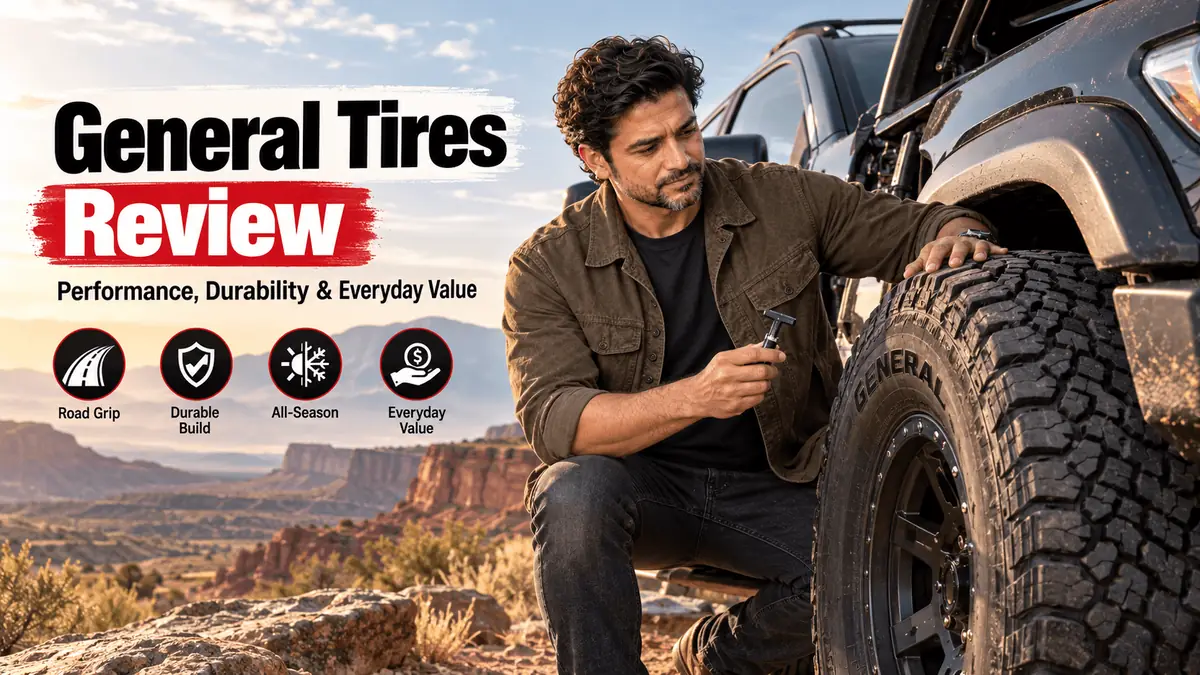
General Tires occupies a specific and useful spot in the tire market: priced well below the premium names on the wall at the tire shop, but built with enough engineering depth to hold its own against them in everyday driving. That combination is exactly why so many budget-conscious drivers end up cross-shopping the brand — the question is never really whether General makes a decent tire, it’s whether a specific General model matches your vehicle, your climate, and how you actually drive. This review works through the brand’s lineup by category, explains how the tires actually perform on dry and wet roads and in snow, and breaks down pricing, warranty coverage, and where General fits relative to bigger, pricier competitors.
Table of Contents
A Century-Old Tire Maker Rooted in Akron
General Tire traces its roots to 1915, when the company was founded as the General Tire and Rubber Company in Akron, Ohio — historically the epicenter of American tire manufacturing. Germany’s Continental AG has owned the brand since 1987, and General Tire is now based in Fort Mill, South Carolina, according to Wikipedia. More than a century later, the brand still builds its identity around that same value proposition: dependable, well-engineered tires sold at a price that undercuts the flagship brands without asking drivers to settle for a noticeably worse tire.
How this review was put together: We have not road-tested General tires for this overview. It is based on General’s published Shield+ Advantage Plan terms, with sources listed at the end. Checked on October 22, 2026.
That longevity shows up in the breadth of the current lineup. General builds tires for passenger cars, light trucks, SUVs, crossovers, and commercial vehicles, with dedicated families for touring comfort, ultra-high-performance driving, all-terrain and off-road use, and severe winter conditions. The company has also leaned into practical, incremental engineering — refined tread compounds, siping technology, and construction updates — rather than chasing headline-grabbing gimmicks, which fits neatly with the brand’s value-first positioning.
How the General Lineup Is Organized
General’s catalog breaks down into a handful of clear categories, and knowing which one you’re shopping in makes the rest of the decision much easier.
G-MAX: Performance-Oriented Grip
The G-MAX RS is General’s ultra-high-performance summer tire, built for drivers who want sharp steering response and strong cornering grip above all else. The G-MAX AS-05 and AS-07 bring that same performance focus into all-season form, so drivers who want sporty handling don’t have to give it up once the weather turns. The G-MAX Justice rounds out the performance side as a high-performance all-season option, while the G-MAX Justice AW shifts toward grand-touring comfort with all-weather capability.
AltiMAX: Comfort and Everyday Touring
For commuters and daily drivers, the AltiMAX 365 AW, Altimax RT43, and AltiMAX RT45 are General’s grand-touring all-season tires, tuned for a quiet ride, dependable tread life, and confident traction on dry and wet roads rather than outright cornering limits. These are the tires most likely to end up on a mainstream sedan or crossover used mostly for commuting.
Grabber: Trucks, SUVs, and Everything Off-Pavement
Grabber is General’s answer to the light-truck and SUV market, and the family spans a wide range of intended use. The Grabber H/T, HD, HD Van, HTS, and HTS 60 are highway-focused tires built for SUVs, vans, and light trucks that spend nearly all their time on pavement. Moving toward rougher terrain, the Grabber A/T Sport, A/T Sport-W, and APT are on-road all-terrain tires that balance daily drivability with light gravel and dirt-road use, while the Grabber A/TX, AT2, AT3, and STX2 push further into genuine off-road all-terrain territory. At the aggressive end, the Grabber X3 is General’s maximum-traction off-road tire for drivers who spend serious time away from pavement.
Winter-Specific Tires
General also builds dedicated cold-weather tires rather than relying on all-season models to handle serious snow and ice. The Grabber Arctic, AltiMAX Arctic 12, and Grabber Arctic LT use tread patterns and rubber compounds engineered specifically for winter conditions, with the option to run studs where local regulations allow.
How General Tires Perform on the Road
General’s tread designs and rubber compounds favor predictable, confident grip rather than outright sportiness — with the exception of the G-MAX performance line, where cornering and steering response are the whole point. Across the rest of the lineup, dry-road handling stays composed and steering feel stays responsive enough that most drivers won’t feel like they’re compromising for the lower price.
Wet-weather traction is where the tread engineering earns its keep. Siping and grooves channel water away from the contact patch, cutting down on hydroplaning risk and helping the tire keep biting on slick pavement — a detail that matters more during an unexpected downpour on the highway than in any spec sheet comparison.
General’s dedicated winter models take that a step further. The Grabber Arctic, AltiMAX Arctic 12, and Grabber Arctic LT use aggressive tread patterns and advanced siping to bite into snow and ice, and the compounds stay pliable in freezing temperatures rather than hardening and skating across the surface the way a warm-weather tire would. Drivers in genuinely harsh winter climates get meaningfully better traction and shorter stopping distances from one of these purpose-built winter tires than from an all-season General model — the same limitation that applies to all-season tires as a category, regardless of brand.
Ride comfort and cabin noise are consistent strengths across the touring side of the lineup. The AltiMAX family in particular absorbs road imperfections well and keeps highway drone in check, which is a big part of why the tires show up so often in commuter feedback as a pleasant surprise for the price.
Fuel Efficiency and Rolling Resistance
Rolling resistance — the energy a tire wastes simply by deforming and rolling — has a direct effect on how much fuel a vehicle burns, and General has built several models specifically around minimizing it. The Altimax RT43 and Grabber HTS both use low-rolling-resistance construction, which can produce a noticeable fuel-economy improvement over a comparable tire that wasn’t engineered with efficiency in mind. General also incorporates silica-based compounds and, in some formulations, recycled materials, cutting down on petroleum-based content without sacrificing grip.
For a driver who logs serious highway mileage, that efficiency focus compounds with tread life: fewer stops for gas and fewer tire replacements both add up over years of ownership, which is part of the broader value case General makes against pricier competitors.
Which General Tire Fits Your Vehicle and Driving
- Harsh winter climates: Grabber Arctic or AltiMAX Arctic 12 for dedicated snow and ice traction, rather than relying on an all-season tire.
- Off-road adventuring: Grabber AT2 or Grabber X3 for aggressive tread and reinforced sidewalls on mud, rock, and loose surfaces.
- Fuel efficiency and eco-conscious driving: Altimax RT43 or Grabber HTS for low rolling resistance and reduced fuel costs over time.
- Daily commuting in a sedan or crossover: AltiMAX 365 AW or AltiMAX RT45 for a quiet, comfortable ride and long tread life.
- Spirited or performance-oriented driving: G-MAX RS for maximum grip, or the G-MAX AS-05/AS-07 for that same sportiness in an all-season tire.
- Trucks and SUVs that stay mostly on pavement: Grabber HTS or Grabber H/T for load capacity without the noise of an aggressive tread.
Tread Life and Durability
Tread life is backed by treadwear warranty terms that put real numbers behind it: up to 75,000 miles on select replacement tires under the Shield+ Advantage Plan. That directly affects the total cost of ownership — fewer replacement cycles over the years a vehicle is owned.
That durability isn’t limited to the tread surface. Reinforced construction across the Grabber line improves resistance to punctures, cuts, and impact damage from potholes and road debris, which matters most for the light-truck and SUV owners running these tires on gravel roads or job sites.
Tread wear does vary somewhat by model and by driving habits, vehicle maintenance, and road conditions — a detail worth keeping in mind rather than assuming every model performs identically across every use case.
Pricing and Value
Pricing is General’s clearest advantage. Compared with premium tire brands, General tires often cost noticeably less while still delivering dependable performance and durability, which is the core of the brand’s appeal to budget-conscious buyers. General also lands competitively against other mid-range brands, and frequent manufacturer promotions, rebates, and retailer discounts often widen that price advantage further once a full set of four is factored in.
The value case extends past the sticker price. Strong tread life reduces how often a set needs replacing, and General backs many models with warranties covering both materials defects and tread life, adding a layer of protection that lowers the practical risk of buying outside the premium tier.
Warranty Coverage
General’s U.S. coverage is the Shield+ Advantage Plan (effective February 1, 2025; checked October 2026). Select replacement tires carry a mileage warranty of up to 75,000 miles, with pro-rated credit if they wear out early; tires must be rotated every 6,000 to 8,000 miles. The limited warranty against defects runs up to 72 months, with free replacement during the first 12 months or first 2/32″ of wear. Road hazard coverage replaces a tire with an unrepairable cut, puncture or impact break free of charge in the same 12-month or 2/32″ window, and a 45-day customer satisfaction trial is included.
What Owners and Independent Reviews Say
Owner opinions vary by model, so check reviews for the specific General tire and size you’re considering on a retailer site before you buy. Tread life in particular depends heavily on driving style, vehicle and maintenance.
Complaints do surface occasionally around specific models or individual experiences, but the overall pattern of feedback points to a brand that delivers on its core promise: dependable performance and durability at a price below the industry’s biggest names.
General vs. Premium and Mid-Range Brands
General isn’t trying to out-engineer Michelin or Bridgestone at the extreme top of the performance ladder, and in a handful of specialized categories — extreme performance, dedicated off-road racing applications — the biggest premium names still hold an edge. Where General competes effectively is everywhere else: dependable grip and braking across dry, wet, and light winter conditions, mileage warranties of up to 75,000 miles on select lines, and pricing that consistently undercuts premium-brand tires by a meaningful margin.
Against other mid-range brands like Goodyear or Firestone, General holds its own on price and often edges ahead once seasonal promotions and rebates are factored in. For most everyday driving situations — commuting, family trips, typical road conditions — the practical difference between a well-chosen General tire and a similarly specced premium tire is smaller than the price gap would suggest.
Where to Buy General Tires
General tires are widely available through major auto parts and tire chains, including Pep Boys, NTB, and Discount Tire, most of which also handle mounting and balancing on-site. Online retailers offer detailed product listings, customer reviews, and sizing filters that make it easy to compare models and prices from home before shipping a set to a local installer. Independent tire shops and dealerships round out the options, often with staff who can offer personalized recommendations based on a specific vehicle and driving pattern.
Installation, Rotation, and Maintenance
Getting the full value out of a set of General tires comes down to routine care as much as the tire itself. Professional installation ensures correct balancing, alignment, and inflation from the start, all of which affect tread wear and handling down the road. General recommends rotating tires roughly every 5,000 to 8,000 miles, depending on the specific model and driving habits, to distribute wear evenly across the set.
Beyond rotation, keeping tire pressure at the manufacturer-recommended level, monitoring tread depth, checking wheel alignment periodically, and inspecting for cuts or uneven wear all extend a tire’s usable life and keep it performing the way it’s supposed to. None of that is unique to General, but it matters more for a driver trying to make the most of a value-priced set.
Pros and Cons of General Tires
Pros
- Pricing that often runs below premium-brand tires, with promotions and rebates widening the gap further
- A broad lineup covering passenger cars, SUVs, light trucks, and commercial vehicles across touring, performance, all-terrain, and winter categories
- Mileage warranties of up to 75,000 miles on select lines
- Comfortable, quiet ride across the AltiMAX touring lineup
- Wide retail availability through major chains, independent shops, and online retailers
Cons
- Fewer specialized or extreme-performance options than the largest global tire brands
- Less brand recognition and prestige than Michelin, Bridgestone, or Goodyear among some consumers
- Tread wear can vary by model, driving habits, and maintenance, so results aren’t perfectly uniform across the lineup
- Selection can be more limited in certain regions compared with the biggest national brands
Related Reading
- Fullway Tires Review: Are They Worth It for Budget-Conscious Drivers?
- Armstrong Tires Review: Affordable Performance With a Few Trade-Offs
- Lion Sport Tires Review: Performance, Comfort, and Value for Enthusiast Drivers
Frequently Asked Questions
Yes. Backed by more than a century of manufacturing experience, General delivers dependable grip, handling, and durability at prices that consistently undercut premium competitors.
Tread life varies by model. Select General tires carry mileage warranties of up to 75,000 miles; real-world life depends on driving and regular rotation.
Yes, if you choose a winter model. General’s dedicated winter tires — the Grabber Arctic, AltiMAX Arctic 12, and Grabber Arctic LT — use aggressive tread patterns and cold-weather compounds built specifically for snow and ice traction. All-season General models handle light snow reasonably well but, like any all-season tire, aren’t a substitute for a dedicated winter tire in a harsh climate.
The Grabber AT2, AT3, and A/TX cover on- and off-road all-terrain use well, while the Grabber X3 is built for drivers who need maximum traction on mud, rock, and loose surfaces.
General tires often cost less than comparable premium-brand models while delivering performance that’s close enough for most drivers to notice only a small difference outside of extreme or specialized conditions.
Its Shield+ Advantage Plan includes a mileage warranty of up to 75,000 miles on select lines, a 72-month limited warranty against defects, free road hazard replacement in the first 12 months or first 2/32″ of wear, and a 45-day satisfaction trial.
The Altimax RT43 and Grabber HTS both use low-rolling-resistance construction aimed at improving fuel economy without a significant trade-off in grip.
General tires are sold through major retail chains like Pep Boys, NTB, and Discount Tire, as well as online retailers and independent tire shops and dealerships nationwide.
Germany’s Continental AG, which has owned General Tire since 1987. General is based in Fort Mill, South Carolina, and serves as Continental’s value-oriented American brand.
Continental, if you want the higher-end product; General, if you want value. Continental owns General, and General’s tires cost noticeably less while still delivering dependable performance and durability for most drivers.
Full General Tire Lineup (Reference)
For reference, here is General’s current U.S. passenger and light truck/SUV tire lineup, grouped by category.
Passenger Tires
| Category | Models |
|---|---|
| Ultra High Performance Summer | G-MAX RS |
| Ultra High Performance All-Season | G-MAX AS-05; G-MAX AS-07 |
| High Performance All-Season | G-MAX Justice |
| Grand Touring All-Season | AltiMAX 365 AW; Altimax RT43; AltiMAX RT45; G-MAX Justice AW |
| Studdable Winter / Snow | Grabber Arctic; AltiMAX Arctic 12; Grabber Arctic LT |
Light Truck / SUV Tires
| Category | Models |
|---|---|
| Highway All-Season | Grabber H/T; Grabber HD; Grabber HD Van; Grabber HTS; Grabber HTS 60 |
| On-Road All-Terrain | Grabber A/T Sport; Grabber A/T Sport-W; Grabber APT |
| Off-Road All-Terrain | Grabber A/TX; Grabber AT2; Grabber AT3; Grabber STX2 |
| Off-Road Maximum Traction | Grabber X3 |
Final Verdict: Are General Tires Worth Buying?
General earns its reputation as a genuine value alternative rather than a compromise pick. The G-MAX line delivers real cornering credibility for drivers who want sportier handling without a premium-brand price tag, the AltiMAX family covers daily commuting with a quiet ride and dependable tread life, and the Grabber lineup gives truck and SUV owners options ranging from smooth highway cruising to serious off-road capability.
No single General tire covers every scenario — drivers who track their cars or push into the most extreme winter or off-road conditions may still find a reason to pay more for a specialized flagship from a bigger brand. But for the large majority of everyday driving situations, General’s combination of pricing and warranty support makes it an easy brand to shortlist, particularly for drivers who want dependable, well-rounded tires without paying a premium-brand markup.
Sources
Specs, warranty terms and prices were checked on October 22, 2026. Prices change often.
- General Tire Shield+ Advantage Plan (PDF, effective Feb. 1, 2025) (warranty terms)
 Summarize this article with:













Leave a comment