


If your winters bring packed snow on the morning commute, glazed intersections and the occasional storm that turns a hill into a sledding run, then all-season tires stop being a reasonable compromise. The next question is which winter tire to buy, and that is where cost starts to bite. Premium studless tires from the biggest brands carry premium prices, which makes a lower-cost winter tire appealing for anyone who needs a second set. Cooper built the Evolution Winter for those drivers.
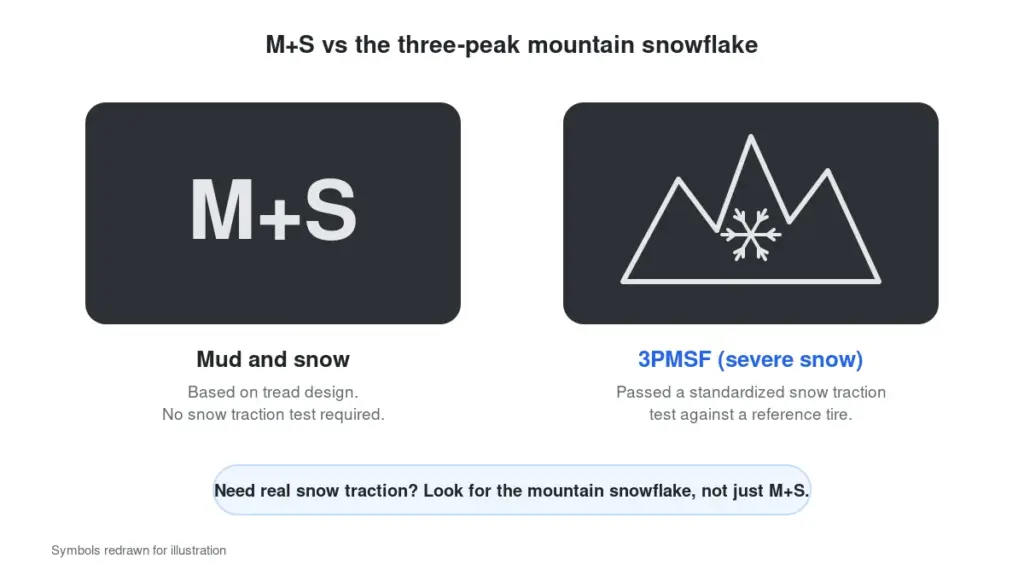
The Cooper Evolution Winter is Cooper‘s answer for passenger cars, minivans, crossovers and SUVs. It is a true winter tire, not an all-season with extra sipes, and it carries the Three-Peak Mountain Snowflake symbol. Its defining feature is that it accepts studs. As a result, drivers in icy regions get an option that studless tires cannot match. This review covers how the Evolution Winter is built and where it performs best. It also explains what studding changes, how it compares with its main rivals and who should buy it.
How this review was put together: We have not road-tested the Cooper Evolution Winter. This review is based on the manufacturer’s published information and retailer listings, with sources listed at the end. Warranty terms and prices change, so confirm them for your size before you buy.
Table of Contents
What the Evolution Winter Is and Who It Suits
The Evolution Winter is a studdable winter tire for coupes, sedans, minivans, CUVs and SUVs. It sits in Cooper’s winter lineup alongside the Discoverer True North, a studless winter tire that covers cars, crossovers and SUVs. If you would rather skip studs altogether, our Cooper Discoverer True North review is the better place to start.
The Evolution Winter makes the most sense for three kinds of drivers:
- Commuters in real snow regions who face packed snow and slush from December through March and need a tire that keeps working when the plows fall behind.
- Drivers who deal with frequent ice, especially in areas where studs are legal, and who want the option to add them.
- Budget-conscious households fitting winter tires to a family car or crossover who want strong winter traction without paying flagship prices.
Some drivers see only a few light dustings each year or live where winter mostly means cold rain. They can usually manage with a good all-season or an all-weather tire. If you are weighing those options, our guide to all-season vs all-weather tires breaks down the differences.
Cooper Evolution Winter at a Glance
| Specification | Cooper Evolution Winter |
|---|---|
| Category | Winter (studdable) |
| Vehicle types | Coupes, sedans, minivans, crossovers, SUVs |
| Rim diameters | 15 to 18 inches in the US, with 14- through 20-inch sizes offered in Canada |
| Speed ratings | T (118 mph) and H (130 mph), depending on size |
| Tread depth | 12/32 inch |
| Studding | Studdable with TSMI #12 studs, where legal |
| Severe snow rating | Three-Peak Mountain Snowflake (3PMSF) |
| UTQG | Not graded (winter tires are exempt) |
| Treadwear warranty | None |
| Other coverage | Cooper Standard Limited Warranty and 45-day satisfaction guarantee |
Tread Design and Construction
The Evolution Winter uses a directional tread pattern, so each tire rolls in one direction, and the installer must mount it accordingly. Directional patterns are common on winter tires. The V-shaped grooves push slush and water outward and help the tread clear itself as it rolls.
A sawtooth center rib runs down the middle of the tread. Cooper says that rib keeps a wide footprint on the road for stability and steering control, which matters when you are holding a lane on a highway coated with packed snow. The jagged edges of the rib also add biting edges where the tire carries much of its load.
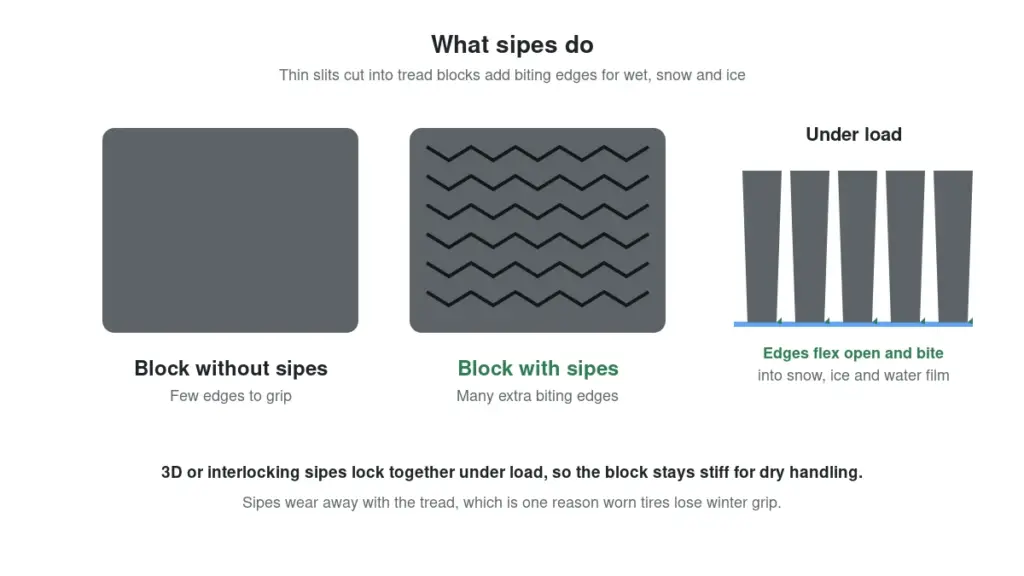
Around that rib, the tread blocks carry multi-angled, corrugated sipes. Sipes are thin slits that open as the tire flexes, creating hundreds of edges that grab at snow and ice. Because Cooper angles them in several directions, the edges help in straight-line braking and acceleration and also when the tire is loaded sideways in a turn.
Cooper calls its groove arrangement Snow-Groove technology. The idea is that the grooves trap snow rather than simply shedding it. Snow sticks to snow better than rubber sticks to snow, so a tread that holds a little packed snow in its grooves gains extra traction on snowy roads.
The outer shoulders are strong and the tread blocks are wide and stiff. That combination supports lateral grip and gives the tire steadier steering response on clear pavement than a softer, blockier winter design. Underneath, two wide steel belts support the tread and help keep the tire uniform at speed.
The Winter Compound
Cooper formulated the tread compound for cold weather. All-season rubber hardens as temperatures drop, which is why an all-season tire can feel skittish on a 20-degree morning even on dry pavement. A winter compound stays pliable well below freezing so the tread can conform to the road surface and keep the sipes working.
The trade-off arrives in spring. That same soft compound wears quickly and loses precision once temperatures climb. For that reason, the Evolution Winter should come off the car when temperatures stay above about 45°F.
Studs: The Feature That Sets It Apart
Most of the winter tires that dominate shopping lists today are studless. Studless designs rely on compound chemistry and dense siping to grip ice, and they work well. Even so, nothing grips glare ice quite like a metal stud, and the Evolution Winter keeps that option open.
The tread has stud holes molded into strategically placed points, sized for TSMI #12 studs. Cooper notes that it engineered the tire to perform with studs installed. In other words, the stud placement is part of the design rather than an afterthought.
Studding brings real benefits and real rules:
- Ice grip improves noticeably. Studs bite into hard ice, which helps most on icy hills, at frozen intersections and on roads that freeze over after a thaw.
- Legality varies. States and provinces set their own rules on whether drivers may use studs and during which months. Check local regulations before you pay for studding.
- Noise and dry-road grip change. Studded tires are louder, and on bare dry pavement the studs can reduce grip slightly compared with an unstudded tire.
If you live where ice is the main winter hazard, such as freezing rain zones or mountain towns with shaded switchbacks, the studding option is the strongest argument for this tire over a studless rival. If your winter is mostly snow and slush, you can run the Evolution Winter unstudded and still get full 3PMSF snow capability.
How It Performs Through the Season
Packed and Fresh Snow
Snow is where the Evolution Winter earns its keep. The 3PMSF symbol confirms that the tire meets the industry’s severe snow traction standard. That standard requires it to outperform a reference all-season tire in standardized snow acceleration testing. Combined with the snow-trapping grooves and dense siping, that gives the tire confident starts, steadier cornering and shorter stops on snow than any conventional all-season tire.
Ice
Unstudded, the Evolution Winter relies on its sipes and cold-weather compound for ice traction, and owners generally rate its winter grip highly. Premium studless tires built around specialized ice compounds may still hold an edge on bare ice when both tires run without studs. Add studs, and the picture changes, because no studless tire can match a studded tire’s bite on hard ice.
Slush and Wet Roads
Slush is one of the trickiest winter surfaces, because it can lift a tire off the road much like standing water. The directional pattern and open grooves help the Evolution Winter clear slush from the contact patch. On cold, wet pavement, the pliable compound keeps grip far better than an all-season compound that has stiffened in the cold.
Dry, Cold Pavement
On clear roads between storms, the wide, stiff tread blocks and strong shoulders pay off with steadier steering than a soft, squirmy winter tire, though not the crisp response of an all-season.
Ride Comfort and Road Noise
Winter tires are rarely as quiet as touring all-seasons, because aggressive tread blocks and deep grooves create more noise. A minority report noticeable noise or some road wander at highway speeds, and those comments are worth taking seriously if you cover a lot of interstate miles.
Studding changes the equation. A studded Evolution Winter will be louder than an unstudded one, and drivers who prize a quiet cabin may prefer to skip the studs.
Tread Life, Warranty and Value
What Cooper Covers
Cooper does not attach a mileage warranty to the Evolution Winter, which is common for dedicated winter tires. Cooper’s Standard Limited Warranty still covers the tire against defects in workmanship and materials. Under Cooper’s current terms, that coverage runs six years from purchase or until the tread wears to 2/32 inch, whichever comes first, with free replacement during the first 2/32 inch of wear or the first 12 months.
The Evolution Winter also qualifies for Cooper’s 45-day satisfaction guarantee. If you are unhappy with the tires within 45 days, you can exchange them at the selling retailer for another tire from the Goodyear family of brands, provided they have not worn past the first 2/32 inch and you have your receipt. Our guide to tire warranties explained covers how pro-rated and free replacement coverage work.
How Long It Lasts
Because there is no mileage warranty, real-world longevity depends on how you use the tire. Winter tires last longest when they go on as temperatures fall and come off in spring, rather than being run through the summer. Owners generally rate treadwear well for the category, though a handful report uneven wear, which often traces back to alignment, inflation or skipped rotations.
Keep in mind that a winter tire loses much of its snow capability long before it reaches the legal wear limit. A common rule of thumb is to replace winter tires when the tread drops to around 6/32 inch, since shallow grooves cannot pack and release snow effectively.
Price Position
The Evolution Winter costs well below flagship studless tires from the premium brands and competes directly with other value-minded winter tires. Owners regularly cite the price as a reason they chose it, and the strong satisfaction scores suggest most buyers feel they got more than they paid for.
Sizes and Fitment
In the US, the Evolution Winter is commonly stocked in 15- through 18-inch sizes, covering popular fitments such as 195/65R15, 205/55R16, 215/60R16, 225/55R17, 235/60R17 and 235/55R18. The wider North American range adds 14-inch sizes for small cars and 19- and 20-inch sizes for larger crossovers and SUVs, though availability varies by retailer and region.
Speed ratings are T (118 mph) or H (130 mph) depending on the size. Load ratings are standard load or extra load (XL), with XL sizes carrying higher maximum inflation pressures. A common approach is to choose one size narrower or one rim size smaller than the stock all-season fitment, which gives a taller sidewall and a narrower footprint for snow. If you go that route, confirm that the size clears your brakes, meets your vehicle’s load requirements and carries an acceptable speed rating.
Because the tread is directional, rotations should stay front to back on the same side of the vehicle unless you have the tires remounted.
Evolution Winter vs the Competition
Cooper Evolution Winter vs Firestone Winterforce 2
The Firestone Winterforce 2 is one of the most familiar budget winter tires and, like the Cooper, it is studdable and carries the 3PMSF symbol. Both target drivers who want serious winter traction at a reasonable price, so the decision often comes down to size availability and price at your local shop.
Choose the Evolution Winter if you want a design with a sawtooth center rib and wide, stiff tread blocks for steadier behavior on clear roads and a broad passenger and crossover size range. Choose the Winterforce 2 if it is noticeably cheaper in your size or if a Firestone dealer is more convenient for installation and studding.
Cooper Evolution Winter vs General Altimax Arctic 12
The General Altimax Arctic 12 is another studdable 3PMSF tire with a strong following among drivers in heavy snow regions. It is a close match for the Evolution Winter in purpose and price bracket.
Choose the Evolution Winter if you value Cooper’s 45-day satisfaction guarantee and its standing among owners for a smooth ride in the category. Choose the Altimax Arctic 12 if you drive a car that is hard to fit and General offers your size, or if a local shop prices it more favorably.
Cooper Evolution Winter vs Bridgestone Blizzak WS90
The Bridgestone Blizzak WS90 is a premium studless winter tire known for its specialized ice compound. It represents a different philosophy: maximum ice grip without studs, at a higher price.
Choose the Evolution Winter if you want strong snow traction at a lower cost, or if you plan to stud your tires for the best possible grip on hard ice. Choose the Blizzak WS90 if studs are banned or impractical where you drive, you face frequent ice, and you are willing to pay more for top-tier studless ice performance.
A studded value tire and a premium studless tire solve the ice problem in different ways. Decide whether studs are legal and acceptable where you live before you compare prices.
Who Should Buy It and Who Should Look Elsewhere
Buy the Evolution Winter if:
- You drive a car, minivan or crossover in a region with regular snow and cold.
- You want the option to stud your tires for ice.
- You need full winter capability at a value price.
Look elsewhere if:
- Studs are illegal in your area and you face frequent glare ice, where a premium studless tire may serve you better.
- Your winters are mild enough that an all-weather tire with the 3PMSF symbol would let you skip seasonal changeovers.
- You drive a heavy pickup or need light truck sizes, where a dedicated truck winter tire is the better fit.
- You cover long highway stretches and are especially sensitive to tire noise.
Pros and Cons
Pros
- Studdable with TSMI #12 studs for superior ice grip where studs are legal
- Three-Peak Mountain Snowflake rating for severe snow
- Snow-trapping groove design and multi-angled sipes for traction in snow and slush
- Sawtooth center rib and stiff tread blocks for steadier handling on clear roads
- Strong owner satisfaction scores for winter traction and ride comfort
- Value pricing compared with premium studless tires
- Covered by Cooper’s 45-day satisfaction guarantee
Cons
- No treadwear mileage warranty
- Unstudded ice grip may trail premium studless tires with specialized ice compounds
- Studded use adds noise and is restricted in some states
- US size range is narrower than the full North American lineup
More Cooper reviews: Cooper Cobra Instinct, Cooper Discoverer EnduraMax and Cooper Discoverer Snow Claw
Frequently Asked Questions
Yes. The tread has molded stud holes that accept TSMI #12 studs. Have them installed when the tires are new, and check your state or provincial laws on stud use and seasonal dates before you stud them.
For drivers who want strong winter traction at a reasonable price, it is a very good choice. Drivers who need the best possible unstudded ice grip may prefer a premium studless tire.
No. Cooper does not offer a treadwear mileage warranty on the Evolution Winter, which is typical for winter tires. It is covered by Cooper’s Standard Limited Warranty against defects and by the 45-day satisfaction guarantee.
That depends on how many miles you drive each winter and whether you remove the tires in spring. Plan to replace them once the tread falls to about 6/32 inch, since snow traction drops off sharply below that point.
Yes. The tread is directional, so each tire must be mounted to roll in the direction marked on the sidewall. Rotate the tires front to back on the same side of the vehicle unless you have them remounted.
It is not a good idea. The soft winter compound wears quickly and loses precision once temperatures climb above about 45°F. Swap back to all-season or summer tires in spring to save tread and keep handling sharp.
The Verdict on the Cooper Evolution Winter
The Cooper Evolution Winter delivers what most snow-belt drivers need from a winter tire: severe snow certification, a tread that packs snow and clears slush, steady manners on clear roads and a price that keeps a dedicated winter setup within reach. The studding option is the standout feature, giving drivers in icy regions a level of grip on hard ice that studless tires cannot quite reach.
It is not the ultimate unstudded ice tire, and the lack of a mileage warranty is worth noting, though that is typical of the category. For car, minivan and crossover owners who want reliable winter traction without paying premium-brand prices, especially those who plan to stud, the Evolution Winter is one of the smartest values in the winter aisle.
Sources
Specs, warranty terms and prices were checked on October 23, 2026. Prices change often.
- Cooper Evolution Winter on the manufacturer’s site (official product page: specs, sizes and warranty terms; accessed October 29, 2026)
 Summarize this article with:










Leave a comment