


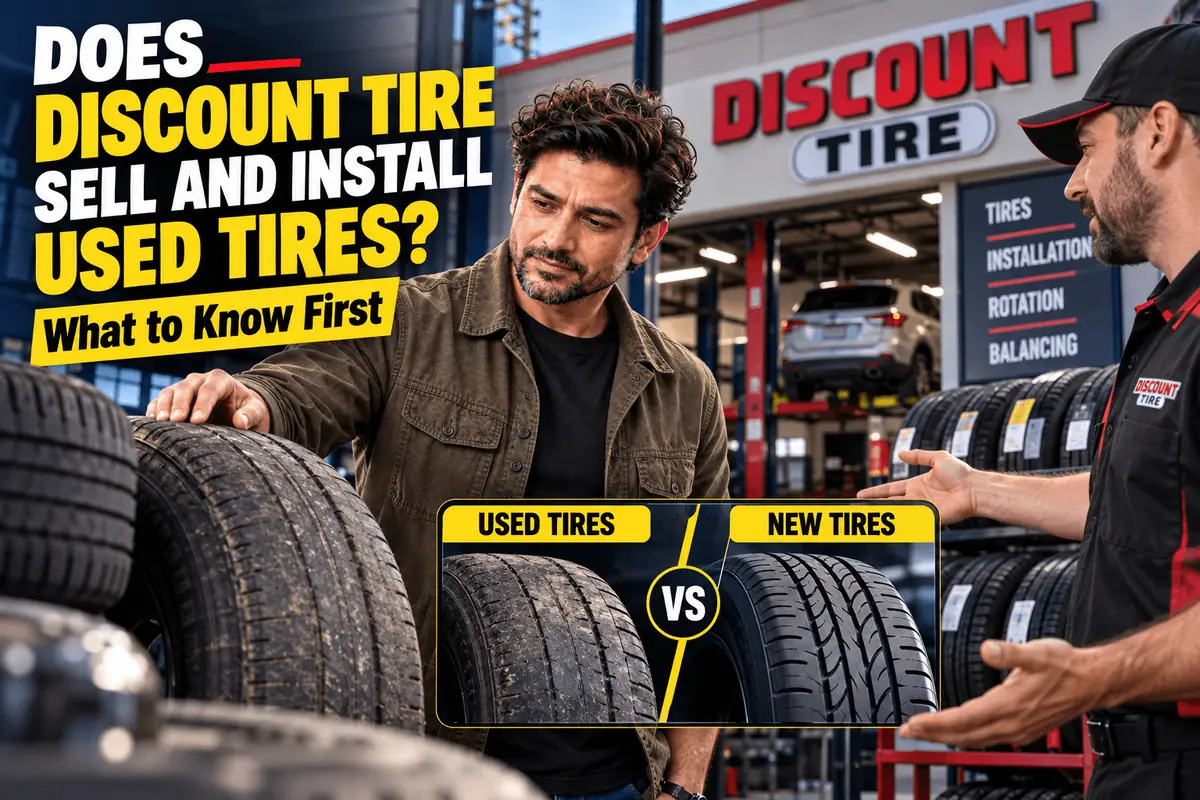
Used tires tempt drivers for an obvious reason. A single replacement for a damaged tire, a cheap set to get an older car through inspection or a spare that matches the other three can all cost far less secondhand. The question is where that tire comes from and who will put it on the car. Discount Tire, which also trades as America’s Tire in some regions, is the largest name many shoppers think of first.
Here is the practical picture. Discount Tire sells new tires, not used ones, so you will not find secondhand inventory on its racks or website. It will mount and balance tires bought elsewhere for a per-tire fee, but a used tire you bring in still has to clear the store’s inspection and age limits, and some will be turned away. This guide explains how those rules work, what Discount Tire does with your old tires and how to decide whether a used tire is worth the risk.
Table of Contents
Does Discount Tire Sell Used Tires?
No. Discount Tire’s business is new tires and wheels, and its stores and website do not offer used passenger tires for sale. Every tire it sells comes with the manufacturer’s warranty and, where the brand offers one, a treadwear warranty. The company also sells optional tire protection plans it calls Certificates for damage that cannot be repaired.
That approach is common among large tire chains, and the reasons are not hard to see. A used tire comes with an unknown history. It may have been driven underinflated or overloaded, repaired badly or stored in heat and sunlight, and much of that damage cannot be seen from outside. A retailer that puts its name on the sale takes on that uncertainty.
Does Discount Tire Buy Used Tires?
Not in the sense of a cash buyback program, which it does not advertise. When you buy new tires, Discount Tire will handle recycling the old set, typically for a disposal fee. The company also says that if your tires are reasonably new and in good shape, it may be able to give credit toward a new tire purchase. That credit is not guaranteed, and how much it is worth will depend on the tire and the store. If you want to sell lightly used tires for cash, our guide to how much used tires sell for covers what to expect from private buyers and resellers.
Will Discount Tire Install Used Tires You Bring In?
Discount Tire states that it is happy to mount and balance tires purchased elsewhere. There is a per-tire charge that varies by region, and it includes lifetime rebalancing at Discount Tire. The company does not publish a separate policy specifically for used tires, so whether a secondhand tire gets mounted comes down to the same safety checks every tire faces.
Expect those checks to be strict. Installation includes a visual inspection of the tire and wheel, and the technician can decline a tire that shows problems. Practices also differ between stores, so it is worth calling ahead with the tire’s size, age and condition before you make the trip.
| Factor | Likely Outcome at Discount Tire | What to Check Before You Go |
|---|---|---|
| Tire is 10 years old or older | Will not be serviced | Read the DOT date code on the sidewall |
| Tire is 6 to 10 years old | May be mounted, but replacement is recommended | Weigh the savings against reduced remaining life |
| Visible cuts, bulges, cracking or exposed cords | Likely refused | Inspect the sidewalls and tread closely |
| Prior repair outside industry guidelines | Likely refused | Look inside for patches or plugs near the shoulder |
| Tread at or below 2/32 inch | Likely refused | Use a tread gauge or the penny test |
| Recent tire in good condition | Usually mounted for the standard fee | Confirm size, load index and speed rating match the vehicle |
The 10-Year Line
Age is the clearest rule. Discount Tire recommends replacing tires at six years old regardless of tread depth and states that it does not service tires that are 10 years or older. That applies to used tires you bring in just as it applies to the tires already on your car. A secondhand tire with deep tread can still be turned away if its DOT code shows it is a decade old.
To read the code, find the letters DOT on the sidewall and look at the last four digits of the sequence that follows. The first two numbers are the week of manufacture and the last two are the year, so 2319 means the 23rd week of 2019. Our guide to when a tire is too old to sell explains why rubber ages even when a tire sits unused.
Check the DOT date code before you buy a used tire. A tire that is 10 years old or older will not be mounted at Discount Tire, however good the tread looks.
Matching Matters Too
Even a tire in perfect condition has to suit the vehicle. The size, load index and speed rating should match what the vehicle maker specifies, and a single used tire should be close in tread depth to the others on the same axle. On all-wheel-drive vehicles, a large tread-depth difference between tires can strain the drivetrain, and some manufacturers set strict limits. A technician who notices a mismatch may recommend against mounting the tire or suggest replacing more than one.
The Real Risks of Buying Used Tires
Consumer Reports has long advised against buying used tires, and its reasoning applies whether or not a shop agrees to mount them.
- Hidden internal damage. A tire driven underinflated or overloaded can suffer structural damage that is not visible, and that damage can lead to sudden failure later.
- Damage most buyers cannot spot. Torn mounting beads and poorly done repairs are problems a professional might catch but a typical buyer would miss.
- Age you cannot see. Rubber compounds deteriorate over time even when a tire is stored, and that weakening does not show on the surface.
- Mismatch with the other tires. A used tire with a different tread pattern, wear level or construction can affect handling and stability.
Uneven wear is another warning sign. Cupping, feathering or one worn shoulder usually means the tire was run on a car with alignment or suspension problems, and that irregular wear can make it noisy and less predictable on your vehicle.
How to Inspect a Used Tire Before You Buy
If you decide a used tire is the right call, a careful inspection improves the odds that it will be both safe and accepted for mounting.
- Read the DOT date code and walk away from anything close to 10 years old.
- Measure the tread depth in several places across and around the tire. Uneven readings point to past alignment or suspension problems.
- Check both sidewalls for cuts, bulges, cracking and scuffing from curbs.
- Look inside the tire, if possible, for patches or plugs, and confirm any repair sits in the central tread area.
- Inspect the bead area for tears or damage from previous mounting.
- Confirm the size, load index and speed rating match your vehicle’s placard on the driver’s door jamb.
A tire that fails any of these checks is not a bargain at any price.
What to Do With Your Old Tires
When you buy new tires, Discount Tire recycles the old ones. The company says the steel is separated from the rubber and each component is recycled or repurposed. A disposal fee typically applies when the store handles your old tires, and many states add their own environmental or recycling fees on new tire purchases. If you keep your old tires, the disposal fee may not apply.
For tires removed elsewhere, other options include:
- Local recycling programs. Many municipal waste and recycling centers accept tires, sometimes for a fee.
- Tire retailers. Many shops will take old tires for a disposal fee even when you are not buying new ones.
- Private sale. Lightly used tires with plenty of tread and recent date codes can find buyers, especially in common sizes.
Avoid dumping or burning tires. Both are illegal in many areas and can bring fines.
When a New Tire Makes More Sense
A used tire can make sense as a short-term fix or a match for a set that still has life in it. In many other cases a new tire is the better buy.
- Your tires are near the end of their life. If the tread is approaching 2/32 inch or the tires are around six years old, a full new set solves the problem rather than delaying it.
- You drive long highway distances. Higher speeds and sustained heat place more demand on a tire whose history you do not know.
- You need warranty coverage. New tires come with manufacturer warranties, and many carry treadwear warranties as well.
- You live with harsh weather. Rain and snow traction fall off as tread wears, and a half-worn used tire has less to give.
Frequently Asked Questions
No. Discount Tire sells new tires and wheels. It does not stock used passenger tires for sale in its stores or online.
Yes. It mounts and balances tires purchased elsewhere for a per-tire fee that varies by region. A used tire still has to pass inspection, and the store can decline a tire that is damaged, badly repaired or too old. Call your local store first to confirm.
No. Discount Tire states that it does not service tires that are 10 years or older. It also recommends replacing tires at six years old regardless of tread depth.
It does not advertise buying tires for cash. It may offer credit toward a new tire purchase if your tires are reasonably new and in good shape, and it recycles old tires, typically for a disposal fee.
Find the DOT code on the sidewall and read the last four digits. The first two are the week of manufacture and the last two are the year.
It can be risky. A used tire may have internal damage from underinflation or overloading, a poor repair or age-related deterioration that cannot be seen from outside. If you do buy one, inspect it carefully and avoid anything close to 10 years old.
Our Take on Used Tires and Discount Tire
Discount Tire will not sell you a used tire, and it does not advertise cash buybacks, though reasonably new tires in good shape may earn credit toward a new set. It will mount tires bought elsewhere for a regional per-tire fee, which makes it a workable option for a secondhand tire as long as that tire passes inspection.
The age rule is the one most likely to trip up a used tire buyer. A tire that is 10 years old or older will not be serviced, and Discount Tire recommends replacement at six. Check the date code, the tread and the sidewalls before you hand over any money, and call the store ahead of time. If the tire you are considering is old, worn or of unknown history, the savings rarely justify the risk.
 Summarize this article with:















Leave a comment