


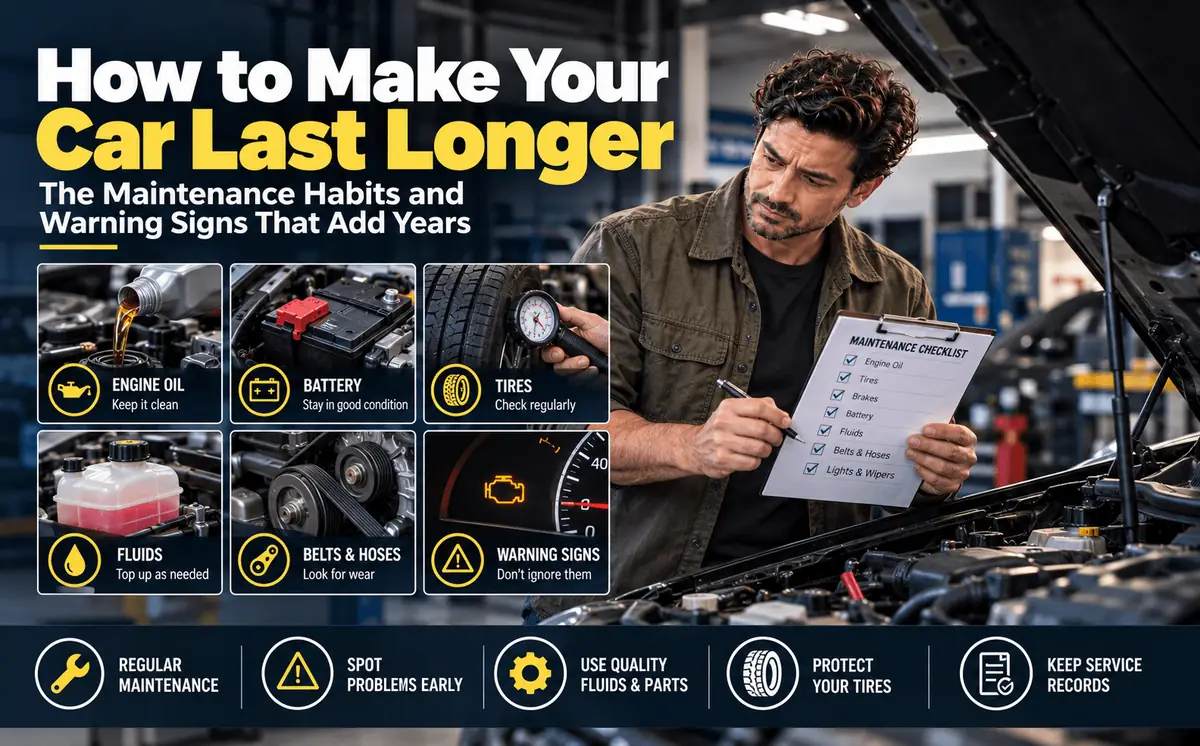
Two identical cars can leave the same dealership on the same day and live very different lives. One is worn out and expensive to keep running by 120,000 miles. The other is still dependable well past 200,000. The difference is rarely luck. It usually comes down to a handful of habits: following the maintenance schedule, keeping an eye on tires and fluids, driving smoothly, and acting on warning signs instead of turning up the radio.
None of that requires mechanical skill or a big budget. It requires consistency. This guide pulls the essentials into one place, from a practical service schedule to the point where keeping an old car stops making financial sense.
How this guide was put together: This guide summarizes common manufacturer maintenance intervals; your owner’s manual is the controlling schedule. Checked on October 22, 2026.
Table of Contents
Why Regular Maintenance Pays Off
Routine maintenance does three things at once.
- It keeps you safer. Regular inspection of brakes, tires, and suspension catches worn parts before they fail. A properly maintained car is also less likely to break down on a busy highway or a remote road.
- It saves fuel. Fresh oil, a clean air filter, and correctly inflated tires all reduce the work the engine has to do, which shows up as better fuel economy over time.
- It extends the car’s life. Most expensive repairs begin as small, cheap problems. Catching them early keeps every system working the way it was designed to, with less wear and fewer premature replacements.
A Practical Maintenance Schedule
Your owner’s manual is the final word on intervals for your specific vehicle, but these ranges are typical for many cars:
| Service | Typical Interval | Why It Matters |
|---|---|---|
| Oil and filter change | Every 5,000–7,500 miles or 6 months, whichever comes first | Clean oil reduces friction and engine wear |
| Tire rotation | Every 5,000–8,000 miles, often with each oil change | Evens out tread wear and extends tire life |
| Fluid level checks | Monthly | Catches leaks and low levels early |
| Brake inspection | At least once a year, or sooner if you notice changes | Prevents costly damage and keeps stopping power reliable |
| Engine air filter | Per manufacturer, commonly every 12,000–30,000 miles depending on conditions | A clogged filter hurts performance and fuel economy |
| Battery test | Periodically; many batteries last about 3–5 years | Avoids being stranded by a sudden failure |
| Spark plugs | Usually every 30,000–100,000 miles, depending on the vehicle | Ensures clean, efficient ignition |
| Coolant flush | Typically every 30,000–50,000 miles or 2–3 years | Old coolant loses its protective and heat-transfer properties |
| Transmission fluid | Typically every 30,000–60,000 miles or 2–3 years, depending on conditions | Prevents wear, slipping, and expensive transmission repairs |
| Brake fluid | Typically every 2–3 years | Brake fluid absorbs moisture, which reduces braking performance |
Intervals vary widely between vehicles. Many modern cars, for example, specify much longer oil change intervals with synthetic oil, and some transmissions have very specific fluid requirements. When the manual and a general guideline disagree, follow the manual.
Make the Owner’s Manual Your Main Reference
The owner’s manual is the most underused tool most drivers own. It contains the manufacturer’s maintenance schedule, service intervals, and fluid specifications for your exact make and model, along with instructions for routine tasks and guidance on which jobs need a professional.
It also matters for your warranty. Following the prescribed maintenance schedule, and keeping records that prove you did, helps protect your coverage. Skipping scheduled service can leave you paying for repairs that would otherwise have been covered.
Many manuals list two schedules: a normal one and a severe-service one for frequent short trips, extreme temperatures, dusty roads, or towing. A lot of everyday driving fits the severe definition, so read both and be honest about which applies to you.
Find a Mechanic You Trust
Even if you do some of your own maintenance, you will need a good shop for diagnosis and bigger jobs. A qualified technician diagnoses problems correctly the first time, which prevents further damage and wasted money.
- Ask for recommendations from friends, family, and coworkers, and read online reviews.
- Look for ASE certification. The National Institute for Automotive Service Excellence certifies technicians who have passed its exams, which is a useful baseline for competence.
- Consider a specialist if you drive a brand that benefits from model-specific experience.
- Visit the shop. A clean, organized workspace and professional staff tend to reflect careful work.
- Ask about warranties on parts and labor. Reputable shops stand behind their repairs.
- Make sure you understand the work and its cost before you approve anything. A good mechanic is happy to explain.
Cutting corners with major DIY repairs beyond your experience, or with unqualified repairers, often costs more in the end. If you want to handle the simpler jobs yourself, our guide to DIY car maintenance for beginners covers what is worth doing at home and what is not.
Look After Your Tires
Tires affect safety, fuel economy, and handling more than almost any other component, and they are easy to neglect.
Keep the Pressure Right
Underinflated tires increase rolling resistance, which costs fuel, and they flex more, building heat that can cause premature wear or even a blowout. Overinflated tires have a smaller contact patch, which reduces traction and wears the center of the tread faster.
Check pressure at least once a month and before long trips, using a reliable gauge and the pressure listed on the placard inside the driver’s door jamb or in the owner’s manual. Check when the tires are cold for an accurate reading.
Watch the Tread
Tread grooves channel water away from the contact patch. As they wear shallower, wet grip falls off and the risk of hydroplaning rises sharply.
- Use the penny test as a minimum check: insert a penny upside down into a groove, and if you can see the top of Lincoln’s head, the tire is at or below the 2/32-inch legal minimum and must be replaced.
- For a safer threshold, use a quarter. If you can see above Washington’s head, you are below 4/32 inch, the point at which many experts recommend replacing tires if you drive in the rain.
- Look for uneven wear, which points to incorrect inflation or alignment problems.
- Rotate the tires every 5,000 to 8,000 miles, or as your manufacturer recommends.
Our full guide to checking tire tread depth explains each method and what different wear patterns mean.
Stay on Top of Fluids
Fluids lubricate moving parts, manage heat, and make the brakes and transmission work. Neglecting them is one of the fastest ways to shorten a car’s life.
- Engine oil reduces friction between moving parts. Skipping changes accelerates wear and can lead to engine failure. Check the level monthly and change it on schedule.
- Coolant circulates through the engine and radiator to prevent overheating. Over time it becomes contaminated and loses effectiveness, so check the level regularly and flush it at the recommended interval.
- Transmission fluid lubricates the transmission’s intricate parts and enables smooth shifting. Old fluid leads to wear, slipping, and some of the costliest repairs a car can need.
- Brake fluid transmits the force from the pedal to the brakes. It gradually absorbs moisture, which reduces braking performance, so it should be replaced on schedule.
- Power steering fluid and washer fluid round out the monthly check.
Keep It Clean, Inside and Out
Washing is not just cosmetic. Road grime, salt, and environmental contaminants can cause fading, oxidation, and eventually rust.
- Wash the car about every two weeks with a proper car shampoo and a soft mitt. Household detergents can strip away the protective wax layer.
- Apply wax or sealant to add a barrier against UV rays, bird droppings, tree sap, and other hazards. It also makes the next wash easier.
- Clean the interior regularly. Vacuuming and cleaning upholstery, carpets, and the dashboard prevents dirt from grinding into surfaces and causing wear and odors.
- Shield the cabin from the sun. UV exposure cracks and fades dashboards, door panels, and seats. A sunshade or quality window tint helps a lot when the car is parked outside.
A clean, well-protected car also holds its resale value better. For a deeper look at paint protection, see our guide to how the sun affects car paint.
Drive Like You Want the Car to Last
How you drive has a direct effect on how long your car’s components survive.
- Accelerate smoothly. Flooring the throttle strains the engine and transmission. Building speed gradually reduces wear and fuel consumption.
- Brake gently and early. Anticipating stops reduces wear on pads and rotors and limits stress on the suspension.
- Cut unnecessary idling. Long idling adds engine wear and wastes fuel. If you expect to be parked or waiting for more than about 30 seconds to a minute, outside of traffic, it is generally more efficient to switch the engine off.
These same habits save fuel; our tips for saving fuel cover more ways to stretch every gallon.
Warning Signs You Shouldn’t Ignore
Your car tells you when something is wrong. Responding early is often the difference between a modest repair and a major one.
| Warning Sign | Examples | What It Can Mean |
|---|---|---|
| Strange noises | Squealing brakes, a knocking engine, a whining transmission | Worn parts or a component heading toward failure |
| Leaks | Puddles or stains under the car after it has been parked | Engine oil, transmission fluid, coolant, or brake fluid escaping |
| Warning lights | Check engine, brake system, oil pressure | Problems ranging from minor to serious; check the owner’s manual |
| Vibrations | Shaking through the steering wheel, seat, or floor | Issues with tires, wheels, suspension, or drivetrain |
| Reduced performance | Sluggish acceleration, worse fuel economy, hard starting | Developing problems that are cheaper to fix early |
Treat the oil pressure light and the brake warning light as urgent; stop driving and get help if either comes on while you are moving. If you are dealing with a vibration, our guide to what causes a car to vibrate while driving walks through the most common causes.
When It’s Time to Replace Your Car
Even the best-kept car eventually reaches a point where repairs cost more than they are worth. These factors help you recognize it:
- Repair costs vs. the car’s value. If a single repair would cost more than the car is worth, replacing it is usually the more economical choice. A steady stream of expensive repairs is a strong signal too.
- Safety concerns. Significant structural damage, serious brake problems, or other critical safety issues that would be costly to fix may justify moving to a newer, more reliable vehicle.
- Reliability. If the car regularly leaves you stranded, the towing fees, rental cars, and missed time add up quickly, on top of the stress.
- Running costs. An older car’s fuel economy may lag far behind newer models, which matters more the more you drive.
- Changing needs. A growing family, a new job, or a different commute may simply call for a different vehicle.
A trusted mechanic can give you an honest assessment of your car’s condition and likely upcoming repairs, which makes the decision much easier. If you do decide to buy, our guides for first-time car buyers and test driving a used car will help you choose well.
Frequently Asked Questions
A common guideline is every 5,000 to 7,500 miles or every six months, whichever comes first, but many modern cars running synthetic oil specify longer intervals. Follow your owner’s manual, and use the severe-service schedule if your driving fits it.
Follow the manufacturer’s maintenance schedule, especially oil changes, and keep records. Regular oil changes protect the engine, and the records help with warranty claims and resale.
At least once a month and before long trips, with the tires cold. Use the pressure on your door-jamb placard, not the maximum printed on the tire.
Yes. Smooth acceleration, gentle braking, and less idling reduce wear on the engine, transmission, brakes, and suspension, and they save fuel as well.
Start with personal recommendations and online reviews, look for ASE-certified technicians, ask about warranties on parts and labor, and choose a shop that explains the work and cost clearly before starting.
When a single repair would cost more than the car is worth, when repairs have become frequent and expensive, or when the car has serious safety or reliability problems. A mechanic’s honest assessment helps you make the call.
The Bottom Line
Making a car last is not about any single secret. It is about doing the routine things consistently: following the schedule in your owner’s manual, checking tires and fluids monthly, keeping the car clean, driving smoothly, and responding promptly when something sounds, smells, or feels wrong.
Do those things and you will spend less on repairs, stay safer on the road, and get far more years and miles out of the car you already own.
Sources
Specs, warranty terms and prices were checked on October 22, 2026. Prices change often.
- FTC: Auto warranties and routine maintenance (maintenance records and warranty coverage)
 Summarize this article with:













Leave a comment