


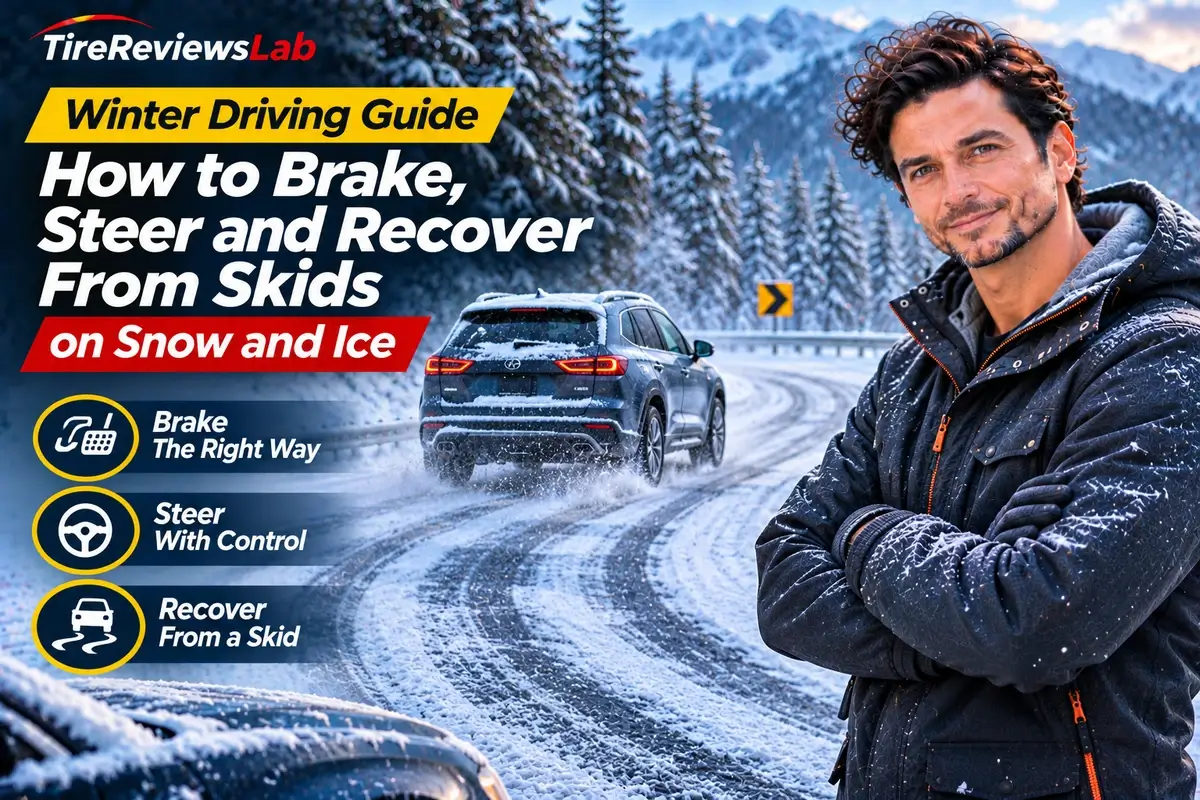
The first real snowfall of the season always produces the same scene: cars in the ditch along the highway, a pickup spinning its wheels at a green light and a line of brake lights where someone discovered black ice on an overpass. Most of those drivers were not reckless. They were simply driving with summer habits on a surface that offers a fraction of the grip. This winter driving guide covers the habits that keep you in control when grip runs short.
Winter driving is a skill, and like any skill it rewards preparation and technique more than luck. This guide covers how snow and ice change the way a vehicle behaves, how to accelerate, brake and steer when traction is scarce, how to recover from a skid, what drivetrain and tires actually contribute and what to do when conditions turn dangerous or you end up stuck.
How this guide was put together: This guide is general information based on manufacturer guidance, federal rules and industry practice, with sources listed at the end. Prices are typical ranges, not quotes, and policies change; checked on October 23, 2026.
Table of Contents
Get the Vehicle Ready for Winter Driving
Technique cannot compensate for a vehicle that is not ready for cold weather. Before the snow arrives, have the battery tested, replace worn wiper blades, top off winter washer fluid and confirm the heater and defroster work properly. Check tire pressure often, because it drops as temperatures fall. Our winter car care guide covers the full checklist.
Keep a cold-weather kit in the vehicle as well:
- Snow brush, ice scraper and a compact shovel
- Jumper cables and a flashlight with spare batteries
- Blankets, warm clothing, gloves and a hat
- Water and nonperishable snacks
- Sand or cat litter for traction if you get stuck
- Flares or reflective triangles and a basic first aid kit
- A phone charger that works in the vehicle
Keep the fuel tank at least half full through the winter. It gives you a reserve if you are stuck in traffic or stranded, and it lets you run the engine for heat while you wait.
Know the Surfaces You Are Driving On
Recognizing the surface ahead tells you how much grip you have to work with.
| Surface | What It Looks Like | Why It Is Dangerous |
|---|---|---|
| Black ice | Wet-looking or simply dark pavement | Nearly invisible and extremely slick, common on bridges, overpasses and shaded spots |
| Freezing rain | Rain falling with temperatures at or below freezing | Glazes roads, windshields and power lines with a smooth sheet of ice |
| Packed snow | Polished white or gray surface in wheel tracks | Compressed snow becomes icy, especially at intersections where tires spin and stop |
| Slush | Wet, partly melted snow | Pulls at the tires, causes hydroplaning and can refreeze overnight |
| Fresh deep snow | Unplowed lanes, drifts | Reduces steering and braking control and can strand vehicles |
Temperatures near the freezing point deserve particular respect. Ice close to 32°F often carries a thin film of water on its surface, which makes it slicker than ice in deeper cold. Bridges and overpasses lose heat from above and below, so they frequently freeze before the road leading up to them.
Smooth Inputs Are Everything in Winter Driving
On dry pavement, a tire has grip to spare. On snow and ice, it may have just enough to do one job at a time: accelerate, brake or turn. Any abrupt input can ask more of the tire than the surface can give, which is how most winter skids begin. The goal is to drive as though there were an egg under the pedals and a full cup of coffee on the dashboard.
Accelerating
Squeeze the accelerator gently, especially from a stop. Spinning the wheels polishes the surface beneath them and makes traction worse. If the wheels start to spin, ease off until they grip again.
Braking
Brake earlier and more gently than usual, and anticipate stops well in advance. Lifting off the accelerator early lets the vehicle slow on its own before you touch the brakes.
If you need to stop hard, how you brake depends on the system:
- With antilock brakes (ABS): press firmly and hold steady pressure. Do not pump the pedal. You will feel pulsing or hear grinding as the system works, which is normal. Keep steering around hazards, since ABS exists to let you steer while braking.
- Without ABS: apply firm, steady pressure just short of locking the wheels. If the wheels lock, ease off slightly until they roll again, then reapply.
ABS preserves steering control, but it does not shorten stopping distances on ice. The vehicle still needs far more room to stop.
Steering and Turning
Slow down before you enter a curve, not halfway through it. Keep speed steady through the turn and avoid braking or accelerating hard mid-corner, when the tires are already working to turn the vehicle. Use small, smooth steering movements and change lanes gradually.
Following Distance
AAA advises increasing following distance to five to six seconds on snow and ice, compared with the three to four seconds commonly recommended on dry roads. Pick a fixed point such as a sign, note when the vehicle ahead passes it and count. If you reach the point in less than five seconds, back off.
Hills
Build momentum on the flat approach to a hill and let it carry you up. Pressing harder on the accelerator partway up a snowy grade usually just spins the wheels. Try not to stop on the way up, and ease off as you approach the crest. Go down slowly, using a lower gear so the engine helps hold the vehicle’s speed and you need less braking.
Leave Cruise Control Off
Do not use cruise control on any slippery surface. If a drive wheel breaks traction, the system may keep applying power, and you lose the instant, instinctive lift off the throttle that can prevent a skid from developing.
When in doubt, slow down. Speed is the one factor every driver controls, and most winter crashes start with a vehicle going too fast for the surface.
How to Recover From a Skid While Winter Driving
Even careful drivers occasionally feel a vehicle start to slide. The key is to stay calm and avoid the instinct to stab the brakes, which usually makes things worse.
- Take your foot off the accelerator.
- Look and steer smoothly in the direction you want the front of the vehicle to go.
- Avoid slamming the brakes. If you have ABS and need to slow down, use firm, steady pressure.
- Be ready to steer back the other way as the vehicle recovers, using small corrections to avoid overcorrecting.
- Once you have control, slow down gently and continue with extra caution.
Front-Wheel Skids
When the front tires lose grip, the vehicle plows straight ahead even though the wheel is turned. This is understeer, and it is common in front-wheel-drive vehicles that enter a turn too fast. Lift off the accelerator and reduce the steering angle slightly so the front tires can regain traction, then steer gently where you want to go.
Rear-Wheel Skids
When the rear tires slide, the back end swings out and the vehicle begins to rotate. This is oversteer, and it is more common in rear-wheel-drive vehicles. Steer in the direction the rear is sliding, which is the same as steering where you want the front of the vehicle to point. Expect to unwind that correction quickly as the rear regains grip, since overcorrecting can send the vehicle into a slide the other way.
What Your Drivetrain Can and Cannot Do
Drivetrain affects how well a vehicle gets moving in snow. It has far less effect on how well it stops or turns.
| Drivetrain | Winter Strengths | Winter Weaknesses |
|---|---|---|
| AWD or 4WD | Best traction for starting, climbing and deep snow | Can create false confidence, heavier and usually less fuel-efficient, some 4WD systems need manual engagement |
| Front-wheel drive | Engine weight over the driven wheels helps traction, simple and economical | Can struggle in deep snow, prone to understeer on ice |
| Rear-wheel drive | Balanced weight distribution in dry conditions | Least traction on slippery roads, prone to oversteer and wheel spin |
All-wheel and four-wheel drive are a real advantage when pulling away from a stop or climbing a snowy hill. But every vehicle brakes with all four wheels, and every vehicle turns with the same tire grip. An AWD vehicle on worn all-season tires can still slide through an intersection that a front-wheel-drive car on winter tires stops short of.
Tires Matter More Than Drivetrain
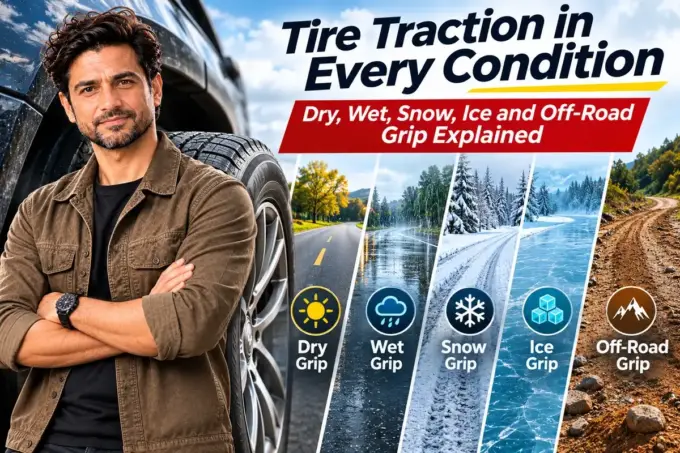
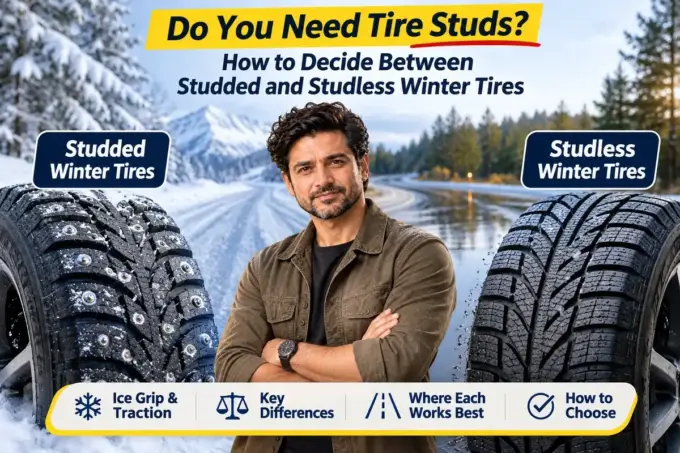
The four small contact patches between the tires and the road decide how much grip you have. Winter tires use a softer compound that stays flexible in freezing temperatures, deep grooves that bite into snow and dense siping that adds edges for gripping ice. All-season tires work as a compromise, and their compounds stiffen and lose grip as temperatures drop, typically below about 45°F.
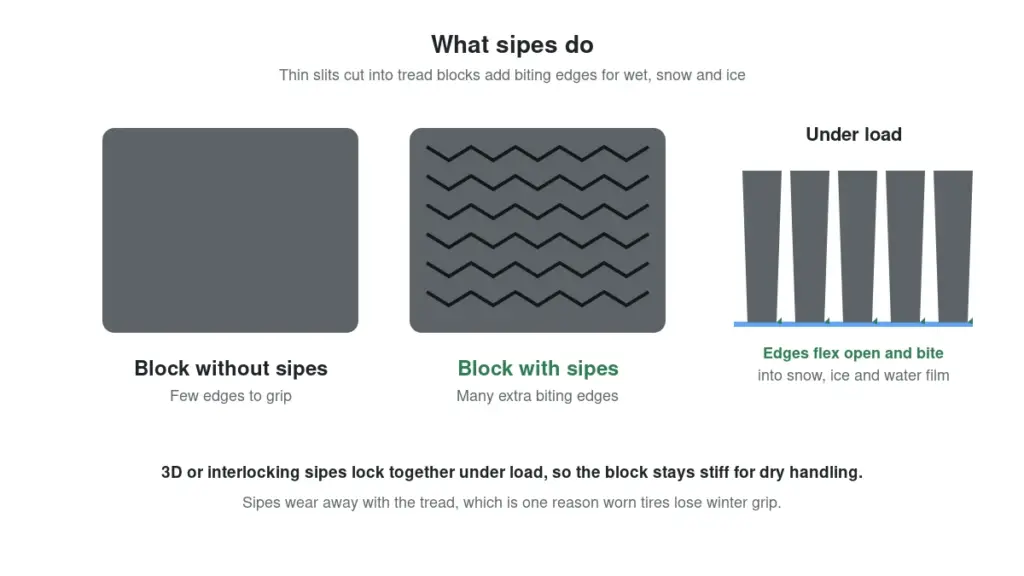
Winter tires shorten stopping distances, improve cornering grip and make the vehicle more predictable on snow, ice and cold pavement. For drivers in regions with regular snowfall and freezing temperatures, they are the single biggest safety upgrade for winter driving. Our comparison of winter tires vs all-season tires explains the trade-offs in detail. If you choose all-season or all-weather tires, look for the three-peak mountain snowflake symbol, which indicates the tire met a minimum snow traction standard.
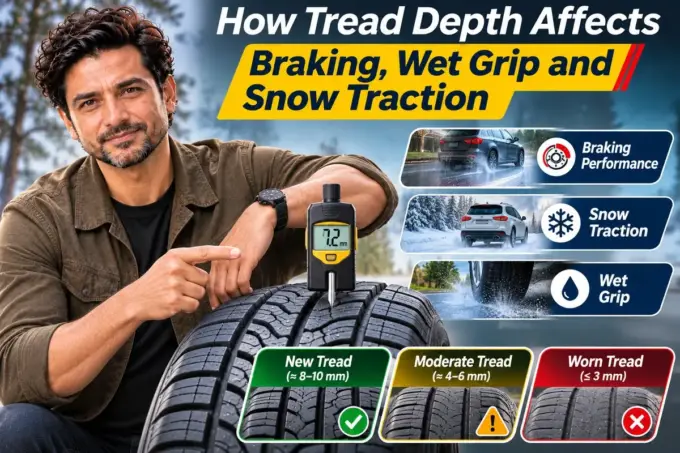
Tread depth matters too. Snow traction falls off long before a tire reaches the legal minimum.
Stay Visible and Keep Your View Clear
Clear the entire vehicle before you drive, not just a peephole in the windshield. That means every window, the mirrors, the headlights and taillights, the hood and the roof. Snow left on the roof can slide over the windshield when you brake or fly off and strike the vehicle behind. Some states fine drivers who leave snow and ice on their vehicles.
Use a scraper and the defroster for stubborn ice. Do not pour hot water on a frozen windshield, which can crack the glass and refreeze on the surface.
Turn on your headlights whenever it is snowing, overcast or getting dark, even during the day, and do not rely on daytime running lights, which often leave the taillights off. In heavy snow or fog, use low beams. High beams reflect off falling snow and reduce what you can see.
Winter Driving Traction and Chain Laws
Winter traffic rules vary widely by state and even by highway, so check the requirements for your route before a mountain trip.
Colorado’s Passenger Vehicle Traction Law is a well-known example. When it is in effect, typically on mountain corridors such as I-70, passenger vehicles need tires with at least 3/16 inch of tread that are winter tires, carry the mountain snowflake symbol or are marked M+S, or must carry chains or an approved alternative traction device. Under the stricter chain law, which Colorado activates in severe storms, every vehicle needs chains or an approved alternative. Fines for noncompliance start at $100 plus a surcharge and climb sharply if a stuck vehicle blocks a travel lane.
California, Oregon and Washington post chain or traction device requirements on mountain passes when conditions demand them, and roadside signs indicate when the rules apply. Our article on whether tire chains are legal covers how chain rules differ by state.
Posted speed limits do not automatically drop in snow, but every state expects drivers to travel at a speed safe for conditions. You can be ticketed for driving too fast for conditions even while under the posted limit.
If You Get Stranded
A few rules keep you safe until help arrives.
- Stay with your vehicle. It provides shelter and is much easier for rescuers to find than a person on foot. Do not walk away in a severe storm.
- Call for help and give your location as precisely as possible.
- Run the engine only in short periods to warm the cabin, which conserves fuel.
- Keep the exhaust pipe clear of snow, ice and mud to prevent carbon monoxide from entering the cabin, and crack a window slightly for fresh air.
- Make yourself visible by tying a brightly colored cloth to the antenna or a door and using the dome light at night.
- Do not overexert yourself shoveling, since cold air and heavy snow put real strain on the heart.
- Stay warm with blankets, extra clothing or floor mats, and take turns sleeping if others are with you.
When to Skip Winter Driving Altogether
Some conditions are beyond any amount of skill or equipment. Whiteouts, where blowing snow erases the boundary between road and roadside, can leave drivers unable to see the vehicle ahead or the edge of the pavement. Freezing rain can glaze a road so completely that braking and steering barely work. Roads closed for drifting snow or stuck vehicles are closed for a reason.
When forecasts call for any of these, the safest trip is the one you postpone. Wait until crews have plowed and treated the roads. If you are already driving when visibility collapses, slow down, turn on your lights and hazard flashers and pull well off the road at the first safe place, such as an exit or parking lot.
Related guides: Driving on Winter Tires in Summer, Driving With Mismatched Tires and How to Pass Your Driving Test the First Time
Frequently Asked Questions
AAA recommends five to six seconds, roughly double the usual three-second gap on dry roads. Leave more if visibility is poor, the road is icy or you are following a large truck.
Not if your vehicle has antilock brakes. Press firmly, hold steady pressure and let the ABS modulate the brakes while you steer. Without ABS, apply firm pressure just short of locking the wheels and ease off slightly if they lock.
Steer in the direction you want the front of the vehicle to go. In a rear-wheel skid, that means steering toward the side the rear is sliding. Take your foot off the accelerator, avoid slamming the brakes and use small corrections so you do not overcorrect.
AWD helps you accelerate and climb in snow, but it does not help you stop or corner. Tires decide those, which is why an AWD vehicle on winter tires is far more capable than the same vehicle on worn all-seasons.
Straighten the wheels, clear snow from around the tires and under the vehicle, and spread sand or cat litter in front of the drive wheels. Accelerate gently to avoid digging deeper. If you are stranded in a storm, stay with the vehicle, keep the exhaust clear and call for help.
Smart Winter Driving When the Snow Flies
Safe winter driving rests on a few principles: prepare the vehicle, read the surface, keep every input smooth and leave far more space than feels necessary. Brake early, steer gently, build momentum for hills and lift off the accelerator the instant a skid begins.
Equipment can only do so much. AWD helps you go, winter tires help you stop and turn, and good judgment tells you when to stay home. Slow down, give yourself room and treat every dark patch of pavement as if it might be ice.
Sources
Specs, warranty terms and prices were checked on October 23, 2026. Prices change often.
- NHTSA: Tires (tire safety, pressure, tread and DOT codes)
- USTMA: Tire care (industry tire care and maintenance guidance)
 Summarize this article with:







Leave a comment